A reliable crypto portfolio tracker is the foundation of professional crypto portfolio management — without one, you're flying blind. Most traders focus obsessively on finding the next 100x coin while ignoring the framework that determines whether their overall account grows or shrinks. The best crypto portfolio tracker tools help you decide what to hold, how much of each position to take, and when to adjust allocations using a dedicated portfolio tracker app.
The difference between amateur and professional crypto traders is not their ability to pick winners. It's their ability to manage losers, size positions correctly, and maintain a balanced portfolio that captures upside while limiting catastrophic drawdowns. Mastering crypto portfolio rebalancing and position sizing is what separates consistent winners from gamblers.
A well-managed portfolio with average token picks will consistently outperform a poorly managed portfolio with great token picks. This guide covers the specific strategies professionals use to construct, manage, and rebalance crypto portfolios — and how to leverage tools like CoinXSight's AI backtesting engine to validate your approach.
The Core-Satellite Portfolio Model
The most proven portfolio construction method for crypto is the core-satellite model. It divides your portfolio into two tiers:
Core Holdings (50-70% of Portfolio)
Core holdings are your highest-conviction, longest-term positions. These are assets you plan to hold through market cycles.
Typical core allocation:
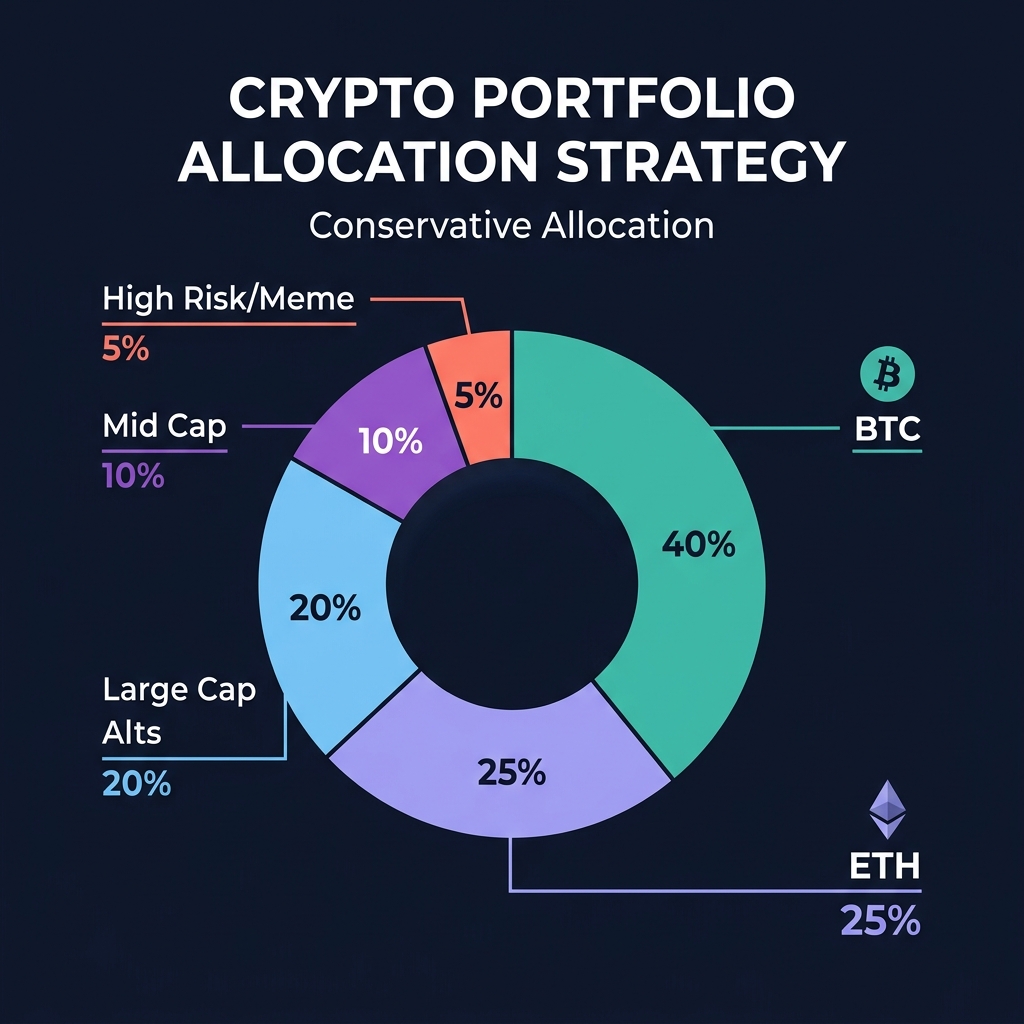
Bitcoin (BTC): 30-40% — digital gold, store of value, lowest volatility
Solana (SOL): 5-10% — high-performance alternative L1
Why these specifically: Core holdings should be assets with strong network effects, proven track records, deep liquidity, and institutional adoption. These characteristics reduce the risk of permanent capital loss, which is the primary concern for portfolio longevity.
Satellite Holdings (30-50% of Portfolio)
Satellite positions are your alpha-generation layer — higher-risk, higher-reward positions in altcoins, DeFi tokens, and emerging narratives.
Satellite characteristics:
Smaller position sizes (2-5% each)
Shorter holding periods (weeks to months)
Higher expected returns AND higher expected volatility
Rotated based on market conditions and narrative shifts
Finding satellites: CoinXSight's Alpha Hunter V2 is designed specifically for identifying satellite opportunities — tokens with strong technical, on-chain, and sentiment confluence that are likely to outperform over the next 1-4 weeks.
Position Sizing: The Most Important Decision
This is where crypto technical analysis becomes practical — a quality crypto analytics platform will display these signals in real time, helping you act on setups as they form.
Position sizing determines your portfolio's risk profile more than any other factor. A 50% gain on a 2% position contributes 1% to your portfolio. A 50% loss on a 20% position costs you 10%.
The Conviction-Based Sizing Framework
Conviction Level
Position Size
Risk Per Trade
Example
Core conviction
15-40%
3-5% max loss
BTC, ETH
High conviction
5-10%
1-2% max loss
SOL, top DeFi blue chips
Medium conviction
2-5%
0.5-1% max loss
Emerging L2s, narratives
Speculative
0.5-2%
Full position loss acceptable
Meme coins, pre-launch tokens
The 1% Rule for Active Trading
For actively traded satellite positions, risk no more than 1% of your total portfolio on any single trade. This means if your portfolio is $100,000, your maximum loss on any trade should be $1,000.
Crypto diversification is tricky because most altcoins are highly correlated with Bitcoin. During major market drops, nearly everything falls together. Simply holding 20 different tokens doesn't provide true diversification if they all drop 50% simultaneously.
Effective diversification in crypto requires diversifying across:
Narratives: Don't overconcentrate on a single narrative (all AI tokens, all meme coins)
Risk profiles: Mix of buy-and-hold core + actively traded satellites
Timeframes: Some positions for months, others for weeks
The Maximum Position Count Rule
For portfolios under $100,000, limit yourself to 8-12 total positions. More positions create:
Monitoring burden that exceeds your attention capacity
Position sizes too small to be meaningful
Tendency to neglect positions that underperform
For portfolios over $100,000, 12-20 positions is reasonable, with automated monitoring through tools like CoinXSight's dashboard.
When and How to Rebalance
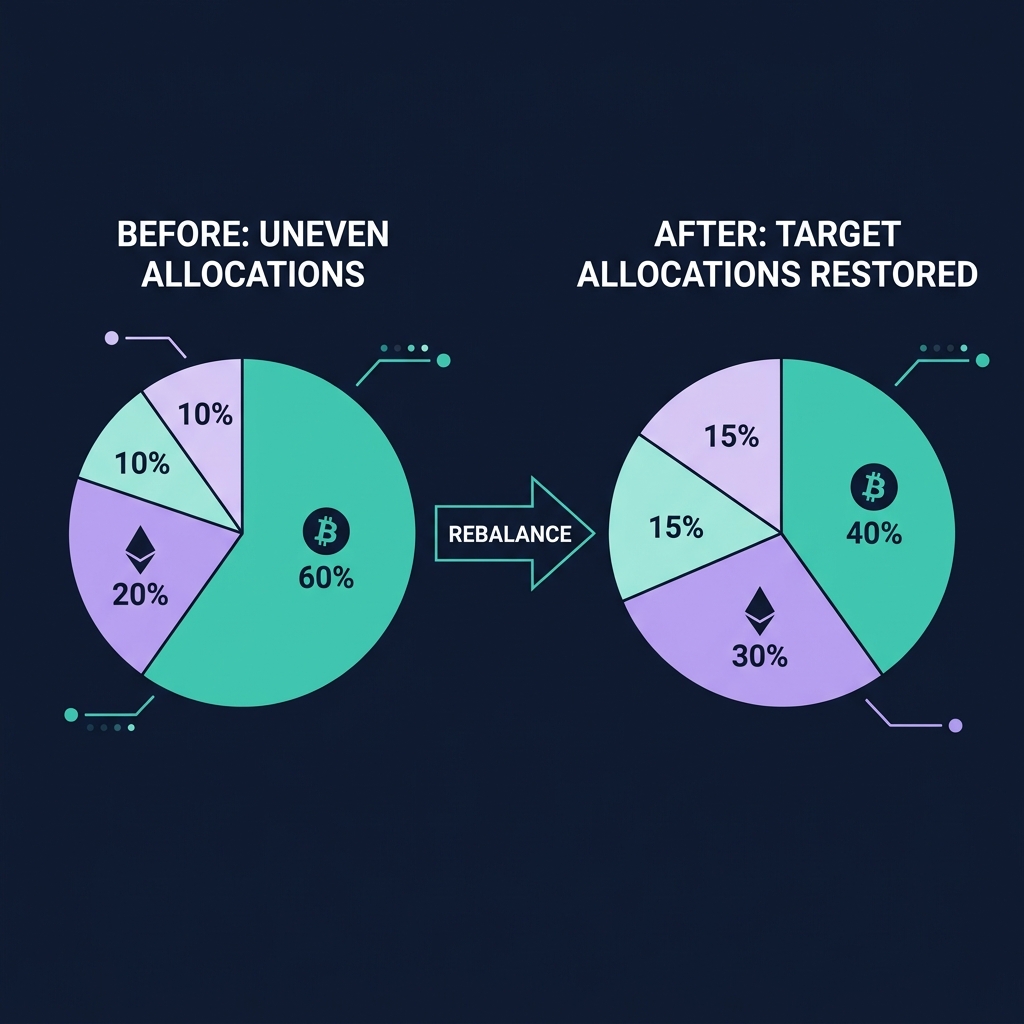
Rebalancing brings your portfolio back to target allocations after price movements shift the proportions. Without rebalancing, winners become oversized positions and losers become undersized, distorting your intended risk profile.
Time-Based Rebalancing
Set a fixed schedule — weekly, bi-weekly, or monthly — to review and adjust allocations.
Monthly rebalancing workflow:
Compare current allocations to target allocations
Any position that has drifted more than 5% from target → rebalance
Sell portions of positions that have grown above target
Buy positions that have shrunk below target
Review satellite positions — replace underperformers with new Alpha Hunter signals
Threshold-Based Rebalancing
Rebalance whenever any position deviates from its target by more than a set percentage (typically 5-10%).
Example:
Target BTC allocation: 35%
BTC rallies, now representing 45% of portfolio
Deviation: +10% → trigger rebalance
Sell BTC to bring back to 35%, redistribute proceeds to underweight positions
Event-Based Rebalancing
Rebalance when significant market events occur:
Major protocol upgrades or forks
Regulatory announcements
Narrative shifts (DeFi summer → AI narrative → meme season)
CoinXSight signals a significant change in a token's ASI score
Focus: Reduce exposure, wait for directional clarity
Use CoinXSight's market analysis tools to identify the current market phase and adjust your allocation accordingly.
Tax-Efficient Portfolio Management
Harvest Losses When Available
If a satellite position drops significantly, consider selling to realize the capital loss. This loss can offset gains elsewhere in your portfolio, reducing your tax liability. You can re-enter the position later if your thesis remains intact.
Hold Core Positions for Long-Term Capital Gains
In many jurisdictions, holding assets for more than one year qualifies for lower capital gains tax rates. Design your core holdings for long-term holding periods to benefit from this tax advantage.
Track Cost Basis Meticulously
Rebalancing creates taxable events. Use portfolio tracking tools to maintain accurate cost basis records for every transaction. This prevents costly errors during tax filing.
Frequently Asked Questions
How many coins should I hold in my portfolio?
For most retail traders, 8-12 positions is optimal. This provides meaningful diversification without creating an unmanageable monitoring burden. Each position should be large enough to meaningfully impact your portfolio returns if it performs well.
Should I always hold Bitcoin?
For most portfolios, yes. Bitcoin's lower volatility, institutional adoption, and market-leading liquidity make it the most reliable store of value in crypto. It serves as a portfolio anchor during market downturns when altcoins typically fall 2-3x more than BTC.
How often should I rebalance?
Monthly rebalancing is suitable for most traders. More frequent rebalancing (weekly) during volatile markets, less frequent (quarterly) during stable periods. The key is consistency — pick a schedule and follow it regardless of market emotions.
What percentage should I keep in stablecoins?
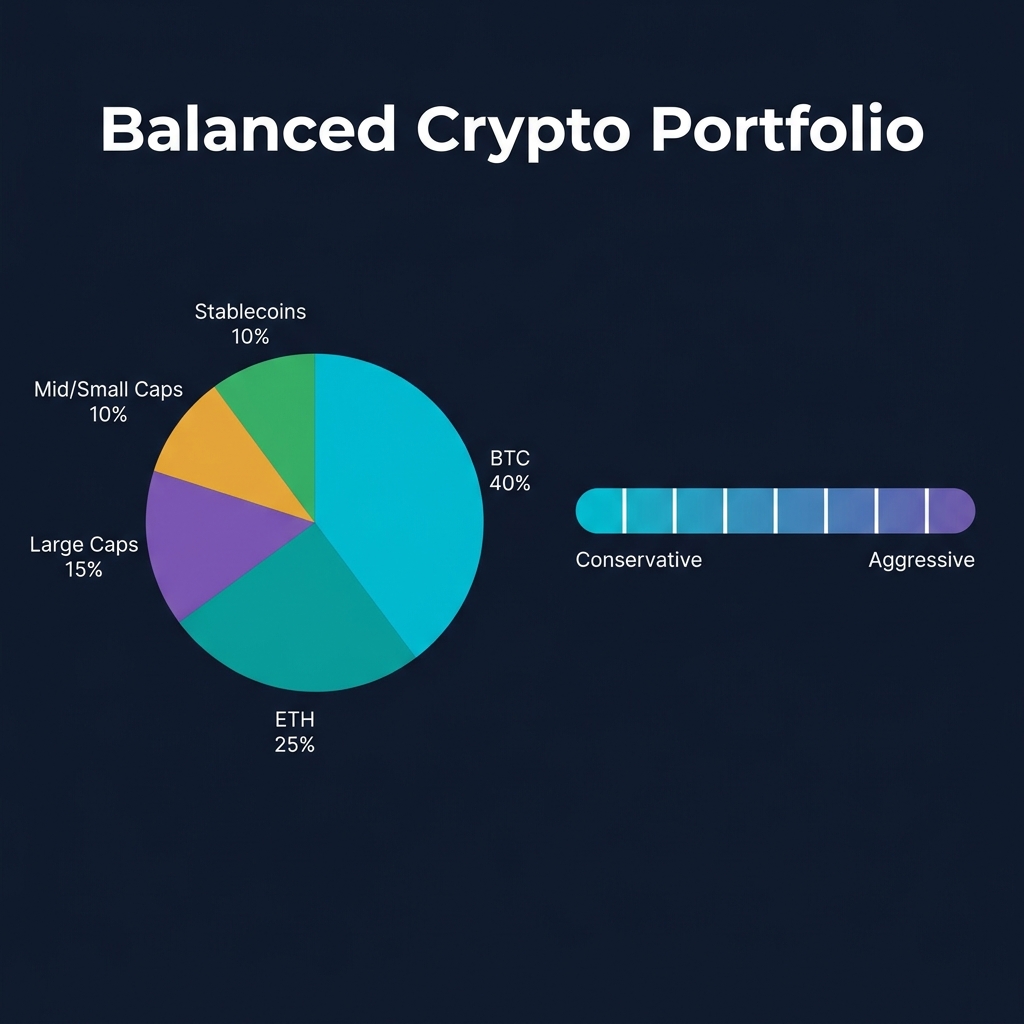
10-30% depending on market conditions. During bull markets, reduce cash to 10% to maximize exposure. During uncertain or bearish conditions, increase to 20-30% to preserve capital and maintain buying power for future opportunities.
How do I handle a position that drops 50%?
First, evaluate whether the drop is due to market-wide conditions (everything is down) or token-specific issues (hack, team departure, failed upgrade). If market-wide, hold if your thesis is intact. If token-specific, cut the loss and reallocate to a stronger position. Never average down without reassessing the fundamental case.
Summary
Crypto portfolio management is the discipline that transforms random trading wins into sustainable wealth growth. The core-satellite model provides a proven framework: maintain high-conviction core holdings for stability while using smaller satellite positions for alpha generation.
Position sizing based on conviction levels, systematic rebalancing, and adaptation to market phases are the three pillars that separate professional portfolio management from gambling. CoinXSight's integrated suite — Portfolio Dashboard, Alpha Hunter, AI Analysis, and Backtest Engine — provides the data infrastructure needed to execute these strategies with precision.
Start with a simple allocation (60% core, 30% satellites, 10% cash), set a monthly rebalancing schedule, and refine your approach based on tracked performance over time.
Master risk management for crypto trading. Learn position sizing formulas, stop-loss strategies, and how CoinXSight's Portfolio module tracks your risk…