AI Agents in Crypto: How Autonomous Systems Trade in 2026
Explore how AI agents and automated trading systems have evolved from simple trading bots to autonomous financial actors. Understand agentic architecture, real capabilities vs hype, and how human-AI collaboration outperforms full automation.
MC
Marcus ChenSenior Quantitative Strategist·May 19, 2026 · 14 min read · Updated Oct 6
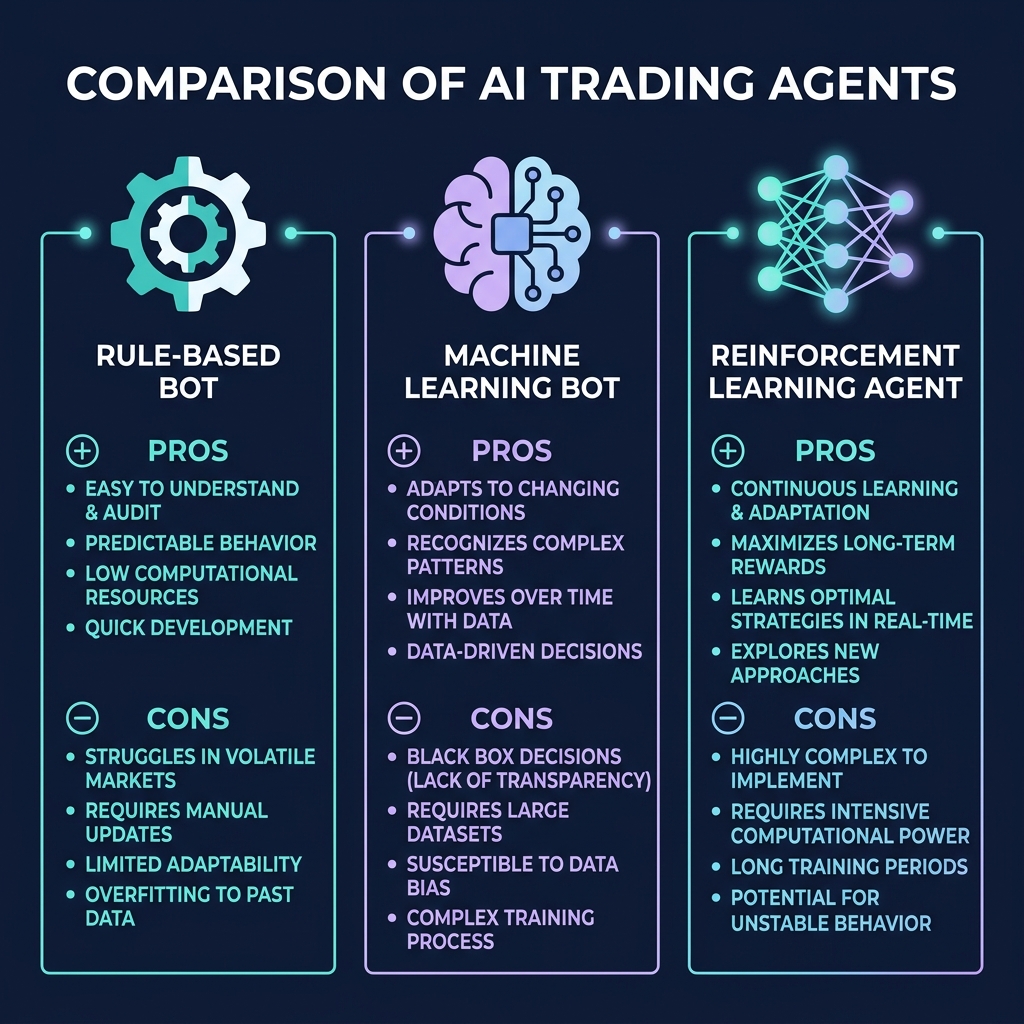
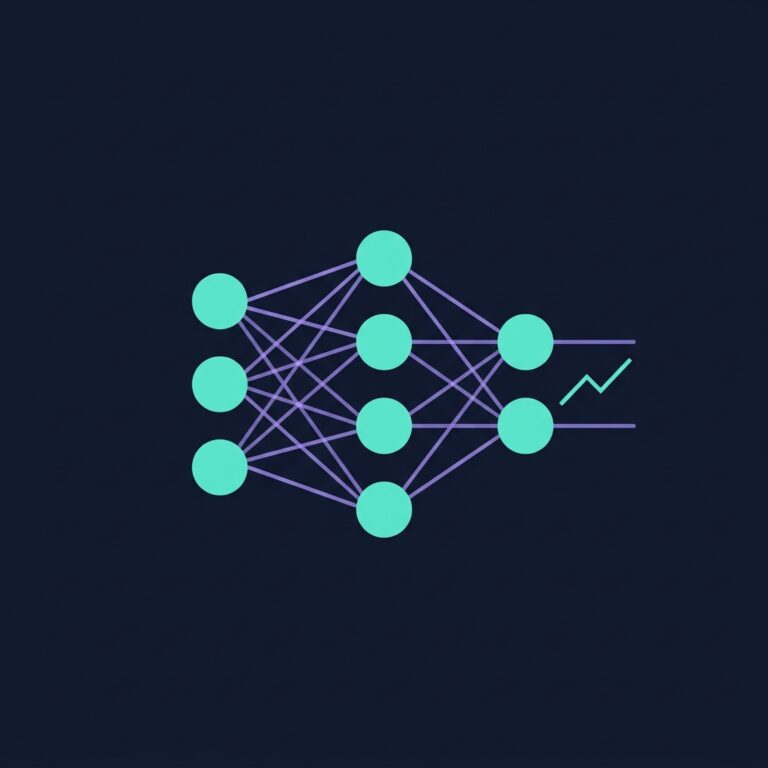
The crypto trading landscape in 2026 is defined by a fundamental shift: from rule-based bots that follow static instructions to AI agents that reason, plan, and adapt autonomously. This isn't a marginal upgrade — it's an architectural transformation in how automated systems interact with markets.
A trading bot circa 2023 operated like a vending machine: insert conditions, receive predetermined outputs. An AI agent in 2026 operates more like a junior analyst: it observes market conditions, formulates hypotheses, evaluates multiple data sources, and makes probabilistic decisions — all without explicit programming for every scenario.
This guide examines what AI agents actually are, how they work in crypto markets, what they can and cannot do, and why the most effective approach remains human-AI collaboration rather than full autonomy.
What Makes an AI Agent Different From a Bot?
Traditional Bots: Static Decision Trees
IF RSI < 30 AND price > EMA200 → BUY
IF price > entry + 5% → SELL
IF price < entry - 2% → STOP LOSS
These bots execute predefined rules. They don't understand why RSI below 30 matters — they simply check conditions and act. When market conditions change (a regime shift from trending to ranging), the bot continues executing the same rules, often to disastrous effect.
AI Agents: Dynamic Reasoning Systems
An AI agent follows a fundamentally different architecture:
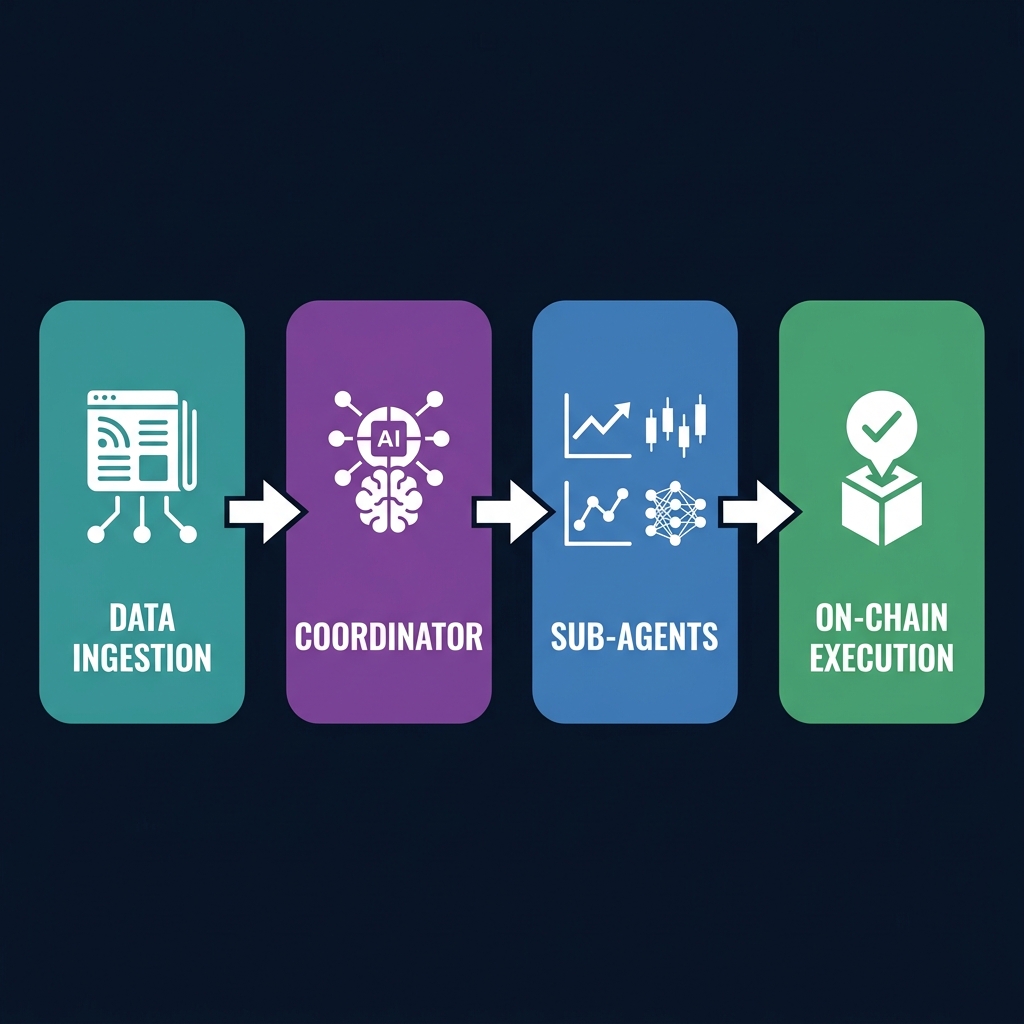
1. Perception — The agent ingests multiple data streams: price action, order book depth, on-chain metrics, social sentiment, funding rates, and macroeconomic indicators.
2. Reasoning — Using large language models (LLMs) or specialized ML models, the agent interprets the data in context. It doesn't just see that RSI is 28 — it understands that RSI at 28 during a bull market pullback has different implications than RSI at 28 during a bear market capitulation.
3. Planning — The agent formulates a multi-step action plan: "Current confluence score is high, whale accumulation is accelerating, but funding rates are elevated. Plan: wait for a funding rate reset, then enter with reduced size due to the leverage risk."
4. Execution — The agent acts on its plan, interacting with exchange APIs, DeFi protocols, or other agents.
5. Reflection — After execution, the agent evaluates the outcome and adjusts its future behavior. Did the trade work? Why or why not? What should change next time?
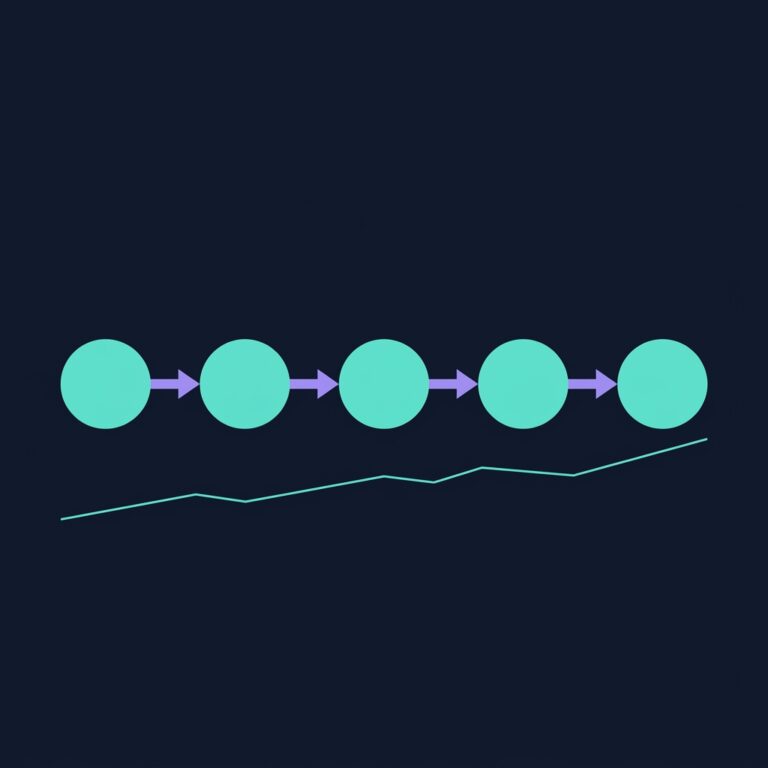
This perception-reasoning-planning-execution-reflection loop is what separates agents from bots.
The 2026 AI Agent Landscape
The rise of automated trading has created a tiered landscape of AI agent capabilities. Choosing the right crypto analytics platform matters — agents are only as good as the data infrastructure feeding them.
Tier 1: Signal Interpretation Agents
What they do: Process CoinXSight-style analytics (confluence scores, whale alerts, ASI scores) and translate them into actionable trade recommendations with reasoning.
Decision: "Signal is strong but macro event risk is high. Recommend 50% position size with wider stop loss to accommodate event volatility."
CoinXSight integration: The AI Signal Engine already provides the multi-layer analysis that these agents consume. The agent adds context awareness and position sizing intelligence.
Tier 2: Portfolio Management Agents
What they do: Manage entire portfolios across multiple assets, continuously rebalancing based on market conditions, risk parameters, and correlation analysis.
Capabilities:
Dynamic asset allocation based on market regime detection
Correlation-aware position sizing (reducing exposure when assets become correlated)
Automatic hedging when portfolio drawdown exceeds thresholds
Tax-loss harvesting optimization
Limitation: These agents excel at systematic portfolio management but struggle with narrative-driven markets. They can't evaluate whether a new meme coin trend has staying power — that requires human cultural judgment.
Tier 3: DeFi Strategy Agents
What they do: Navigate DeFi protocols autonomously — finding yield opportunities, managing LP positions, executing arbitrage, and compounding rewards.
Key operations:
Cross-protocol yield optimization (moving capital from lower to higher yield)
Impermanent loss monitoring with automatic position closure
Flash loan-assisted arbitrage across DEXs
Gas optimization and MEV protection
Risk: DeFi agents interact with smart contracts, which introduces exploit risk. A compromised contract can drain agent-managed funds instantly. Human oversight of contract approvals remains essential.
Tier 4: Autonomous Trading Agents (Experimental)
What they do: Make fully independent trading decisions from market analysis through execution, without human approval for individual trades.
Reality check: Despite the hype, Tier 4 agents remain experimental in 2026. The most successful implementations are used by institutional trading desks with:
Strict risk limits hardcoded outside the agent's control
Kill switches that halt trading if drawdown exceeds predetermined levels
Human review of all trades above a size threshold
Separate model validation teams that audit agent reasoning
No retail-accessible Tier 4 agent has demonstrated consistent profitability over a full market cycle.
Agent Architecture: How They're Built
The LLM Core
Most 2026 trading agents use a large language model (GPT-4+, Claude, Gemini) as their reasoning engine. The LLM processes natural language descriptions of market conditions and generates analysis in human-readable form.
Why LLMs work for trading analysis:
They can synthesize disparate data types (price action + news + on-chain + sentiment)
They produce reasoning chains that humans can audit and understand
They handle novel situations better than purely statistical models
Why LLMs are insufficient alone:
They hallucinate — generating confident but incorrect analysis
They lack real-time data access without tool integrations
They can't execute trades without API connections
Their training data has a cutoff, missing recent market dynamics
The Tool Layer
Agents augment their LLM core with specialized tools:
Episodic memory: Specific market events and their outcomes (e.g., "last time funding rates exceeded 0.05%, a liquidation cascade followed within 48 hours")
What AI Agents Can't Do (Yet)
1. Predict Black Swans
AI agents excel at analyzing patterns within known market regimes. They fail at predicting events that have no historical precedent — regulatory crackdowns, exchange collapses, protocol exploits. These events are, by definition, outside the training distribution.
2. Understand Narrative Quality
Can a new AI-crypto narrative sustain a multi-month rally, or will it fade in two weeks? This requires cultural intuition, understanding of developer ecosystems, and community sentiment analysis that goes beyond quantitative metrics. Human judgment remains superior here.
3. Navigate Illiquid Markets
In low-liquidity altcoin markets, agent trades can move prices significantly. The agent's own execution becomes a market signal, creating feedback loops that traditional models don't account for. Human traders with experience in thin markets handle this better.
4. Adapt to Regime Changes in Real Time
When market structure shifts fundamentally (e.g., from trending to ranging), agents relying on recent data patterns may take several losing trades before their models adapt. Experienced human traders often recognize regime changes faster through qualitative observation.
5. Manage Counterparty Risk
An agent doesn't evaluate whether an exchange is about to become insolvent, whether a DeFi protocol's team is trustworthy, or whether a token's smart contract has been audited. These qualitative risk assessments require human due diligence.
The Human-Agent Collaboration Model
The most effective approach in 2026 is not full autonomy but human-agent collaboration — the same philosophy behind CoinXSight's AI-assisted manual trading approach.
CoinXSight implements this collaboration model through its module architecture:
AI does the heavy computation — The ASI Score synthesizes technical, on-chain, and sentiment data into a single intelligence metric
Human makes the decision — The Deep Alpha module presents the analysis; the trader decides whether to act
Practice builds skill — Paper Trading lets you test your human-AI collaboration workflow without financial risk
Review improves the loop — Backtest validates whether your decision-making adds value over pure signal-following
Evaluating AI Agent Claims: A BS Detector
The AI agent space is flooded with marketing hype. Here's how to evaluate claims:
Red Flags
"Guaranteed returns" — No legitimate AI system guarantees returns. Markets are inherently uncertain.
"100% autonomous, zero human input" — Full autonomy without human oversight is a risk management failure, not an innovation.
"Trained on secret proprietary data" — Without verifiable backtests on out-of-sample data, this claim is unsubstantiated.
"Works in all market conditions" — No strategy works in all conditions. Honest systems specify their optimal market regime.
"No coding required to build your own agent" — While no-code agent builders exist, effective agents still require deep trading knowledge to configure properly.
Green Flags
Transparent methodology — The system explains how decisions are made
Verifiable track record — Live trading results (not just backtests) with realistic transaction costs
Clear risk parameters — Defined maximum drawdown, position limits, and kill switches
Human oversight integration — The system is designed for human-in-the-loop operation
Honest about limitations — Acknowledges what the agent can't do
Building Your First Agent Workflow (Without Code)
You don't need to build a custom AI agent to benefit from agentic thinking. CoinXSight's module system already provides an agent-like workflow:
The Manual Agent Loop
Every trading session, run this loop:
Perceive → Open AI Terminal. Check market regime, pre-trade checklist, sentiment summary
Analyze → Open Alpha Hunter. Review active signals on your timeframes
Confirm → Open Deep Alpha for top signals. Check Confluence Score ≥ 7
Decide → Apply risk management rules. Calculate position size
Execute → Place trade in Paper Trading (or live exchange)
Reflect → After trade closes, review what worked and what didn't
This is exactly what an AI agent does — you're just performing each step manually, building the intuition and judgment that no agent can replicate.
Summary
AI agents represent a genuine evolution from static trading bots to dynamic, reasoning systems. In 2026, they excel at data synthesis, pattern recognition, and systematic execution — but they still fall short on narrative judgment, black swan navigation, and counterparty risk assessment.
The practical takeaway: Don't try to replace yourself with an agent. Instead, use a crypto analytics platform like CoinXSight to handle the computational heavy lifting while you provide the strategic judgment, risk management, and contextual awareness that agents can't replicate.
The traders who thrive in 2026 aren't the ones who built the best autonomous bot — they're the ones who built the most effective human-AI collaboration workflow.