Exchange Flow Analysis: How to Track Crypto Moving In and Out of Exchanges
Master exchange flow analysis for crypto trading. Learn how to interpret exchange inflows, outflows, and net flow to predict market direction and spot accumulation phases.
DP
David ParkChief On-Chain Data Analyst·May 17, 2026 · 9 min read · Updated Oct 6
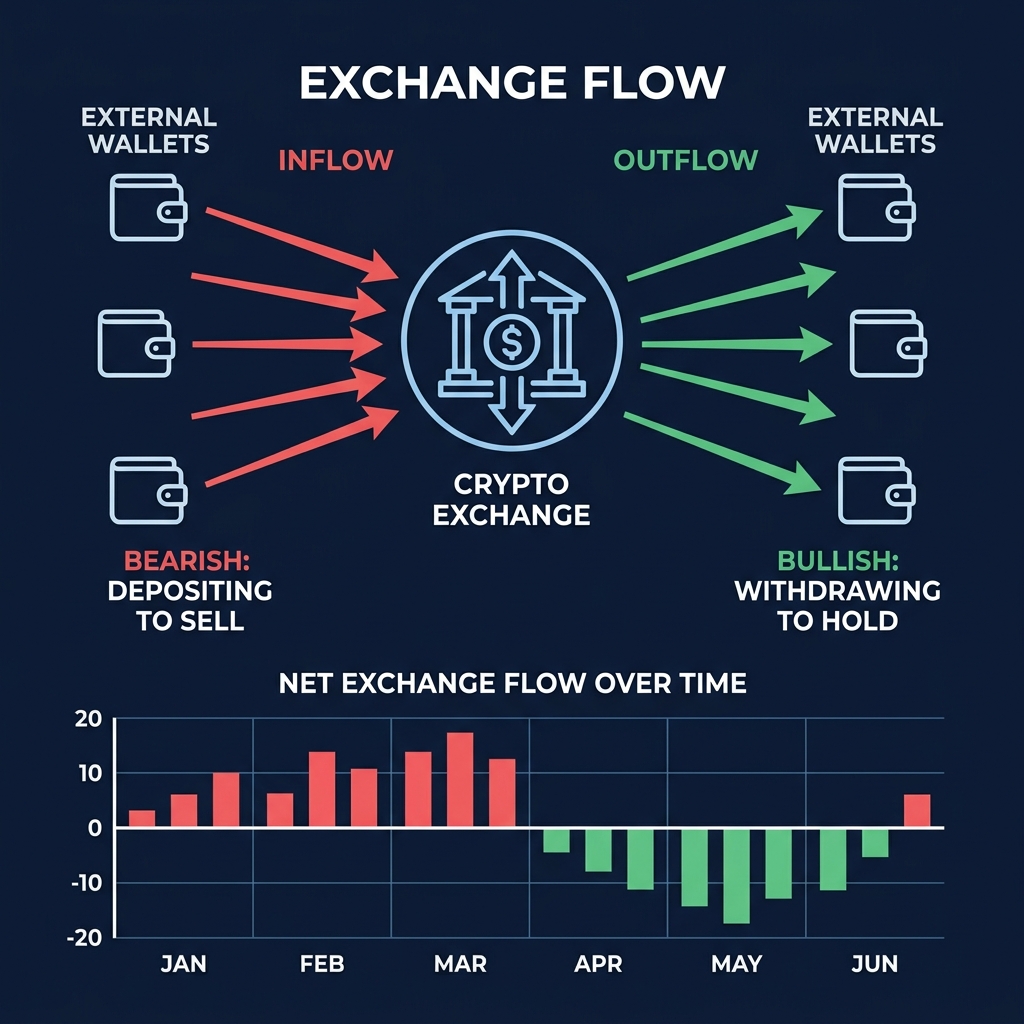
Exchange flows measure the movement of cryptocurrency between centralized exchanges (like Binance, Coinbase, Bybit) and private wallets. This is one of the most powerful on-chain metrics available because it reveals the intentions of holders in a way that price charts cannot.
The logic is straightforward:
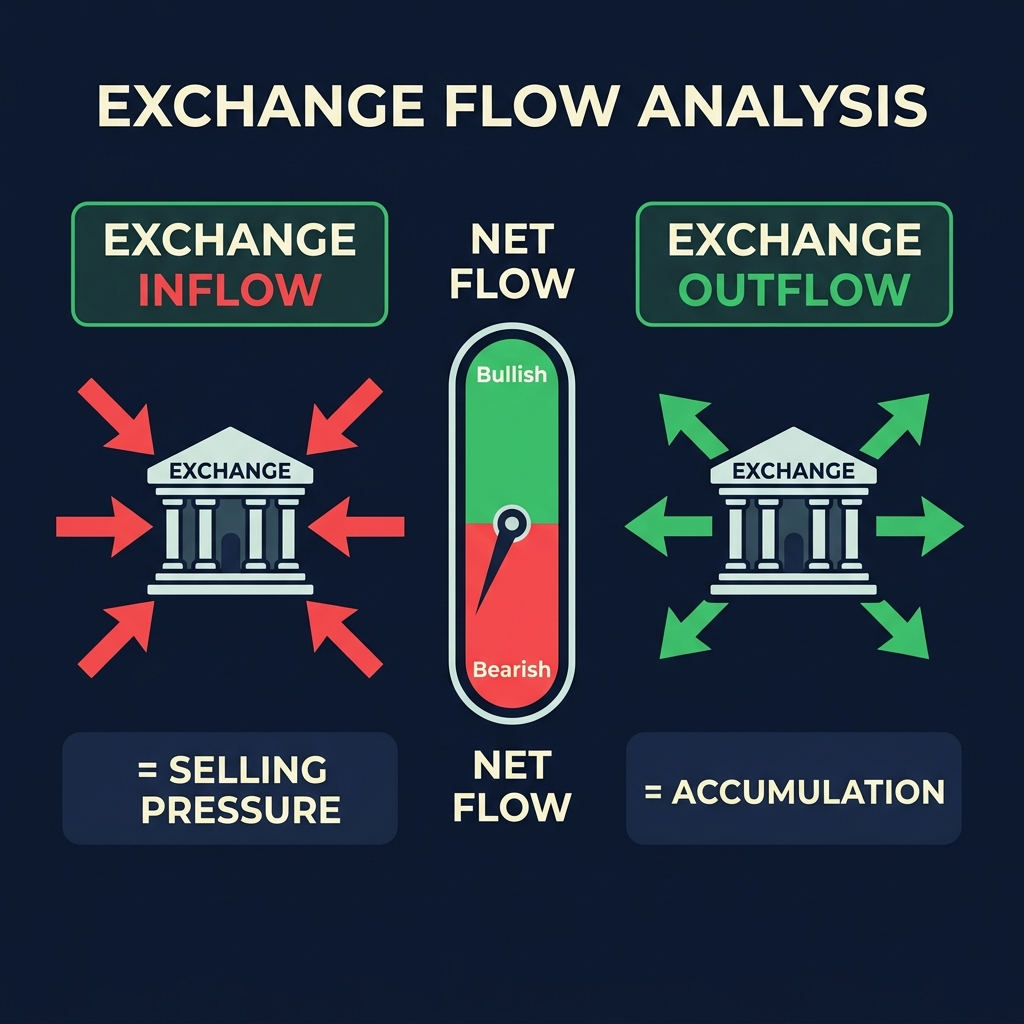
Inflows (coins moving TO exchanges): Holders are depositing coins on exchanges, likely preparing to sell. This increases available supply and creates selling pressure.
Outflows (coins moving FROM exchanges): Holders are withdrawing coins to private wallets for long-term storage. This reduces available supply and is typically bullish.
Net flow: The difference between inflows and outflows. Negative net flow (more outflows) is bullish. Positive net flow (more inflows) is bearish.
Exchange flow analysis works because the primary reason people move crypto to an exchange is to sell or trade it, and the primary reason people move crypto off an exchange is to hold it securely long-term.
Why Exchange Flows Are the Most Reliable On-Chain Metric
Among all on-chain indicators covered in the On-Chain Analysis Beginner Guide, exchange flows have the strongest historical correlation with price direction. The reason is that exchange reserves directly measure supply availability.
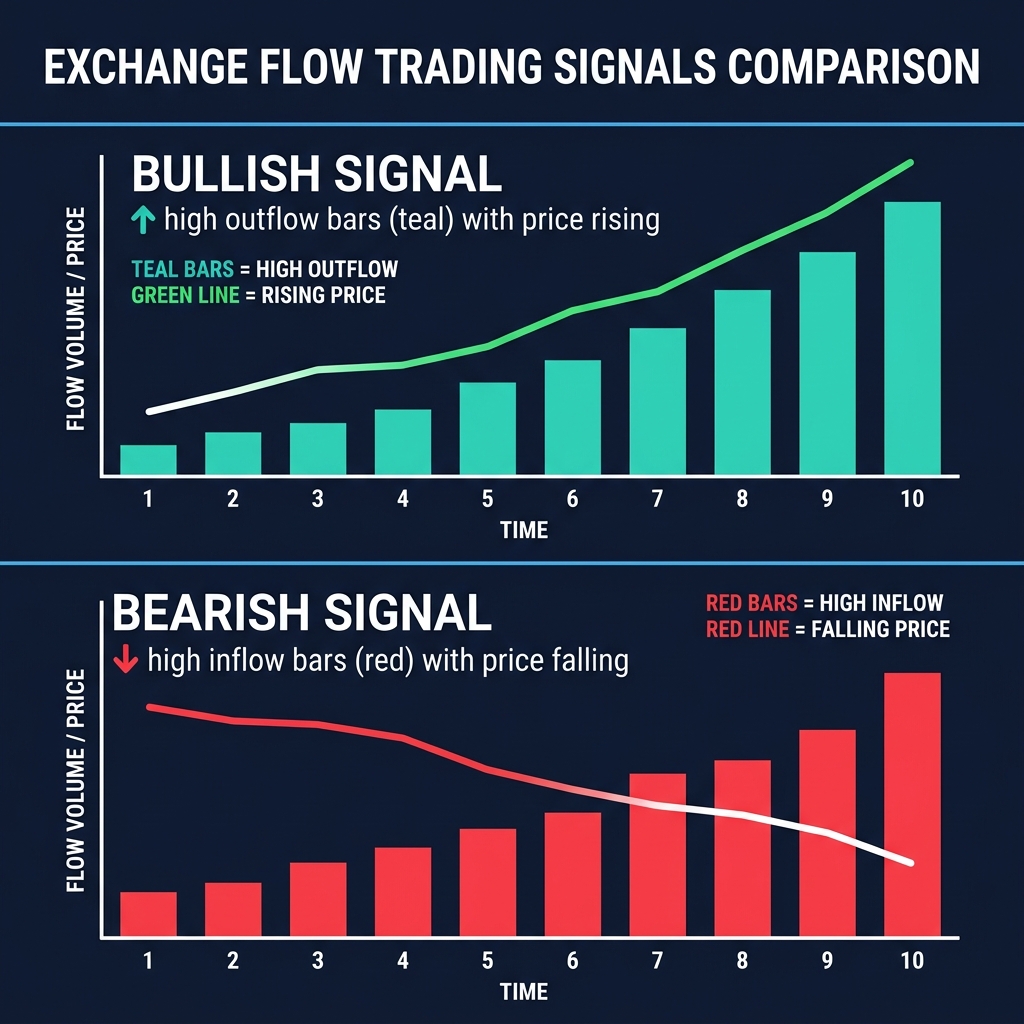
Supply economics: When exchange reserves decrease, the available supply for selling shrinks. If demand remains constant or increases while supply decreases, prices must rise. Conversely, when exchange reserves increase, more supply becomes available for selling, creating downward pressure.
Historical precedent: Before every major Bitcoin rally in 2020-2024, exchange reserves showed a sustained decline over weeks to months. Before every major correction, exchange inflows spiked as holders moved coins to exchanges in preparation for selling.
Reading Exchange Inflow Signals
This is where crypto technical analysis becomes practical — a quality crypto analytics platform will display these signals in real time, helping you act on setups as they form.
Normal Inflows
Small, consistent inflows from many wallets are normal exchange activity — traders depositing funds for active trading, users converting crypto to fiat, etc. This background noise is not a significant signal.
Warning Signs: Large Inflow Spikes
Single wallet large deposits:
When a whale deposits 500+ BTC to an exchange in a single transaction, it creates immediate sell-side pressure. This is one of the signals CoinXSight's Whale Stream tracks in real-time.
How to assess the risk:
Check if the deposit went to a known OTC desk (less market impact) vs. a spot trading address (direct sell pressure)
Check the timing — deposits during low-volume hours (Asian session) suggest the whale may be trying to sell discreetly
Check if multiple whale wallets are depositing simultaneously — coordinated inflows suggest significant selling is planned
Cluster inflows from multiple wallets:
When dozens of wallets simultaneously deposit to exchanges, it often signals a broader sentiment shift. This pattern appears before coordinated sell events and market corrections.
Miner/validator inflows:
When miners (Bitcoin) or validators (Ethereum) move newly earned rewards to exchanges, it increases supply. Sustained miner selling during price rallies can cap upside. Track miner exchange deposits as a supply-side indicator.
Reading Exchange Outflow Signals
Bullish Outflow Patterns
Steady, sustained outflows over weeks:
The most bullish exchange flow pattern is not a single large withdrawal but a consistent trend of net outflows over 2-4 weeks. This indicates systematic accumulation by multiple participants, not just one whale moving funds.
Large outflows to known cold storage:
When large amounts move from exchanges to wallets identified as institutional cold storage (Grayscale, MicroStrategy-linked wallets, known custody solutions), it's strong evidence of long-term accumulation with no intention to sell.
Post-crash outflows:
After significant market drops (20%+ corrections), exchange outflows increasing suggest that buyers view the dip as an opportunity and are moving purchased coins to secure storage. This is one of the strongest bottoming signals.
Neutral Outflow Patterns
Exchange to exchange transfers:
Not all outflows are bullish. Sometimes coins move from one exchange to another. This is neutral because the coins remain available for selling — just on a different platform. CoinXSight's Smart Money Flow algorithm filters these inter-exchange transfers to provide cleaner net flow data.
DeFi protocol deposits:
Coins moving from centralized exchanges to DeFi protocols (staking, lending, liquidity pools) are generally bullish because they remove supply from the immediately tradable market. However, coins in DeFi can be quickly unstaked and sold, so this is moderately bullish rather than strongly bullish.
Net Flow Analysis: The Complete Picture
Net flow combines inflows and outflows into a single metric:
Net Flow = Exchange Inflows – Exchange Outflows
Net Flow
Interpretation
Action
Strong negative (outflows >> inflows)
Active accumulation, supply decreasing
Bullish — look for entries
Slightly negative
Gradual accumulation, healthy trend
Mildly bullish — trend intact
Neutral (~zero)
Balance between buying and selling
No clear signal — use other indicators
Slightly positive
Minor distribution beginning
Caution — monitor for acceleration
Strong positive (inflows >> outflows)
Active distribution, sell pressure building
Bearish — reduce exposure or hedge
Net Flow Timeframes
Hourly net flow: Noisy, useful only for detecting sudden whale movements
Daily net flow: Good for short-term trading signals
Weekly net flow: Best for identifying accumulation/distribution phases
Monthly net flow: Macro trend indicator, useful for long-term investors
For day-to-day trading decisions, focus on the 7-day rolling net flow. For position trading and portfolio management, use the 30-day rolling average.
Building an Exchange Flow Trading Strategy
The Accumulation Entry Strategy
Signal: 14-day rolling net flow turns negative (sustained outflows) while price is in a consolidation range or at support.
Entry logic:
Identify a token showing sustained exchange outflows for 7+ consecutive days
Check that CoinXSight's ASI score is above 60 via the AI Analysis module
Enter a position at support with a stop-loss below the support level
Target: hold until net flow turns positive (distribution begins) or a major resistance level is reached
Why it works: Sustained exchange outflows during consolidation indicate that informed buyers are accumulating at current prices. When the accumulation phase ends and demand returns to the market, price typically breaks upward from the range.
The Distribution Exit Strategy
Signal: 14-day rolling net flow turns positive (sustained inflows) while price is at resistance or in a mature rally.
Exit logic:
Monitor tokens you're holding for increasing exchange inflows
If net flow turns positive for 5+ consecutive days, begin reducing position size
If combined with RSI above 70 (overbought), exit more aggressively
Complete exit if a single large whale deposit (top-10 wallet) hits an exchange
Why it works: Distribution phases (coins moving to exchanges) often precede major corrections because the increasing sell-side supply eventually overwhelms buyer demand.
Exchange Flow Across Different Crypto Assets
Bitcoin Exchange Flows
Bitcoin exchange flows are the most reliable because BTC has the longest history, deepest liquidity, and most transparent on-chain data. Bitcoin exchange reserves have been declining since 2020, reflecting the long-term trend of institutional accumulation and self-custody adoption.
Ethereum Exchange Flows
Ethereum flows are complicated by DeFi activity. Large ETH outflows might go to DeFi protocols rather than cold storage, making interpretation less straightforward. Focus on flows to known custody wallets rather than total outflows.
Altcoin Exchange Flows
Altcoin exchange flows are noisier and less reliable because:
Lower liquidity means smaller transactions create larger percentage moves
Many altcoins have concentrated ownership (top 10 wallets hold 50%+)
Cross-chain bridge activity can create misleading flow signals
For altcoins, combine exchange flow analysis with the Discovery module which filters for genuine demand signals versus noise.
Stablecoin Exchange Flows
Stablecoin flows provide a unique perspective:
USDT/USDC flowing TO exchanges: Buyers are preparing to purchase crypto → bullish for overall market
USDT/USDC flowing FROM exchanges: Capital exiting crypto market → bearish for overall market
Stablecoin exchange reserves increasing is one of the most reliable leading indicators for upcoming buying pressure across the entire crypto market.
Common Mistakes in Exchange Flow Analysis
1. Reacting to Single Transactions
One large deposit or withdrawal is not a trend. Always look for sustained patterns over 3-7+ days. Individual transactions can be internal exchange operations, OTC settlements, or security-related wallet rotations.
2. Ignoring the Context
Exchange outflows during a strong uptrend are bullish (accumulation). Exchange outflows during a downtrend might be neutral (holders simply moving to cold storage in panic, not necessarily buying). Always consider the broader market context.
3. Not Distinguishing Exchange Types
A whale depositing to Coinbase Pro (institutional trading) carries different implications than depositing to Binance spot (retail trading). Institutional exchange deposits may indicate OTC deals rather than market selling.
4. Conflating Total Reserves with Net Flow
Exchange reserves can decrease because of exchange security practices (moving coins to cold wallets) rather than customer withdrawals. Focus on customer deposit/withdrawal flows rather than total exchange wallet balances.
Frequently Asked Questions
How fast do exchange flows affect price?
Exchange inflows don't cause immediate price drops. After depositing, sellers may wait hours, days, or weeks to execute. Think of inflow spikes as "potential energy" — the selling hasn't happened yet, but the capability is staged. Monitor the order book depth after large inflows for confirmation.
Are exchange flows more reliable than technical indicators?
Exchange flows provide a different type of information. Technical indicators show price momentum and patterns. Exchange flows show supply/demand dynamics. Neither is "more reliable" — the strongest signals come from combining both. CoinXSight's ASI score integrates both data types automatically.
Which exchanges should I track?
Focus on the top 5-10 exchanges by volume: Binance, Coinbase, Bybit, OKX, and Kraken account for the vast majority of crypto trading volume. Flows to smaller, less-regulated exchanges may also signal specific trading intentions.
Can I get exchange flow data for free?
Basic exchange reserve data is available through free platforms. Granular flow analysis (individual transaction tracking, wallet attribution, real-time alerts) requires professional tools. CoinXSight's Whale Stream provides real-time exchange flow monitoring integrated with its AI analysis system.
Do exchange flows work for DeFi tokens?
DeFi tokens traded primarily on decentralized exchanges (Uniswap, Jupiter) don't have traditional "exchange flow" metrics because there's no centralized deposit/withdrawal process. For DeFi-native tokens, focus on liquidity pool depth changes and wallet concentration instead.
Summary
Exchange flow analysis is one of the most actionable on-chain metrics available. By tracking whether coins are moving to exchanges (potential selling) or away from exchanges (accumulation), you gain insight into the supply dynamics that ultimately drive price direction.
The strongest signals come from sustained net flow trends over 7-14 days, combined with technical analysis confirmation and CoinXSight's AI scoring. Individual large transactions are worth monitoring but should not drive trading decisions in isolation.
Start by tracking Bitcoin exchange net flow weekly, then expand to Ethereum and specific altcoins in your portfolio. Use CoinXSight's Whale Stream for real-time alerting on significant exchange movements.