Learn how to identify, track, and analyze smart money wallet addresses on-chain. Understand address clustering, transaction pattern analysis, and how to build a watchlist of high-alpha wallets using CoinXSight.
DK
Daniel KimHead of Curriculum & Trader Development·May 19, 2026 · 13 min read · Updated Oct 6
Wallet forensics is the practice of analyzing blockchain transactions to identify who is behind specific addresses, what they're doing, and what their behavior signals about future market movements. Unlike traditional financial markets where institutional activity is reported with delays, blockchain transactions are public and real-time — creating a unique intelligence advantage for traders who know how to read them.
The core insight: blockchains are transparent ledgers. Every transaction from every wallet is permanently recorded. When a whale accumulates $50 million worth of ETH across 12 wallets over three weeks, that activity is visible — if you know where to look.
The Smart Money Hierarchy
Not all wallets carry equal signal value. Understanding the hierarchy helps you prioritize which addresses to track:
Signal value: Very high for macro direction. When institutional wallets accumulate, it suggests long-term bullish conviction. When they distribute to exchanges, it signals potential selling.
How to identify: These wallets typically have:
Very large balances ($100M+)
Infrequent but large transactions
Interactions with OTC desks rather than open market
Known labels from on-chain analytics providers
Tier 2: Profitable Trader Wallets
Who: Individual traders or small funds with consistently profitable track records
Signal value: High for specific token entries and exits. These wallets demonstrate proven skill in timing markets.
How to identify:
Realized profit/loss ratio consistently above 2:1
Win rate above 60% across 50+ trades
Active across multiple market conditions (not just one bull run)
Position sizes between $50K-$5M
Tier 3: Insider/Early Wallets
Who: Project team members, early investors, seed round participants
Signal value: Very high for specific tokens. Insider selling often precedes negative news or token performance decline.
How to identify:
Received tokens directly from project deployment/vesting contracts
Hold tokens from genesis or very early blocks
Often interact with project governance contracts
Tier 4: MEV Bots and Arbitrage Wallets
Who: Automated systems extracting value from transaction ordering
Signal value: Low for directional trading, but useful for understanding market microstructure and identifying tokens with unusual activity.
How to identify:
Extremely high transaction frequency (hundreds per day)
Interact primarily with DEX router contracts
Execute sandwich attacks or back-running patterns
Often have near-zero long-term holdings
CoinXSight's Smart Money Flow module automatically classifies wallets into these tiers, saving you hours of manual analysis.
Transaction Pattern Analysis
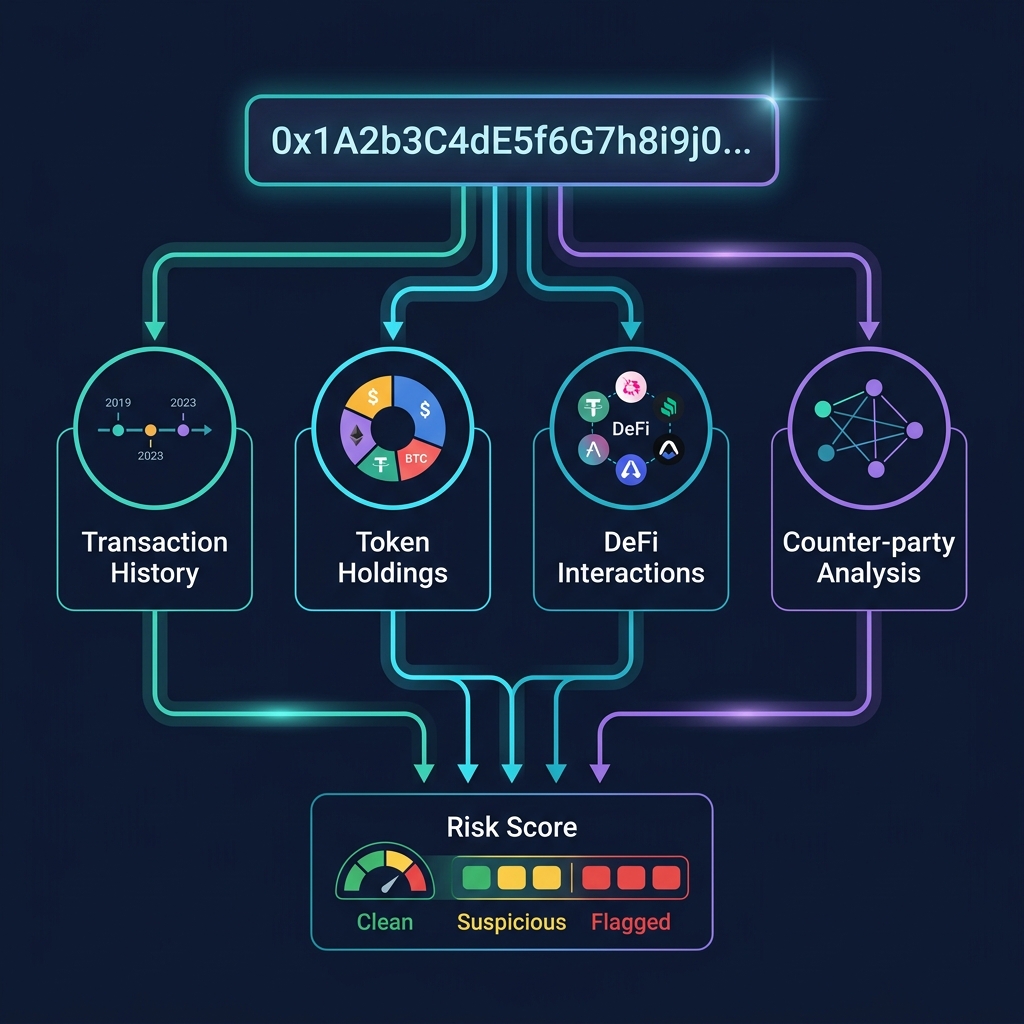
Once you've identified a wallet worth tracking, the next step is understanding its behavior patterns:
Accumulation Patterns
Slow accumulation: The wallet buys consistently over days or weeks in small increments. This is the strongest bullish signal — it indicates conviction without urgency.
Look for: Regular purchases of similar size across multiple transactions
Timeframe: 5-30 days of consistent buying
Signal strength: Very high when combined with on-chain fundamentals
Exchange withdrawal accumulation: The wallet withdraws tokens from exchanges to self-custody. This removes supply from liquid markets.
Look for: Repeated withdrawals from exchange hot wallets
Signal: Tokens moving to cold storage = long-term holding intention
Distribution Patterns
Exchange deposit distribution: The wallet sends tokens to exchange deposit addresses. This precedes selling.
Look for: Large transfers to known exchange hot wallets
Warning: A single large deposit doesn't always mean selling — the wallet may be repositioning or providing collateral
Confirm with: Check if tokens are subsequently sold on the exchange's order book
Multi-hop distribution: Sophisticated actors distribute through multiple intermediate wallets before reaching exchanges, obscuring the trail.
Look for: New wallets receiving tokens → immediately forwarding to another new wallet → eventually reaching an exchange
Signal: This deliberate obfuscation suggests the actor doesn't want their selling to be noticed
DeFi Interaction Patterns
Collateral deposit: The wallet deposits tokens as collateral on lending protocols (Aave, Compound). This can indicate:
Borrowing stablecoins to buy more crypto (leveraged long)
Borrowing other tokens to short (bearish signal)
Liquidity provision: The wallet adds tokens to DEX liquidity pools. This can indicate:
Earning yield on tokens they plan to hold long-term (neutral/bullish)
Distributing tokens gradually through LP withdrawals (potentially bearish)
Building a Smart Money Watchlist
Step 1: Source High-Value Addresses
From CoinXSight's Whale Tracking module:
Identify wallets flagged as "smart money" by the platform's AI scoring
Filter by wallets with consistently profitable histories
From on-chain events:
When a token makes an unusual move, trace back the early buyers
Identify wallets that accumulated before the move and add them to your list
From known entity labels:
Major VCs and funds have known wallet addresses
DAO treasuries and protocol team wallets are publicly documented
Step 2: Classify and Prioritize
Create a tiered watchlist:
Priority
Criteria
Check frequency
A-list (5-10 wallets)
Proven profitability, large size, relevant to your trading assets
Daily
B-list (20-30 wallets)
Institutional, less frequent activity
2-3x per week
C-list (50+ wallets)
Interesting but unproven, early stage
Weekly scan
Step 3: Set Alerts
Configure alerts for key activities from your A-list wallets:
Any exchange deposit > $100K
Any new token accumulation
Any interaction with new DeFi protocols
Any large transfer to unknown addresses
CoinXSight's alert system can automate this monitoring.
Step 4: Validate Before Acting
Never blindly copy a whale's trades. Always validate with additional analysis:
Check the wallet's recent track record — Has this wallet been profitable in the last 30 days?
Understand the context — Is this a new position or an addition to an existing one?
Assess your own analysis — Does the whale's trade align with your technical and on-chain analysis?
Size appropriately — A whale risking 1% of their $100M portfolio is $1M. Your equivalent 1% is much smaller. Match the risk percentage, not the dollar amount.
Address Clustering Techniques
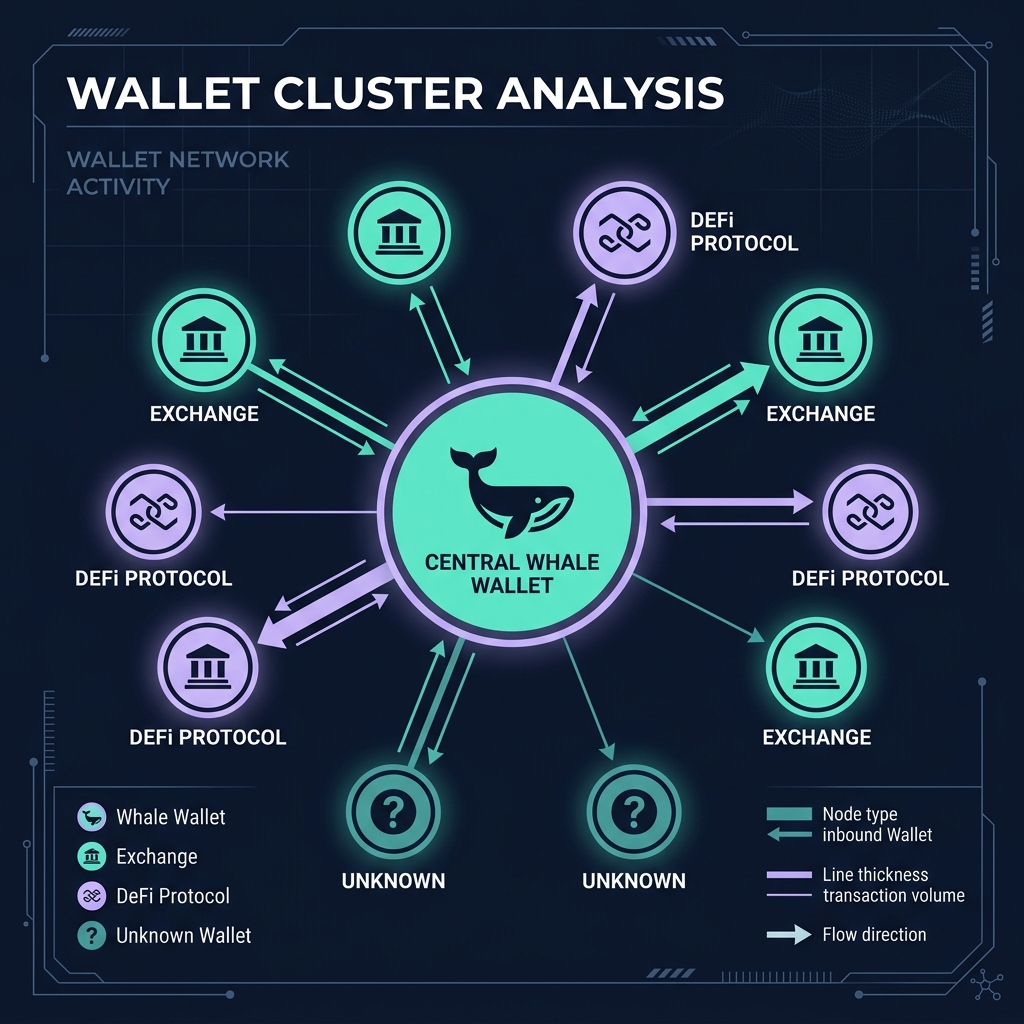
Advanced wallet forensics involves clustering — grouping multiple addresses that likely belong to the same entity.
Common Ownership Heuristics
1. Co-spending: If two addresses provide inputs to the same transaction, they're very likely controlled by the same entity.
2. Change address detection: When a transaction has a "change" output, the change address is likely owned by the sender.
3. Temporal correlation: Addresses that consistently transact within seconds of each other, especially in coordinated patterns, likely share ownership.
4. Similar balance patterns: Addresses that receive identical amounts from the same source, then move funds in synchronized patterns, suggest systematic splitting.
Why Clustering Matters for Trading
Clustering reveals the true scale of an entity's activity. A whale might spread $50M across 50 wallets to avoid detection. Without clustering, each wallet looks like a $1M fish. With clustering, you see the $50M whale.
CoinXSight's Smart Money Concepts analysis incorporates clustering to provide more accurate whale activity metrics than raw per-address tracking.
Practical Forensics Workflow
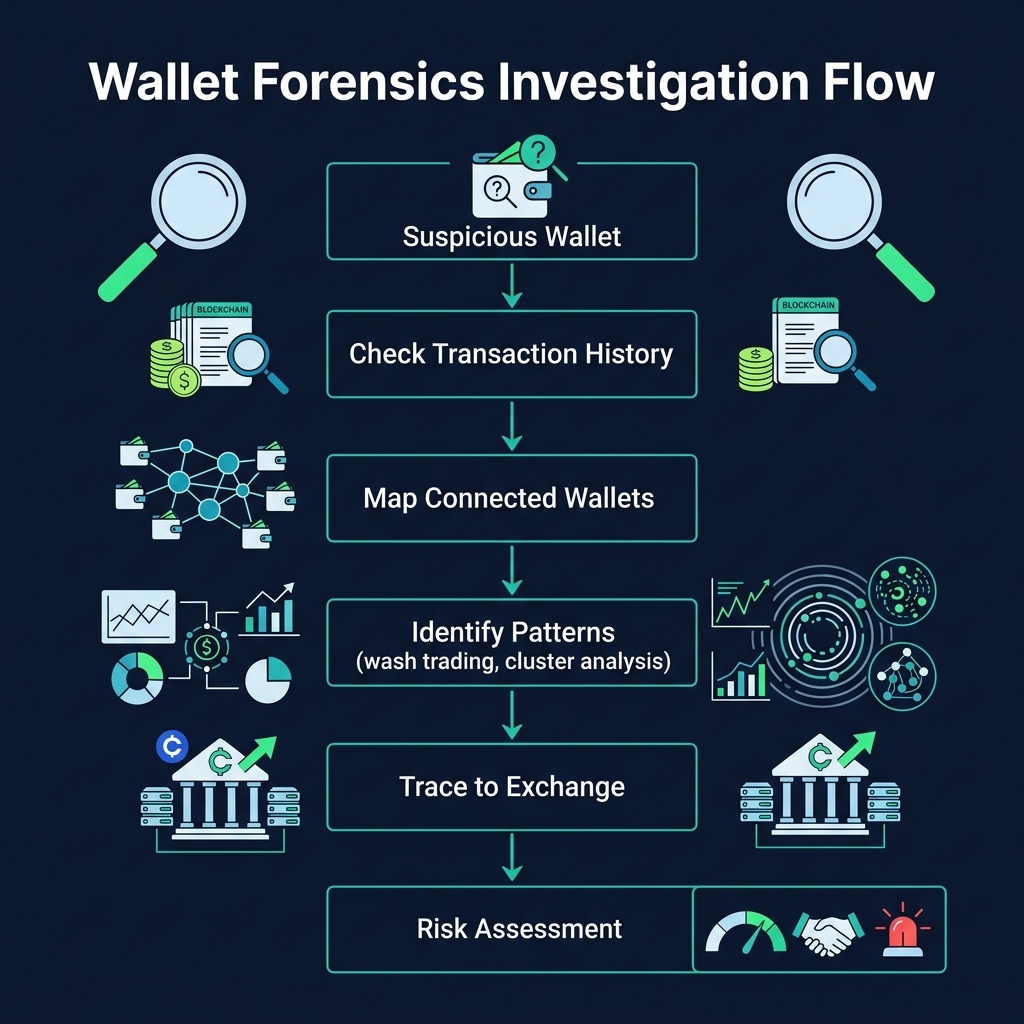
Here's a step-by-step workflow for when a token on your watchlist makes an unusual move:
1. Identify the move — Token XYZ pumps 15% in 2 hours without obvious news
2. Check exchange flows — Use CoinXSight's Exchange Flow module:
Large withdrawals before the pump = informed buying
Large deposits after the pump = potential distribution
3. Trace early buyers — Look for wallets that accumulated in the 24-72 hours before the move:
Did any A-list wallets buy? → High-confidence signal
Are the early buyers new wallets? → Potential insider trading or coordinated pump
4. Analyze the source of funds — Where did the early buyers get their capital?
From exchanges (fresh capital inflow) → Genuine new demand
From other DeFi protocols (rotating capital) → Rotation, not new money
From recently funded new wallets → Suspicious, potentially coordinated
5. Assess distribution risk — Are early buyers starting to sell?
Exchange deposits increasing → Distribution phase, be cautious
No movement from early buyers → Holders are patient, potentially more upside
6. Decision — Based on the forensics:
Early buyers are A-list whales still holding + exchange flows positive → Consider entry
Early buyers are unknown wallets now depositing to exchanges → Avoid, likely pump-and-dump
Common Forensics Mistakes
Mistake 1: Following Without Context
A whale's BTC purchase might be a hedge against a large short position you can't see. Without understanding the full portfolio context, you're only seeing half the picture.
Mistake 2: Delayed Reaction
By the time you identify a whale's accumulation pattern, the price may have already moved significantly. The forensics advantage is in identifying patterns early — during the accumulation phase, not after the price spike.
Mistake 3: Ignoring Wallet History
A wallet that's been profitable for 2 years has a very different signal quality than a wallet created last month. Always check the wallet's historical performance before adding it to your watchlist.
Mistake 4: Confusing Correlation with Causation
Just because a whale bought and the price went up doesn't mean the whale caused the price increase. They might have been lucky, or other factors drove the move. Evaluate wallet performance over 50+ trades, not individual wins.
Summary
Wallet forensics transforms the blockchain's transparency from raw data into actionable trading intelligence. By identifying, classifying, and tracking smart money wallets, you gain insight into what the most informed market participants are doing — often before the broader market reacts.
Key principles:
Build a tiered watchlist prioritizing proven, profitable wallets
Analyze transaction patterns (accumulation, distribution, DeFi interactions) for directional signals
Use clustering to reveal the true scale of entity activity
Always validate whale activity with your own technical and on-chain analysis
Never blindly copy trades — match risk percentage, not dollar amounts
CoinXSight's Whale Tracking and Smart Money Flow modules automate much of this forensics work, surfacing the highest-signal wallet activities for your review.