RWA Token Surge: $8.4B Tokenized Stocks and What It Means for Crypto
Tokenized real-world assets hit $8.4B in monthly transfers, surging 105%. Understand what this RWA boom means for crypto markets, which tokens benefit, and how to position your portfolio.
CB
Chloe BennettMarket Intelligence & Narrative Lead·Jul 10, 2026 · 13 min read · Updated Oct 6
In July 2026, a quiet revolution is happening on-chain. Tokenized real-world assets (RWAs) hit $8.4 billion in monthly transfers — a 105% month-over-month surge. Robinhood expanded RWA adoption, and Circle received OCC approval for USDC infrastructure.
This isn't just a DeFi trend. It's the bridge between traditional finance and crypto — and it's reshaping how institutions interact with digital assets.
In this guide, we break down what RWA tokenization actually means, which assets are being tokenized, the key protocols driving this surge, and what it means for your crypto portfolio in 2026.
What Are Real-World Assets (RWA)?
Real-World Asset tokenization is the process of converting ownership of physical or traditional financial assets into digital tokens on a blockchain.
Common RWA Categories:
Asset Type
Examples
Current Market Size
Growth Rate
US Treasuries
Tokenized bonds
$1.2B
+45% QoQ
Private Credit
Real estate loans, invoices
$2.1B
+60% QoQ
Equities/Stocks
Tokenized shares
$1.8B
+105% MoM
Commodities
Gold, silver, oil
$0.9B
+30% QoQ
Real Estate
Property tokens
$0.6B
+25% QoQ
Carbon Credits
ESG tokens
$0.4B
+80% QoQ
Other
Art, royalties, IP
$1.4B
+15% QoQ
Total RWA market: ~$8.4B in monthly transfer volume, growing exponentially
How RWA Tokenization Works
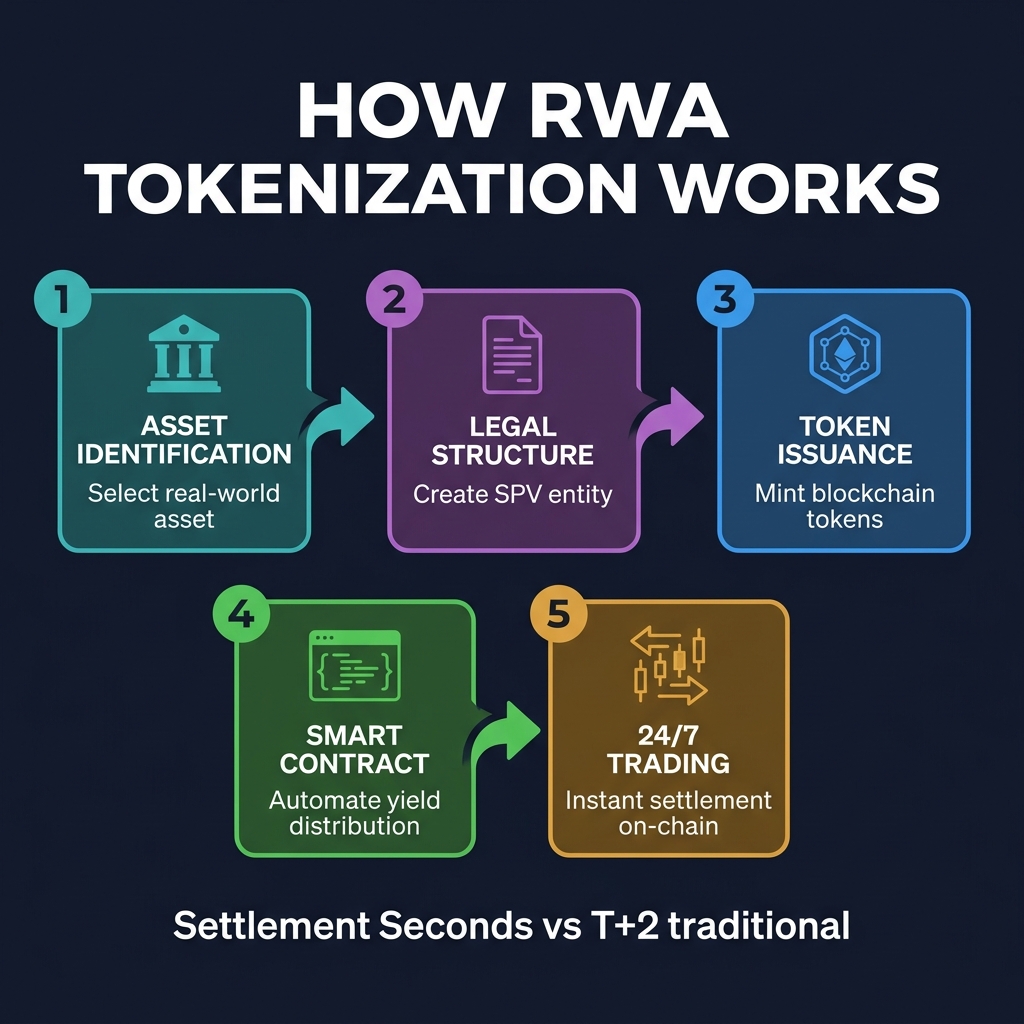
The basic process involves:
Asset Identification: A real-world asset is identified for tokenization (e.g., a US Treasury bond, a real estate property)
Legal Structure: A legal entity creates a special purpose vehicle (SPV) that holds the asset
Token Issuance: The SPV issues blockchain tokens representing ownership stakes
Smart Contract: Automated distribution of yields, dividends, or interest to token holders
Trading & Settlement: Tokens trade on-chain 24/7 with instant settlement
Why This Matters: Traditional markets settle in T+2 (2 business days). RWA tokens settle in seconds. This efficiency gain is why institutions are flocking to tokenization.
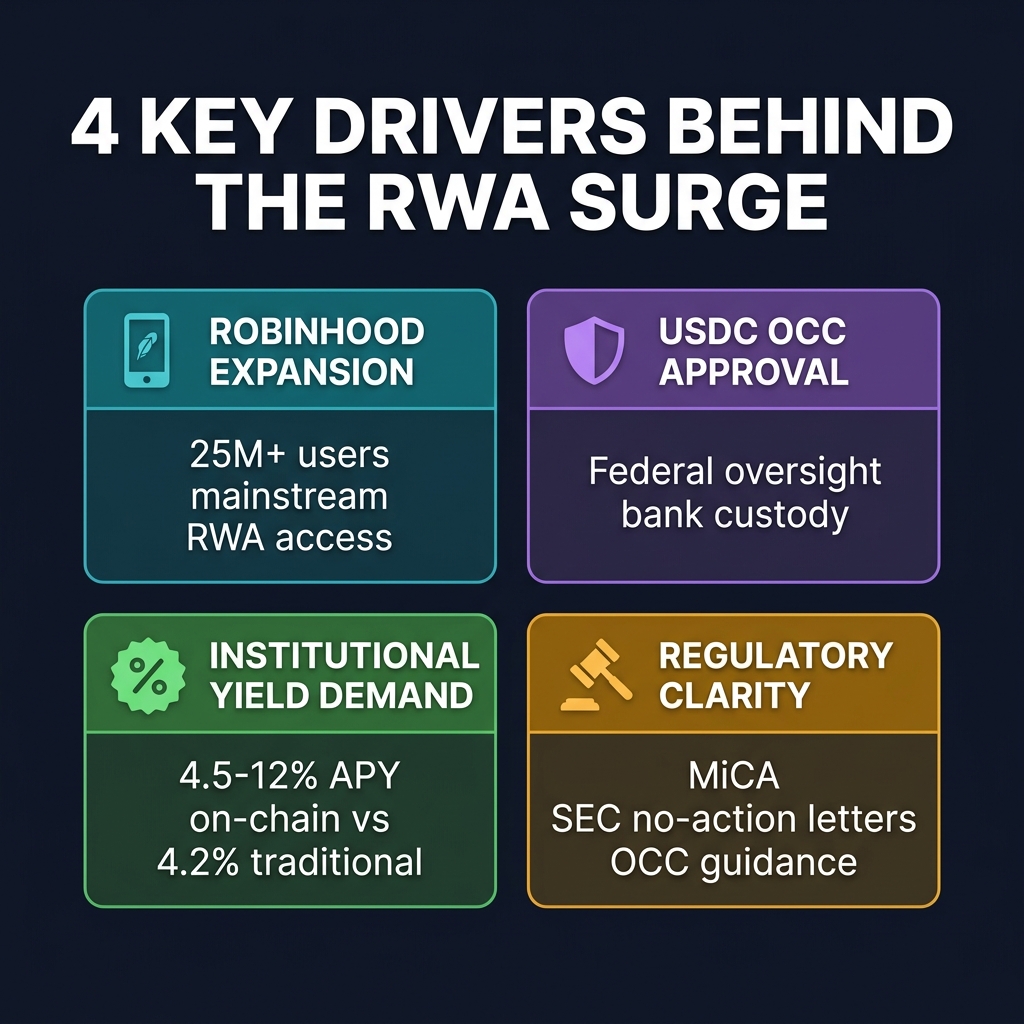
The $8.4B Surge: What's Driving It
1. Robinhood Expands RWA Adoption
Robinhood, with 25+ million users, expanded its RWA offerings in Q2 2026, allowing users to trade tokenized stocks directly from their app. This is significant because:
Mainstream access: Millions of retail users now have RWA exposure without leaving their preferred platform
Liquidity injection: Robinhood's order flow brings institutional-grade liquidity to tokenized assets
Network effect: As more users trade RWAs, protocols gain TVL and attract more issuers
2. USDC OCC Approval
Circle's USDC received OCC (Office of the Comptroller of the Currency) approval, placing USDC infrastructure under federal oversight. For RWA, this means:
USDC as settlement layer: Tokenized assets can now settle in a federally-regulated stablecoin
Bank custody: Banks can now custody USDC, enabling institutional participation
Compliance framework: Clearer regulatory path for RWA protocols operating in the US
3. Institutional Demand for Yield
With traditional yields declining and institutional portfolios seeking yield diversification:
Treasury yields: 10-year UST at ~4.2% in Q3 2026
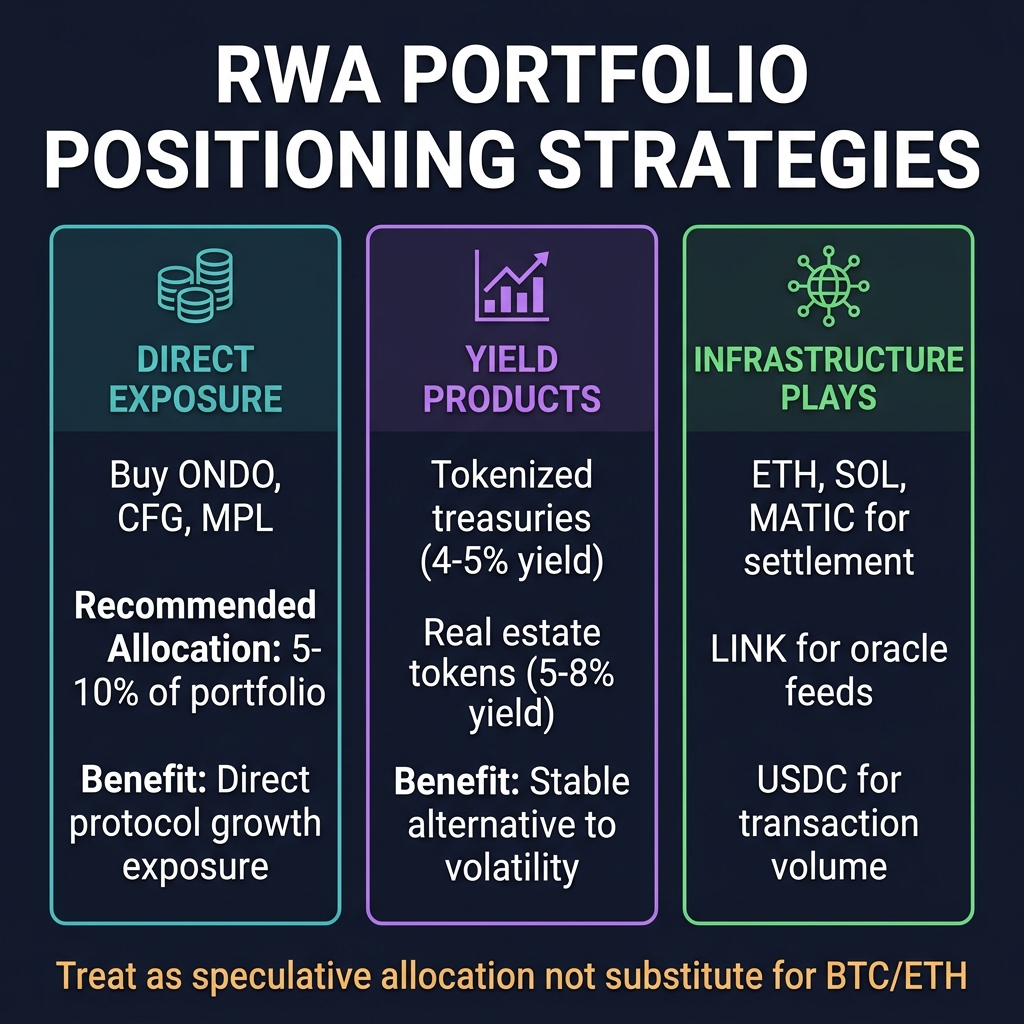
Tokenized treasuries: 4.5-5.0% APY on-chain (premium due to DeFi-native distribution)
Real estate tokens: 6-8% annualized yield from rental income
Risk Note: RWA is a high-growth, early-stage narrative within crypto. Treat it as a speculative allocation within your portfolio — not a substitute for blue-chip crypto (BTC, ETH). Read our Crypto Risk Management guide to size positions appropriately.
Frequently Asked Questions
Q1: Are tokenized real-world assets safe to hold?
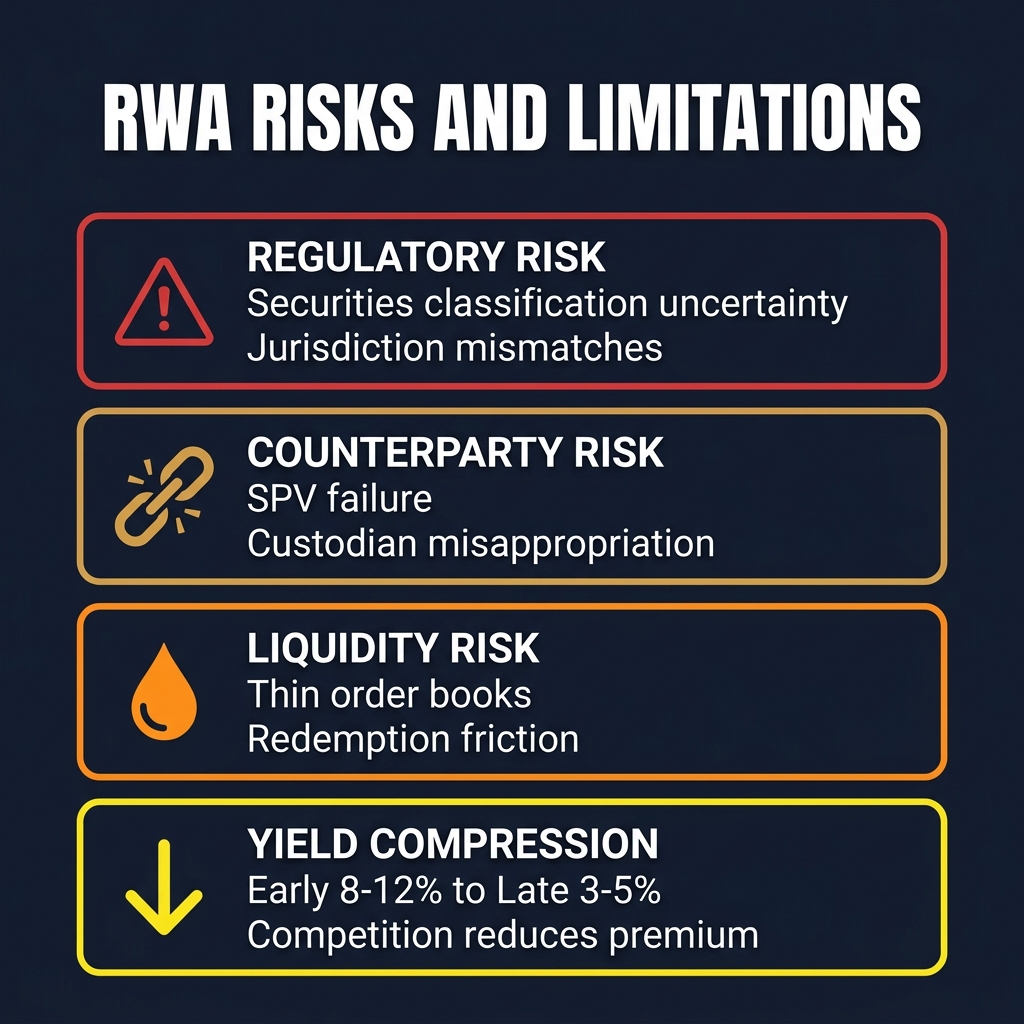
A: Safety depends on the specific asset and protocol. Tokenized US Treasuries (OUSG) are relatively safe because they're backed by actual US government debt held by regulated entities. However, tokenized private credit and real estate carry higher risks from default, liquidity issues, and legal complexity. Always verify: 1) Who holds the underlying asset? 2) What's the redemption mechanism? 3) Is there insurance coverage? 4) Which jurisdiction's law applies?
Q2: How do I buy RWA tokens?
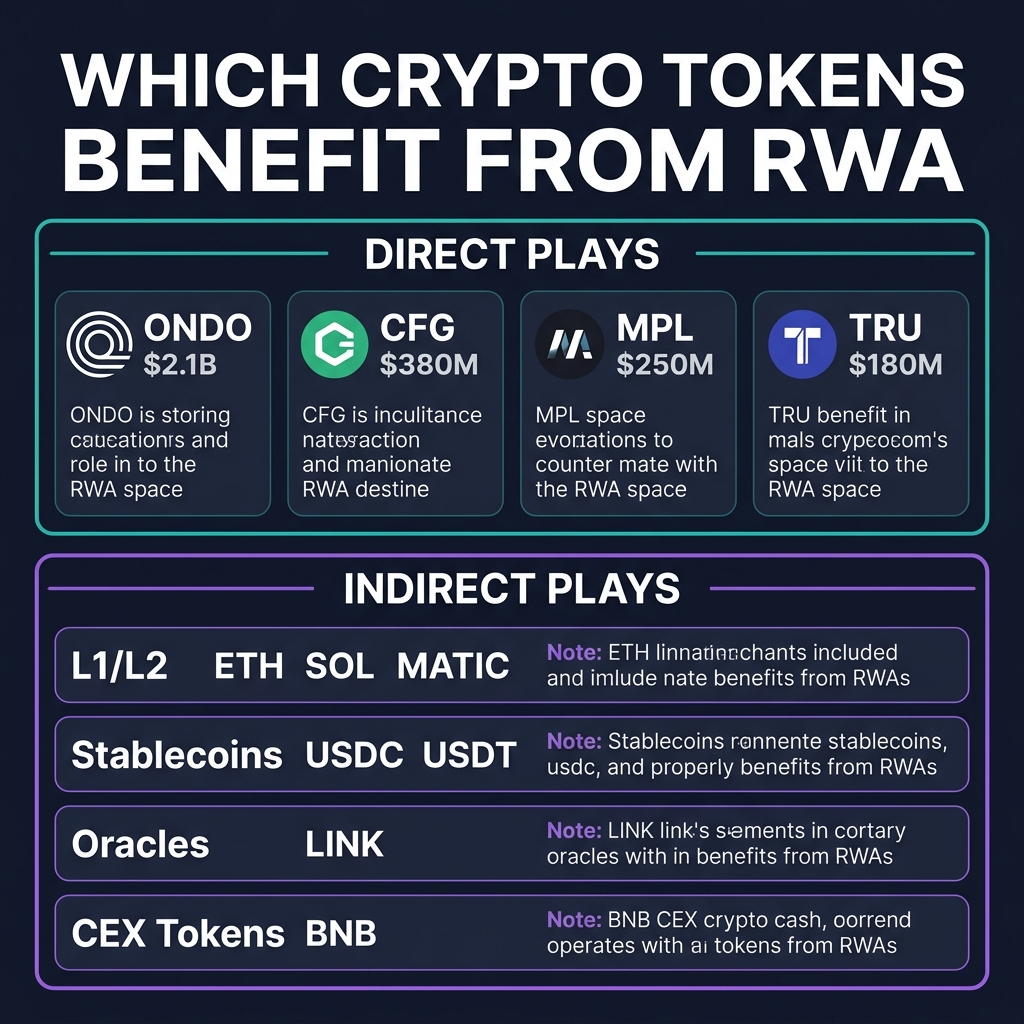
A: Most major RWA tokens (ONDO, CFG, MPL) trade on Coinbase, Binance, and other top exchanges. For tokenized asset products (OUSG, USDY, RealT tokens), you typically need to:
Connect a wallet (MetaMask, Coinbase Wallet) to the protocol's dApp
Complete KYC if required
Purchase the token directly from the protocol or on secondary markets
Use CoinXSight's Crypto Dashboard to track your RWA holdings and yields
Q3: What's the difference between tokenized stocks and crypto stocks?
A: Tokenized stocks (like those on Robinhood's RWA platform) represent ACTUAL ownership in the underlying company — you get dividends, voting rights, and the same legal protections. Crypto stocks (like Grayscale GBTC or synthetic stock tokens) are derivatives that track stock prices but don't grant actual ownership. Tokenized stocks are the more "legitimate" version with real backing.
Q4: Will RWA tokenization replace traditional stocks and bonds?
A: Not in the short term. RWAs currently represent a tiny fraction of global asset markets (Trillions). But they will capture a growing niche — particularly for 24/7 trading, instant settlement, composability with DeFi, and fractional ownership. Think of it as stocks 2.0: same underlying asset, better infrastructure.
Q5: How does RWA affect Bitcoin's role as "digital gold"?
A: RWAs and Bitcoin serve different purposes. Bitcoin is a decentralized, trustless store of value — no counterparty risk, no legal framework needed. RWAs are traditional assets with blockchain rails — they rely on legal enforcement and centralized custodians. Think of RWAs as "TradFi 2.0" and Bitcoin as "SoV 2.0." They're complementary: investors might hold BTC for its anti-censorship properties and RWAs for yield.
Conclusion: The $8.4B Signal
The 105% surge in RWA tokenized transfers isn't just a data point — it's a signal that traditional finance is quietly embracing blockchain infrastructure. With Robinhood bringing millions of users, USDC getting OCC approval, and regulatory clarity improving, RWAs are crossing the chasm from crypto-native experiment to institutional-grade product.
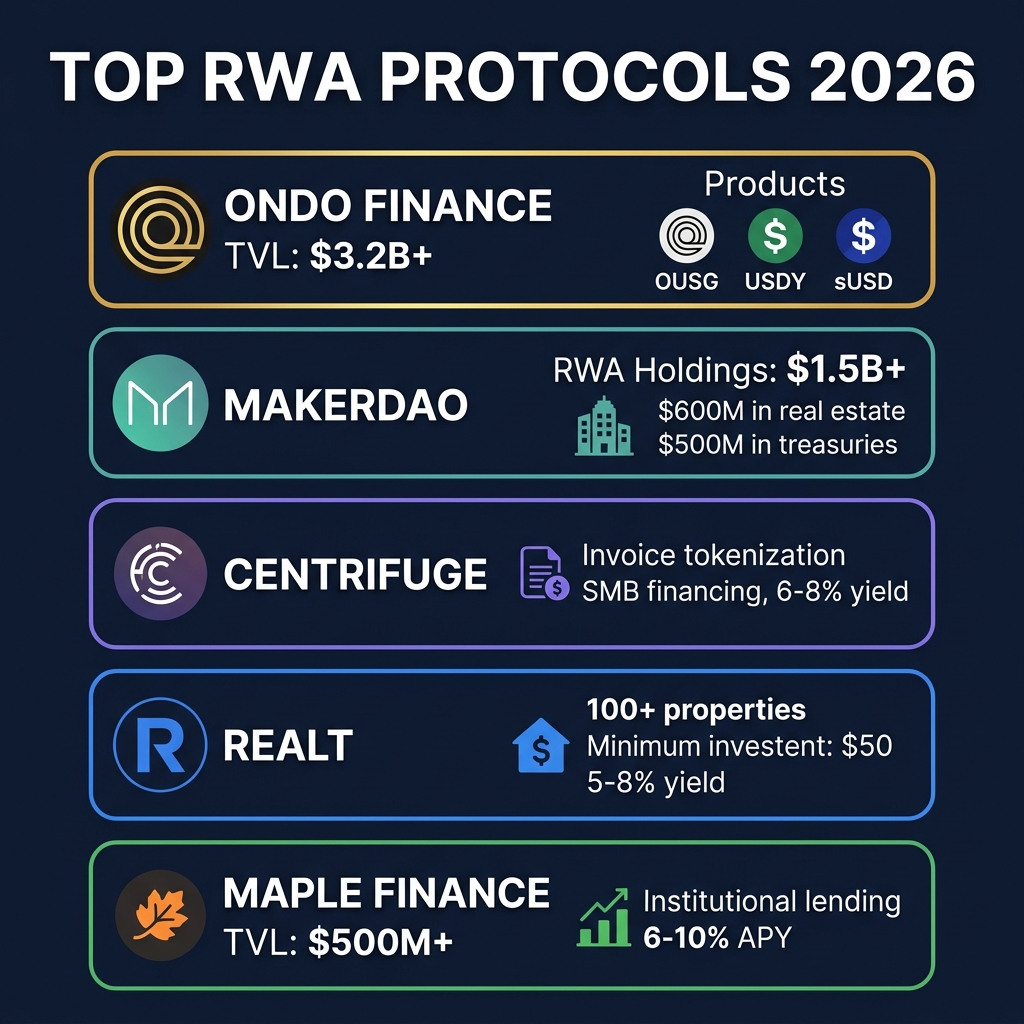
For traders: This narrative creates opportunities in both RWA protocols (ONDO, CFG) and the broader crypto ecosystem that benefits from institutional inflow (ETH as settlement layer, USDC demand, oracle networks).
For investors: Consider allocating 5-10% to RWA exposure as a hedge against pure crypto volatility while capturing the yield premium that RWAs offer.
Stay ahead of the curve: Use CoinXSight's AI Token Screening to monitor RWA protocol tokens and our Alpha Strategy framework to time entries during accumulation phases.
The future of finance is tokenized. The question is: are you positioned for it?
Learn to identify altcoin season using BTC dominance charts, capital rotation patterns, sector analysis, and on-chain metrics. A data-driven framework…