Crypto Tax Guide 2026: Global Overview and Optimization Strategies
Navigate crypto taxation in 2026. Find the best crypto tax calculator and software for your needs across major jurisdictions. Understand taxable events for trading, DeFi, staking, airdrops, and NFTs. Learn legal optimization strategies to minimize your tax burden.
DK
Daniel KimHead of Curriculum & Trader Development·May 19, 2026 · 12 min read · Updated Oct 6
Crypto tax enforcement has tightened dramatically. Major exchanges now report user transactions directly to tax authorities via standardized frameworks (DAC8 in the EU, enhanced 1099 reporting in the US). "Hoping the IRS won't notice" is no longer a viable strategy — it's a path to penalties, interest, and potential criminal charges.
The good news: understanding crypto taxation isn't complicated. This guide covers what's taxable, what's not, and legal strategies to minimize your burden.
Disclaimer: This guide provides general educational information. Tax laws vary by jurisdiction and change frequently. Consult a qualified tax professional for advice specific to your situation.
Taxable Events in Crypto
Events That Trigger Tax
Event
Tax Type
Example
Selling crypto for fiat
Capital gains/losses
Sell BTC for USD
Trading crypto-to-crypto
Capital gains/losses
Swap ETH for SOL
Spending crypto on goods/services
Capital gains/losses
Pay for a subscription with BTC
Receiving mining/staking rewards
Income tax
ETH staking rewards
Receiving airdrops
Income tax
Free token airdrop
Earning DeFi yield
Income tax
Lending interest, LP rewards
Getting paid in crypto
Income tax
Salary or freelance payment in BTC
Events That Are Generally NOT Taxable
Event
Why not taxable
Buying crypto with fiat
No gain/loss realized
Transferring between your own wallets
No change in ownership
Gifting crypto (below threshold)
Gift tax exemption applies
Donating crypto to charity
May qualify for deduction
Holding (unrealized gains)
Not realized until sold
How Capital Gains Are Calculated
Capital Gain = Sale Price - Cost Basis - Fees
Cost basis is what you paid for the crypto, including any purchase fees.
Example:
Buy 1 ETH at $3,000 (+ $5 fee) → Cost basis: $3,005
Sell 1 ETH at $4,000 (- $5 fee) → Proceeds: $3,995
Capital gain: $3,995 – $3,005 = $990
Cost Basis Methods
When you've bought the same token at different prices over time, you need a method to determine which purchase you're "selling":
Method
How it works
Best for
FIFO (First In, First Out)
Oldest purchase sold first
Most jurisdictions (default)
LIFO (Last In, First Out)
Newest purchase sold first
Minimizing gains in rising market
HIFO (Highest In, First Out)
Highest cost basis sold first
Minimizing gains overall
Specific ID
You choose which lot to sell
Maximum flexibility
Important: The available methods depend on your jurisdiction. The US allows specific identification with proper records. Many countries require FIFO.
Short-Term vs Long-Term
In many jurisdictions (notably the US), holding crypto for over one year qualifies for lower long-term capital gains tax rates.
Holding period
US Tax Rate (2026)
< 1 year (short-term)
Ordinary income rates (10-37%)
> 1 year (long-term)
0%, 15%, or 20% depending on income
Trading implication: Swing trades and day trades generate short-term gains taxed at your highest rate. Long-term holds benefit from preferential rates — a significant reason to consider holding periods in your trading strategy.
DeFi-Specific Tax Scenarios
Liquidity Pool Entry/Exit
Depositing tokens into an LP pool is generally treated as a taxable swap (you're exchanging tokens for LP tokens). Withdrawing triggers another taxable event.
Tax-efficient approach: Use same-asset pools (ETH/stETH) where possible to minimize gain recognition on entry.
Yield Farming Rewards
Harvested rewards are typically taxed as ordinary income at fair market value when received. If you later sell the reward tokens, any gain/loss from that point is a capital gain/loss.
Staking Rewards
Most jurisdictions treat staking rewards as income when received. Some debates exist around whether rewards should be taxed at receipt or when sold — consult your tax advisor for your jurisdiction's current position.
Token Swaps (DEX Trading)
Every token swap on a DEX is a taxable event, even though no fiat is involved. The gain/loss is calculated based on the fair market value of both tokens at the time of the swap.
High-frequency DEX traders: If you make dozens of swaps daily, the record-keeping burden is significant. Use portfolio tracking software that integrates with on-chain data.
Airdrops
Airdrops are generally taxed as income at fair market value when received. If the token has no market value at the time of the airdrop, the income is $0, but you'll owe capital gains tax when you eventually sell.
Tax Optimization Strategies (Legal)
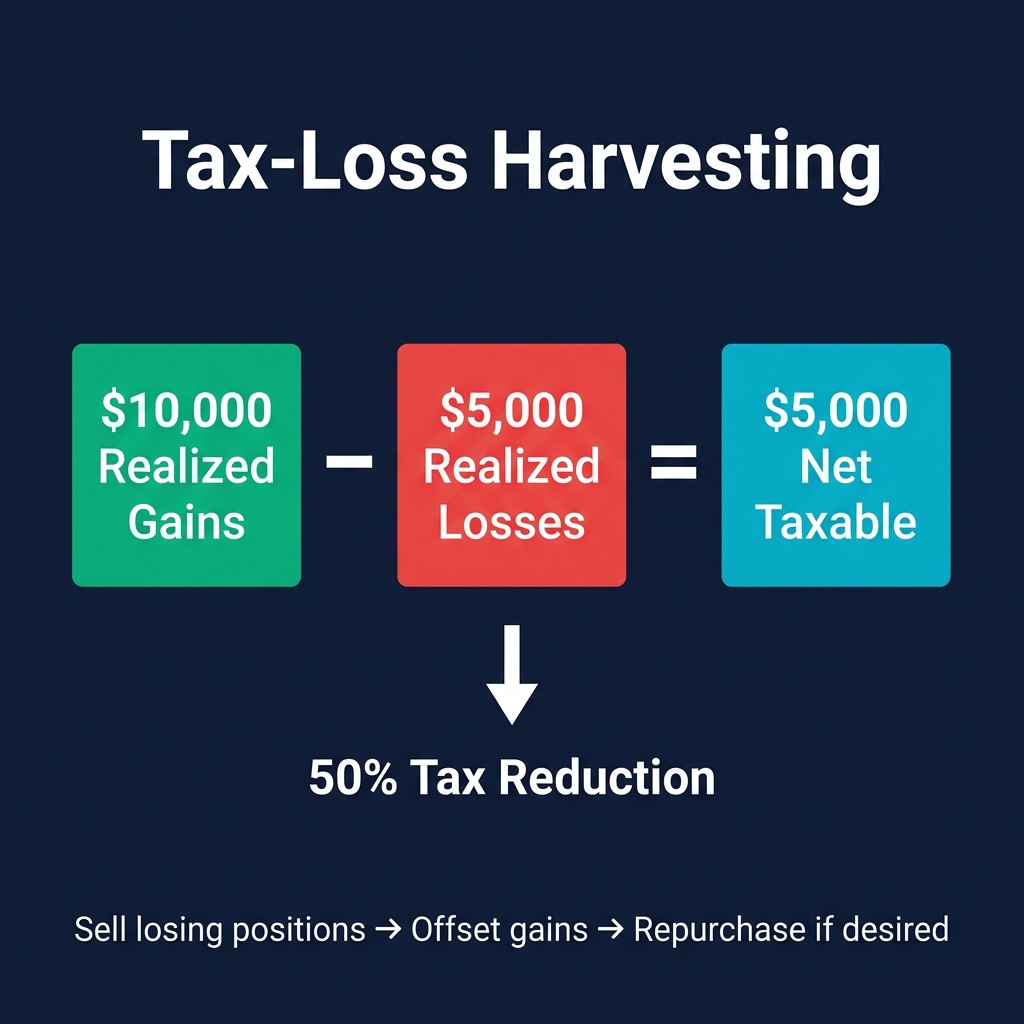
1. Tax-Loss Harvesting
Sell losing positions before year-end to realize capital losses, which offset capital gains. You can immediately repurchase the same token (crypto is not subject to wash sale rules in most jurisdictions as of 2026, though this is changing — verify current rules).
Example:
You have $10,000 in realized gains from profitable trades
You hold SOL at a $5,000 unrealized loss
Sell SOL to realize the $5,000 loss → Net taxable gain: $5,000 instead of $10,000
Repurchase SOL immediately if you want to maintain the position
2. Hold Period Optimization
Plan your exits to qualify for long-term capital gains rates where possible. If you're up significantly on a position held for 10 months, consider whether waiting 2 more months for long-term treatment saves more in taxes than the risk of holding longer.
3. Charitable Donations
Donating appreciated crypto directly to a qualified charity allows you to deduct the fair market value without paying capital gains tax on the appreciation. This is one of the most tax-efficient ways to give.
4. Retirement Account Strategies
Some jurisdictions allow crypto investment through tax-advantaged retirement accounts (self-directed IRAs in the US). Gains within these accounts grow tax-free or tax-deferred.
5. Jurisdiction Optimization
Some countries have more favorable crypto tax treatment. If you're a digital nomad or considering relocation, research jurisdictions with:
No capital gains tax on crypto (e.g., some countries treat crypto as property with exemptions)
Favorable long-term holding incentives
Clear, stable regulatory frameworks
Warning: Tax residency rules are complex. Simply incorporating in a low-tax jurisdiction while living elsewhere rarely works and can create additional compliance obligations.
Record-Keeping Best Practices
What to Track for Every Transaction
Date and time of the transaction
Type (buy, sell, swap, transfer, reward, airdrop)
Amount of crypto involved
Fair market value in your local currency at the time
Fees paid (gas fees, exchange fees, DEX slippage)
Wallet/exchange used
Transaction hash (for on-chain verification)
Recommended Tools
Use crypto tax software that:
Connects to exchanges via API (auto-imports CEX trades)
CoinXSight's Portfolio module tracks your positions and can export transaction history in formats compatible with major tax software.
Common Tax Mistakes
Mistake 1: Ignoring Small Transactions
Every swap, even a $5 test transaction, is potentially taxable. The IRS and equivalent agencies have full visibility into on-chain transactions. Don't assume small amounts are ignored.
Mistake 2: Not Tracking Cost Basis
Without proper cost basis records, you may end up paying tax on your entire sale proceeds rather than just the gain. Keep records from day one.
Mistake 3: Double-Counting
Transferring crypto between your own wallets is NOT a taxable event. Make sure your tax software correctly identifies transfers vs. sales. Many tools misclassify self-transfers as dispositions.
Mistake 4: Ignoring Gas Fees
Gas fees paid for transactions increase your cost basis (for purchases) or reduce your proceeds (for sales). Over hundreds of transactions, unclaimed gas fee deductions can add up to significant tax savings.
Mistake 5: Treating Paper Trading as Taxable
Profits from paper trading simulations are NOT taxable — no real assets are bought or sold. Only real transactions trigger tax obligations.
Summary
Crypto taxation in 2026 requires active record-keeping and strategic planning. With enhanced exchange reporting and on-chain transparency, compliance is no longer optional — but legal optimization strategies can significantly reduce your tax burden.
Key principles:
Track every transaction from day one using dedicated tax software
Understand which events are taxable (sales, swaps, rewards) vs non-taxable (transfers, holding)
Use legal optimization: tax-loss harvesting, hold period planning, charitable donations
Account for DeFi-specific scenarios: LP entry/exit, yield farming, staking rewards
Consult a qualified tax professional for jurisdiction-specific advice
Master risk management for crypto trading. Learn position sizing formulas, stop-loss strategies, and how CoinXSight's Portfolio module tracks your risk…
The DeFi yield farming landscape has fundamentally shifted from inflationary token rewards to sustainable, real-yield models. Learn which strategies generate…