Wall Street Bought $4.2 Billion of Bitcoin ETFs in Q3. Then the Selling Started.
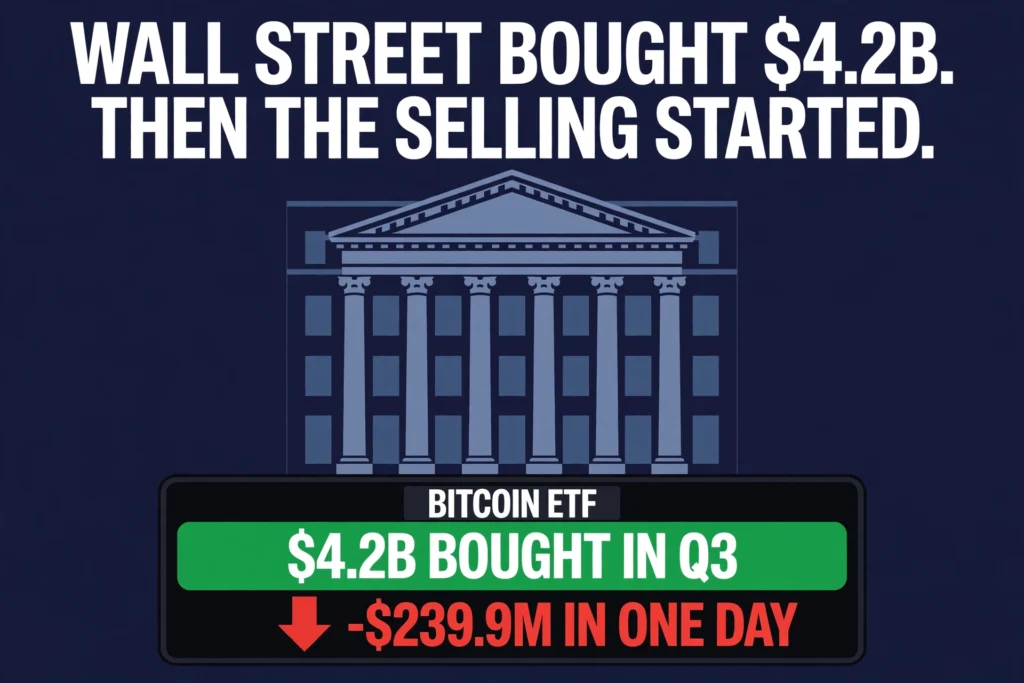
13F filings show Wall Street added ~$4.2B of Bitcoin ETFs in Q3 — Wells Fargo $2.3B, Brevan Howard $1.06B, Bank of America +741%. But the snapshot is dated 30 September, and November's daily flows have flipped: a final -$239.9M outflow on 17 November. What the scoreboard does and does not prove.
CX
CoinXSight Alpha DeskQuantitative Research Desk·Nov 18, 2026 · Updated Nov 18
The filings landed on Monday, and they read like a victory lap. In the third quarter, Wall Street institutions added roughly $4.2 billion of US spot Bitcoin ETFs. Wells Fargo doubled its position to $2.3 billion. Brevan Howard tripled its stake to $1.06 billion. Bank of America increased its holding more than eightfold. If you stopped reading there, you would conclude that institutional conviction in Bitcoin has never been stronger.
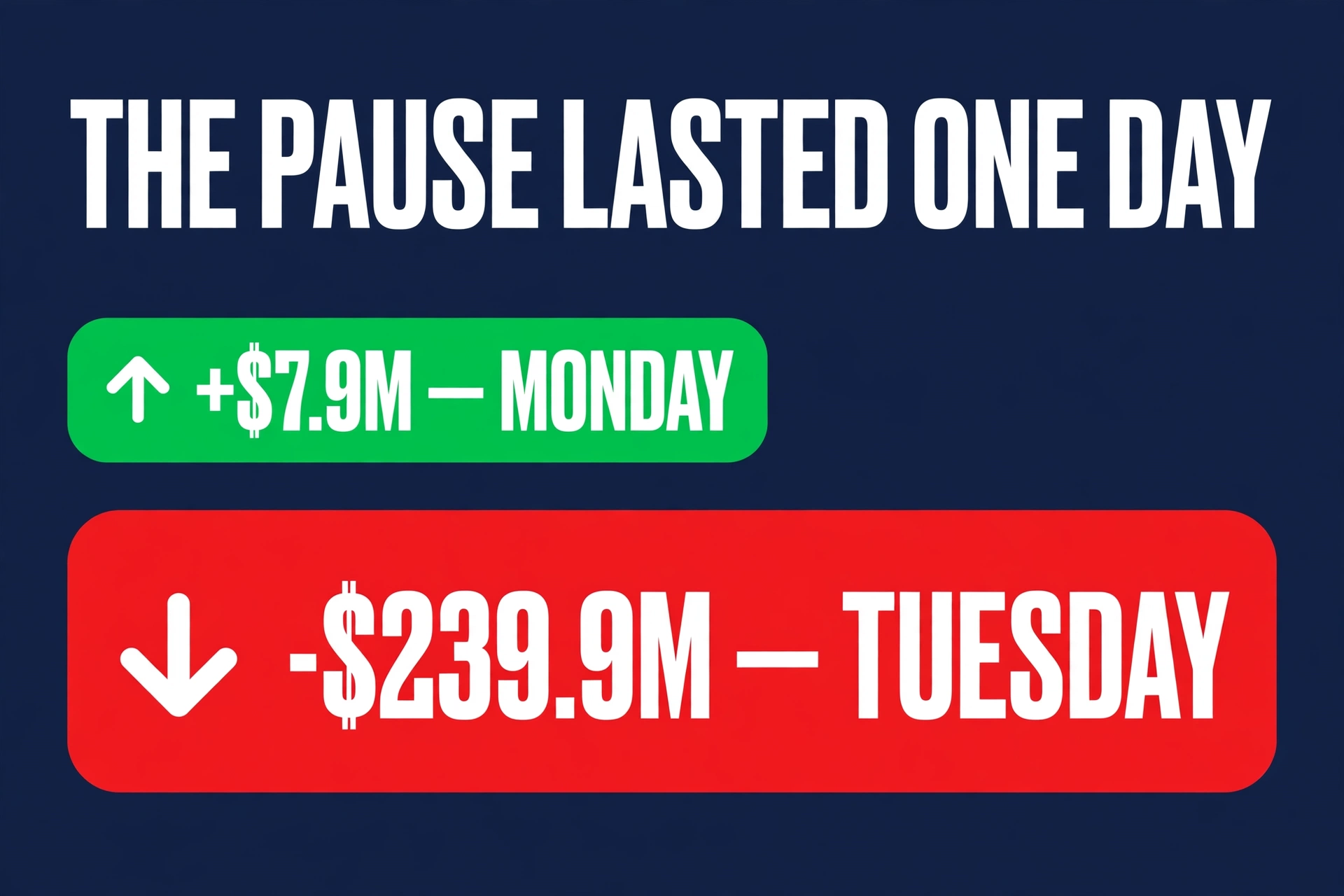
Do not stop reading there. The same funds’ market, in the present tense, is doing the opposite. On Tuesday, US spot Bitcoin ETFs posted a final net outflow of $239.9 million — the day after a single $7.9 million inflow had briefly interrupted seven straight sessions of withdrawals that drained about $1.91 billion. The 13F filings describe where institutions stood on 30 September. The flow data describes where they are going in November. This afternoon’s story is the distance between those two pictures.
That distance matters because 13F headlines are already travelling without their dates attached. A quarterly filing is a photograph, not a feed. This one was taken six weeks ago, at the end of a quarter in which Bitcoin was rising toward its October high — before six straight red weeks, before the first weekly close below the 200-week moving average since October 2023, and before the ETF complex started bleeding in size. Treating it as evidence that institutions are buying this dip is not optimism. It is a misreading of the calendar.
The scoreboard
The filings, compiled by 13F Pro across 1,649 filers holding about $19.5 billion of BlackRock’s IBIT in total, show real accumulation in the third quarter. This was not one fund’s trade. It was broad, and the top of the table is dominated by names that do not chase momentum for a living.
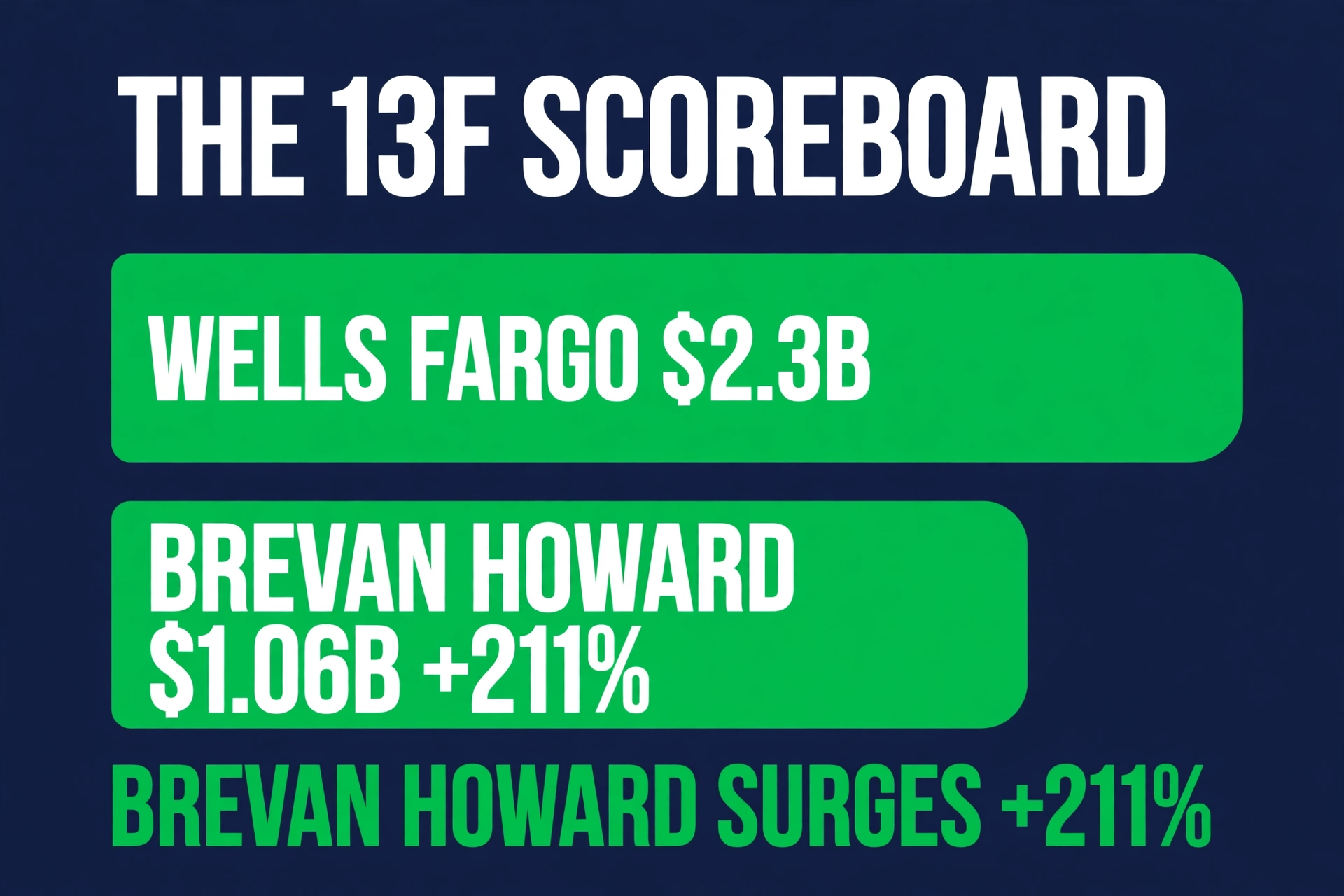
Wells Fargo is now the largest disclosed holder, with 49,577,094 IBIT shares worth $2.3 billion at 30 September — up 103.2% from the second quarter, an addition of more than 25.1 million shares, roughly $1.2 billion of new exposure. Brevan Howard, the macro hedge fund, holds 22,405,494 shares worth $1.06 billion, up 211% after adding about 15.2 million shares. Bank of America’s position rose 740.9% to 14,479,277 shares, worth $685.4 million. These are quarter-on-quarter share-count increases, not price effects. The shares were bought.
Then there is the name that has travelled furthest with the least accuracy. Mubadala, Abu Dhabi’s sovereign wealth fund, holds 14,721,917 IBIT shares worth $696.9 million. It bought none of them in the third quarter. The share count is identical to the second quarter — zero change — and the position’s value rose from $490.1 million to $696.9 million only because IBIT’s price rose during the quarter. Early summaries that put Mubadala near $1.1 billion, or described it as adding, are wrong on both the amount and the direction. The sovereign fund sat still. In a quarter when the price has since fallen by a fifth, sitting still is itself a data point — but it is not buying.
Paul Tudor Jones’s firm, Tudor Investment, nearly doubled its share count — up 98% to 1,363,567 shares, worth $64.6 million. Even here, the detail cuts against the headline. The position’s value rose 181.6%, from $22.9 million, but most of that increase is arithmetic: IBIT rose from $33.29 to $47.34 during the quarter, a gain of 42.2%, which inflates every unchanged holding. Tudor also reported IBIT call options on 858,000 shares and puts on 625,000 shares — a structured position, not a simple long. And the firm’s current stake remains far below its own peak of more than 8 million shares, worth $427 million, at the end of 2024. The most famous Bitcoin bull on the list is, by his own filing, running a position a fraction of the size he ran a year ago.
Institutional Q3 Bitcoin spot ETF positions vs November net outflow reality. Source: CoinXSight Telemetry / 13F Filings.
The 13F scoreboard, 30 September 2026
Holder
IBIT shares
Value at 30 Sep
Change vs Q2
Wells Fargo
49,577,094
$2.3B
+103.2% (added ~25.18M shares)
Brevan Howard
22,405,494
$1.06B
+211.0% (added ~15.20M shares)
Mubadala
14,721,917
$696.9M
0.0% — unchanged; value rose on IBIT price alone
Bank of America
14,479,277
$685.4M
+740.9% (added ~12.76M shares)
Tudor Investment
1,363,567
$64.6M
+98% shares; also calls on 858k / puts on 625k shares
All filers (13F Pro)
—
~$19.5B total IBIT
~$4.2B added across BTC ETFs in Q3 (Bitcoin Magazine)
Read the date before you read the dollars
Every number in that table is true, and every one of them is six weeks old. That is the structural flaw in 13F analysis that this cycle keeps exploiting. The filings were due 45 days after quarter-end and arrived on 16 November. They describe portfolios as they stood on 30 September, when Bitcoin was within reach of its highs and the ETF complex was still absorbing money.
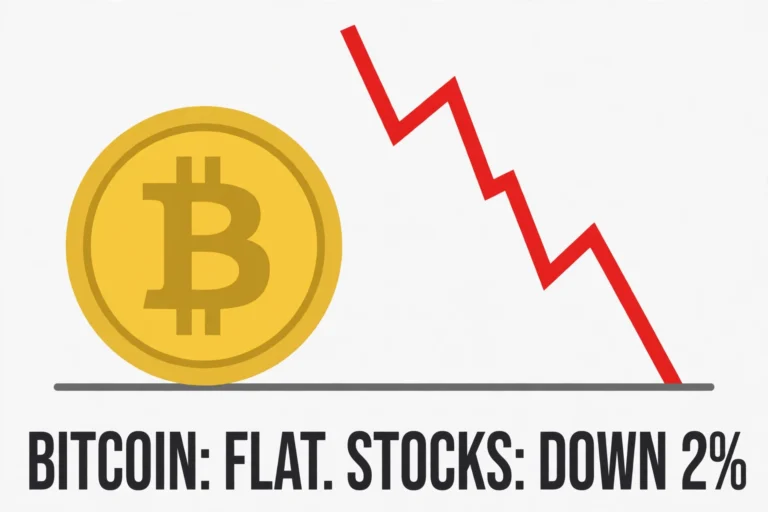
Since that snapshot: Bitcoin has fallen 20.56% in a month and 26.88% year to date. It closed last week at $65,510.09, its sixth consecutive red week, and its first close below the 200-week moving average near $67,982 since October 2023 — the break this week’s analysis of that close set out in detail. At 13:43 Vietnam time today, Bitcoin traded at $64,627.81, up 0.30% on the day but still below $65,000, with an overnight low of $63,336. The Fear & Greed Index reads 11 — Extreme Fear, down from 12 yesterday, 29 a week ago and 55 a month ago.
None of the institutions in the scoreboard has told us what they did in October. Some of the Q3 buying was surely unwound into the decline; some was surely held. The filings cannot distinguish between the two, and any commentary that uses them to claim institutions are absorbing this selloff is claiming knowledge the documents do not contain. The next 13F round, covering the fourth quarter, is not due until mid-February. By then, this drawdown will be history one way or the other.
CME basis compression and perpetual funding dynamics across the $64,000 liquidity cluster. Source: CoinXSight Quantitative Research.
The flow has already flipped
What we can measure in the present tense is the daily flow, and it points the other way. Monday’s session brought a net inflow of $7.9 million, the first positive day after seven consecutive outflows totalling roughly $1.91 billion. This morning’s column warned that one green day of that size, against that backdrop, was a pause rather than a reversal. Tuesday’s final numbers settled the question.
The final figure for Tuesday, 17 November, is a net outflow of $239.9 million. BlackRock’s IBIT alone accounted for $209.5 million of it. Grayscale’s GBTC lost $17.7 million, ARK’s ARKB $13.1 million and Valkyrie’s BRRR $3.6 million. Only two funds took money in: Morgan Stanley’s MSBT, $2.9 million, and the Grayscale Bitcoin Mini Trust, $1.1 million. Ethereum ETFs, reported separately, lost another $29.1 million the same day.
A caution belongs here, because this number has already been mangled once. Several trackers published preliminary figures near $30 million for Tuesday — tables compiled before IBIT, the largest fund, had reported. The complete data replaced those figures, as CoinLab noted in publishing the final tally. The gap between the preliminary and final numbers is roughly $210 million, almost exactly IBIT’s outflow. Anyone quoting a $30 million outflow for Tuesday is quoting a table with the biggest fund missing from it.
Set the two datasets side by side and the quarter’s story inverts. In Q3, institutions added about $4.2 billion of Bitcoin ETF exposure. In November, the same complex has been withdrawing at a pace that erased $1.91 billion in seven sessions, paused for one day, and then withdrew another $239.9 million. The leverage market agrees with the flow, not the filings: roughly $463 million of crypto positions were liquidated in the 24 hours to this morning, $160 million of it in Bitcoin and $109 million in Ethereum, according to MyToken data via KuCoin. Last week’s liquidations and ETF outflows set the pattern; this week has extended it.
Not all of it was conviction
One more layer of honesty is required before the $4.2 billion is used as a sentiment gauge, and it applies to the genuine buying as much as to the stale kind. A meaningful share of hedge fund ETF holdings is not directional exposure at all. It is the cash-and-carry basis trade: buy the spot ETF, short CME futures against it, and harvest the spread. Galaxy Research has documented the pattern through the June filings, when nine funds cut about 68,000 Bitcoin of ETF exposure as the basis compressed — positions that appeared and disappeared with the arbitrage, not with anyone’s view of Bitcoin’s future.
That does not make the Q3 accumulation fake. Wells Fargo and Bank of America are not basis traders at this scale; their additions look like genuine allocation, the kind made by wealth platforms and advisory channels rather than trading desks. Brevan Howard’s tripling sits somewhere between the two worlds — a macro fund expressing a view, in size, with the ability to reverse it in a day. The point is narrower and more useful: the $4.2 billion is a mixture of conviction, client allocation and arbitrage, in proportions the filings do not disclose. Quoting it as $4.2 billion of belief overstates what the documents say, in the same way that quoting it as dip-buying misstates when it happened.
What would change the picture
The honest summary of the institutional story, as of this afternoon, is this: Wall Street built its largest-ever Bitcoin ETF positions into the top of the market, and the daily flow has been negative ever since the market turned. Both halves are documented. Only one of them is current.
What would change the picture is not another filing. It is a run of flow days that looks like the third quarter felt — sustained, broad-based inflows led by IBIT rather than a single $7.9 million pause. Until that run appears, the scoreboard is a record of where the money was, and the flow table is the record of where it is going.
Tonight brings one more document to read carefully rather than quickly: the minutes of the Federal Reserve’s October meeting, published at 02:00 Vietnam time on Thursday. They pre-date the hot October CPI print, so they will describe a committee that had not yet seen the data now driving hike expectations toward December. Read them for the split, not the stance. The stance has already moved.
Disclaimer: This article is for informational purposes only and does not constitute investment advice. Market data and figures are cited as of the time of publication and subject to revision. Cryptocurrency trading involves substantial risk; conduct independent research before committing capital.
CX
CoinXSight Alpha Desk
ALPHA // DESK
Quantitative Research Desk·Global Alpha Division
CoinXSight Institutional Research Desk produces quantitative crypto market intelligence, algorithmic models, and on-chain forensics.
QUANTITATIVE SUITE // DEEP ALPHA ENGINEACTIVE
BTC/USDT // LIVE SCANNER
CONFLUENCE 74
LIVE SPOT PRICE$82,807.47WEAK_BUY
TP2
$89,522.75
+9.07%
TP1
$85,056.42
+3.63%
ENTRY
$82,078.86
ZONE
SL
$80,590.09
-1.81%
Auto-detect Order Blocks, Fair Value Gaps and risk-adjusted DCA ladders in < 5s.