Twenty-One Banks Just Committed $270 Million to Their Own Stablecoin — and the OCC Wrote the Rulebook
Twenty-one global banks commit $270 million to Project Faro, their own dollar stablecoin, while the OCC finalizes the GENIUS rulebook to regulate bank-issued digital assets.
CX
CoinXSight Alpha DeskQuantitative Research Desk·Nov 14, 2026 · Updated Nov 17
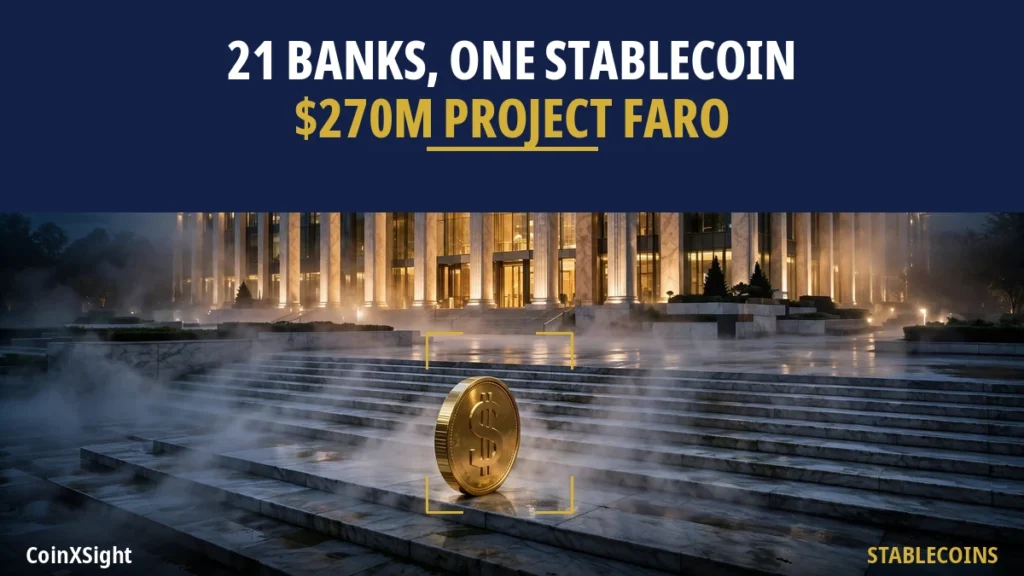
Twenty-one of the world’s largest financial institutions — Goldman Sachs, Citigroup, Bank of America, Wells Fargo, Fidelity, Deutsche Bank, Santander, UBS and thirteen more — have committed about $270 million to launch their own dollar stablecoin, a venture known internally as Project Faro, targeting a commercial launch in the first half of 2027. The news, reported by Bloomberg on November 10, is the clearest sign yet that the banks have stopped fighting stablecoins and started building one instead.
The twist is the part the banks would rather not dwell on. For months, the same industry lobbied hard to stop stablecoins from paying interest to holders, arguing that yield-bearing tokens behave like deposits and drain bank funding. Now the banks are launching a token that pays no interest at all — because the law forbids it. The GENIUS Act bans stablecoin issuers from paying yield to holders, and the Office of the Comptroller of the Currency’s final rule, issued October 21, just wrote the operating manual. The banks did not win the fight over yield. They joined the market on the other side’s terms.
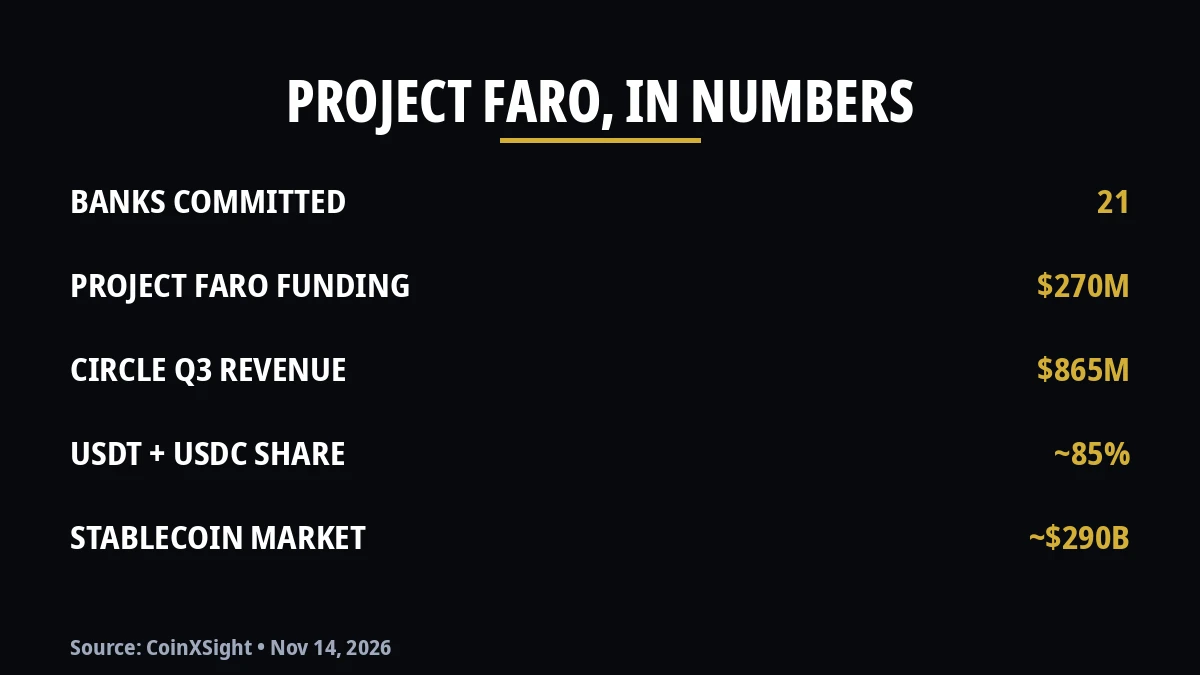
The $270 million itself needs a careful read. It covers five years of operating costs for a new U.S.-incorporated issuer — not the reserves backing the token. The reserves are separate, and the consortium says they will be held one-to-one in eligible assets. That distinction is the whole business model: the issuer holds the reserves and keeps the interest they earn. Circle made $865 million in revenue and reserve income in the third quarter alone. The banks want that yield for themselves.
Who is in — and what $270 million actually buys
The consortium spans five continents. Its North American members are Bank of America, Capital One, Citi, Fidelity Investments, Goldman Sachs, PNC Financial Services, Scotiabank, TD Bank Group, Wells Fargo and WisdomTree. The European members are Santander, BBVA, Commerzbank, Crédit Agricole, Deutsche Bank, Lloyds Banking Group, Rabobank and UBS. MUFG Bank, Sirius International Holding and Standard Bank complete the list, representing East Asia, the Middle East and Africa.
The venture began quietly. In October 2025, ten banks started exploring reserve-backed digital money on public blockchains. By September 1, 2026, participation had grown to 21 institutions, which announced plans to establish a dedicated company during the second half of 2026, subject to closing conditions. The group is still recruiting a chief executive, has no product yet, and has disclosed no preferred blockchain networks, reserve custody arrangements, redemption infrastructure, fee schedule, token ticker or final ownership structure.
That honesty about what is missing matters, because the scale gap is stark. The $270 million works out to about $54 million a year. Circle booked $865 million in revenue and reserve income in a single quarter. Tether’s USDT alone is about $176.3 billion, and USDT plus Circle’s USDC hold roughly 85% of a stablecoin market valued near $290 billion. Project Faro is a rounding error against those numbers — for now. Its advantage is not money. It is reach: twenty-one banks with existing customers, compliance departments and payment rails across the world’s major financial markets, aiming at wholesale, institutional and retail users alike, with cross-border payments and digital-asset settlement as the stated uses.
The irony at the heart of Project Faro
To understand why the banks are doing this, start with how a stablecoin makes money. A dollar stablecoin is a token pegged to $1, backed by reserves — mostly cash and short-term U.S. Treasury bills. The holder gets a dollar token. The issuer gets the interest on the reserves. When rates are above 5% on the 10-year Treasury, as they are now, that interest is enormous. Circle’s $865 million quarter is the proof.
That is also why the yield fight mattered so much. If issuers could pass the yield through to holders, a stablecoin would be a bank deposit with a better return and no bank — which is exactly what the banks feared. The GENIUS Act, signed July 18, 2025, settled it: a permitted payment stablecoin issuer may not pay a holder any form of interest or yield solely in connection with holding, using or retaining the token. The OCC’s final rule kept that prohibition and removed the proposed presumption that affiliate arrangements passing yield to holders violate it, applying the ban case by case instead, with no safe harbors and anti-evasion authority retained. Bona fide service payments are generally permitted, and deposits, including tokenized deposits, are excluded.
So the banks’ token will not pay yield — and that is precisely the point. The yield stays with the issuer. The banks spent months arguing that stablecoin yield was a threat to the banking system. They were right about the economics. They were wrong about who would capture them. Project Faro is their answer: if the yield cannot go to holders, it might as well go to them.
The OCC’s rulebook: what the final rule actually says
The OCC issued its final rule on October 21, 2026, implementing the GENIUS Act for payment stablecoin issuers under its jurisdiction. It is the first primary federal regulator to finalize a framework, which makes it the first settled view of how a federal regulator will apply the statute. The rule adopts a new 12 C.F.R. Part 15 and amends the OCC’s rules on capital, prompt corrective action, assessments and procedure. It takes effect on January 18, 2027 — the same day the GENIUS Act itself takes effect.
Three parts of the rule matter most for Project Faro. First, the yield prohibition described above, now applied case by case without the presumption the proposal had contained. Second, reserves: a principles-based diversification standard, supplemented by two numerical requirements — at least 5% of reserves must be held in instruments such as demand deposits so funds are available immediately without selling assets, and no more than 40% of reserves may be exposed to any single counterparty. Third, redemption: issuers must redeem within two business days of receiving a request from an onboarded customer.
Two more features define the runway. Bank Secrecy Act, anti-money-laundering and sanctions requirements are reserved for a separate rulemaking coordinated with the Treasury Department, so the compliance picture is not yet complete. And there is no transition period: after January 18, 2027, any entity issuing a payment stablecoin in the United States or to U.S. customers other than as an approved permitted issuer faces penalties. The OCC will offer a waiver process, but only to issuers with a substantially complete application pending on or before that date. The OCC published its proposed licensing and registration forms on October 28, 2026, and received about 328 comments on the proposal it issued in February. The clock is the story now: any issuer that is not ready on day one needs a waiver, and a waiver needs a pending application.
Architecture of Project Faro: 21 global banks building a unified institutional dollar stablecoin under OCC guidelines. Source: CoinXSight Telemetry.
Why now — and why the market is shrinking while banks arrive
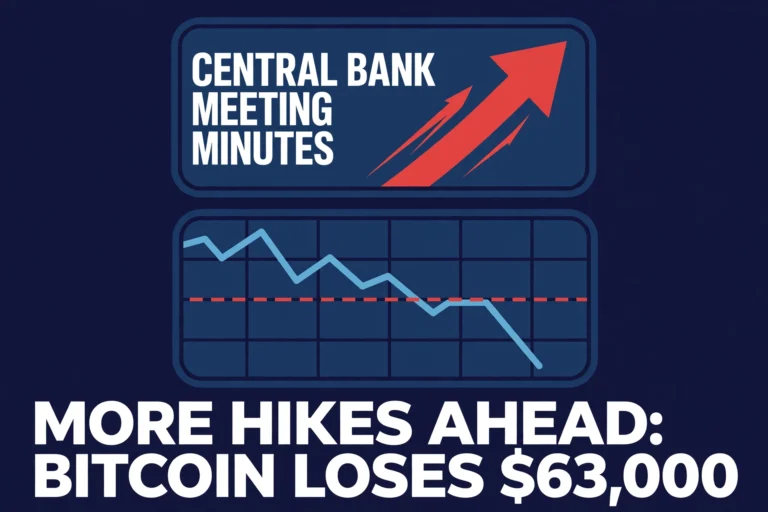
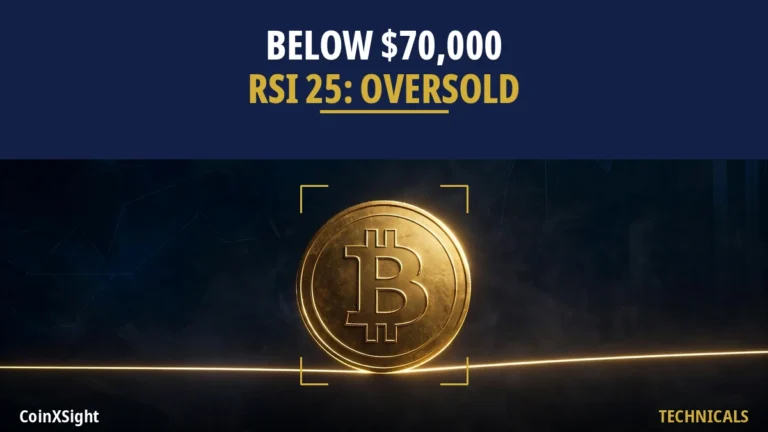
The banks are arriving at a strange moment. Total stablecoin supply sits near $290 billion, but it has contracted by $14.2 billion over the past 30 days — the largest drop since the 2022 bear market, and the same risk-off wave that took bitcoin below $70,000 this week. Bitcoin traded near $67,190 at 07:59 UTC on Saturday, down 2.1% on the day and 7.4% over five sessions, with daily RSI around 23–25 and spot bitcoin ETFs logging a sixth straight session of outflows. The market the banks want to enter is getting smaller, not bigger.
That is less of a contradiction than it looks. The contraction is a leverage flush, not a verdict on stablecoins as a product. And the banks did not move when the market was hot because they could not: there was no federal rulebook. The GENIUS Act gave them legal certainty in July 2025, and the OCC’s final rule gave them the operating manual in October 2026. Regulated institutions move on rules, not on price charts. The rulebook arrived; the banks followed within three weeks.
Europe matters too. The consortium says it intends to operate within the GENIUS Act and the European Union’s Markets in Crypto-Assets framework as applicable, and a euro stablecoin is a stated priority after the dollar launch. MiCA has been fully in force since December 2024, so the euro leg has a ready-made rulebook — and a near-empty field: the euro stablecoin market is a fraction of the dollar market’s size, which makes it the cheaper place for a new issuer to win share. The payments giants are moving in parallel — Visa and Western Union have both advanced their own stablecoin plans this year — which suggests the race is not really about who issues the token. It is about who controls the rails the token runs on.
There is also a tension the banks have not addressed publicly. A bank stablecoin competes, at the margin, with the banks’ own deposits. Every dollar a customer holds in Faro is a dollar that is not sitting in a bank account earning the bank its net interest margin. The non-yield design softens that conflict — a token that pays nothing is a worse substitute for a deposit than one that pays 5% — but it does not remove it. The consortium’s answer, implicit in the $270 million, is that the yield on the reserves plus the fees on the payments the token enables are worth more than the deposits it might displace. That is a bet on the payments business, not on the deposit business, and it is the bet the whole venture turns on.
What to watch next
Five things decide whether Project Faro becomes a real challenger or an expensive press release:
The chief executive. The group is still recruiting one. The hire will signal whether Faro is run like a bank consortium or like a startup — and which one the members actually want.
Company formation. The September announcement committed to establishing the company in the second half of 2026, subject to closing conditions. The second half of 2026 ends in six weeks.
The missing technical choices. No chain, no custodian, no redemption infrastructure has been disclosed. Each choice is a bet — on a public chain, on a bank custodian, on a redemption design — and each one will be read as a signal by competitors.
The OCC queue. The January 18, 2027 effective date has no ramp-up. Watch who files a substantially complete application, and who needs a waiver to survive day one.
The duopoly test. USDT and USDC hold about 85% of the market. Faro does not need to beat them in year one. It needs to show that twenty-one banks can move a customer from a bank account to a bank token — and keep them there.
The bottom line is simpler than the press release. The banks lost the fight to stop stablecoins, lost the fight over yield, and have now decided to own the yield instead. Project Faro is a $270 million admission that stablecoins are not going away — and a bet that the institutions with the customers, the compliance teams and the balance sheets can take a share of a $290 billion market from the two issuers who built it. The money is small. The signal is not.
Disclaimer: This article is for informational purposes only and does not constitute financial advice. Figures are cited from official releases and market data as reported at the time of writing and are subject to revision. Cryptocurrency markets are volatile; always do your own research before making investment decisions.
CX
CoinXSight Alpha Desk
ALPHA // DESK
Quantitative Research Desk·Global Alpha Division
CoinXSight Institutional Research Desk produces quantitative crypto market intelligence, algorithmic models, and on-chain forensics.
QUANTITATIVE SUITE // DEEP ALPHA ENGINEACTIVE
BTC/USDT // LIVE SCANNER
CONFLUENCE 74
LIVE SPOT PRICE$82,807.47WEAK_BUY
TP2
$89,522.75
+9.07%
TP1
$85,056.42
+3.63%
ENTRY
$82,078.86
ZONE
SL
$80,590.09
-1.81%
Auto-detect Order Blocks, Fair Value Gaps and risk-adjusted DCA ladders in < 5s.