North Korea Laundered $600 Million Through THORChain. The Freeze Is Racing the Maze.
North Korea TraderTraitor unit routed over $600M through THORChain across 27,000 wallets. As Binance restores full withdrawals, law enforcement has frozen $2.9B in an unprecedented cross-chain race.
DP
David ParkChief On-Chain Data Analyst·Nov 27, 2026
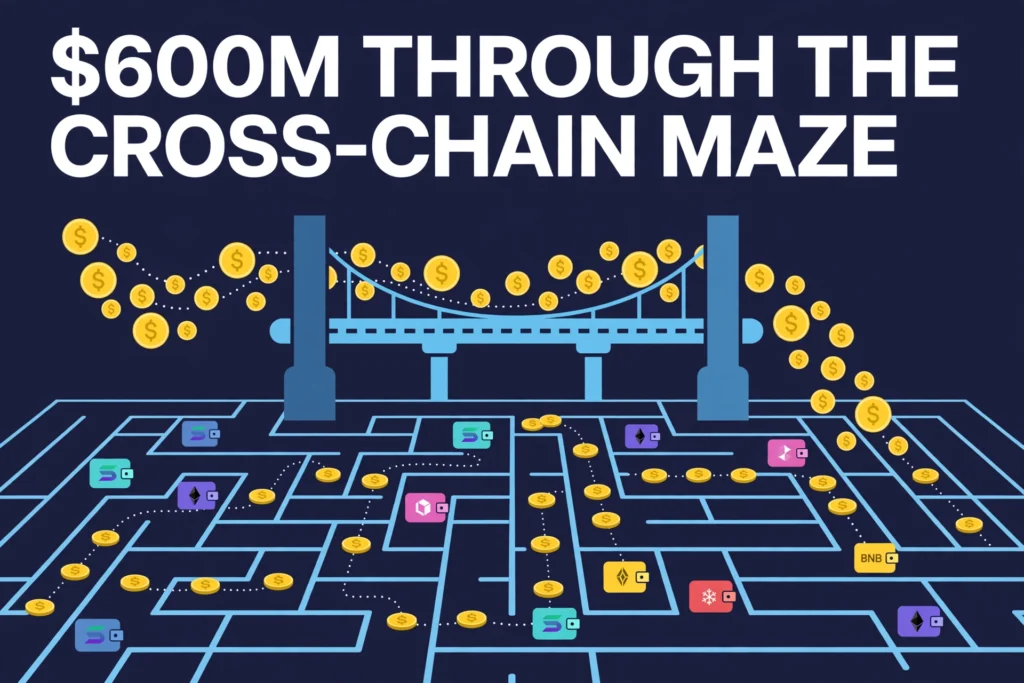
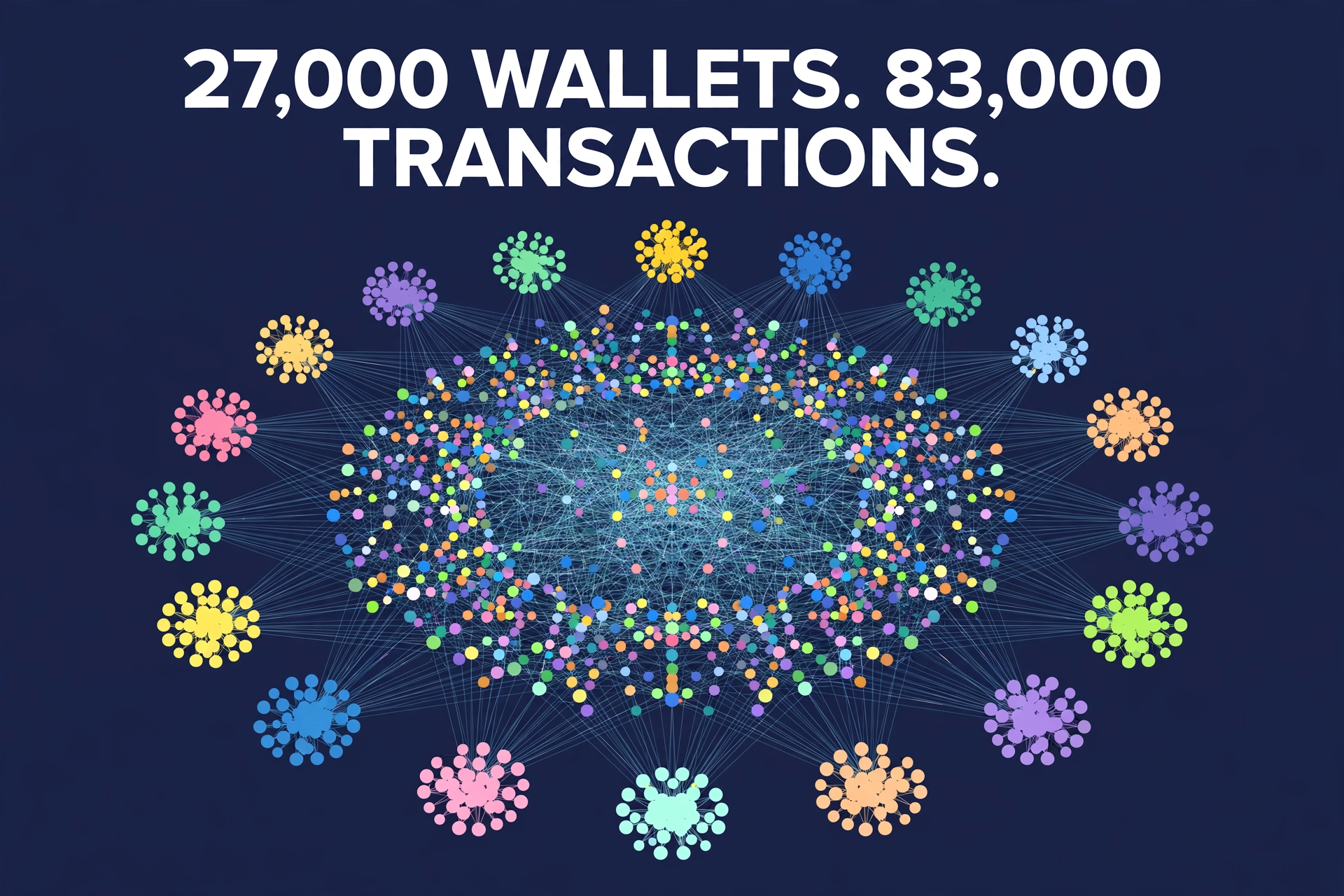
Laundering stolen crypto is a logistics problem before it is a crime story, and North Korea’s TraderTraitor unit has spent years industrializing the logistics. The latest tracing work on the cluster’s flows puts the scale in hard numbers: more than $600 million routed through THORChain’s cross-chain swaps alone, as part of a laundering architecture that investigators have mapped across some 27,000 wallets, at least 16 blockchains, 36 services and more than 83,000 transactions. THORChain matters in this story not because it is exotic, but because it solves the launderer’s hardest problem: converting stolen assets between chains – Ether into native Bitcoin, for instance – without a centralized exchange, without an account, and without a compliance desk that can freeze the swap mid-flight. Every hop through a cross-chain router breaks the clean trail that makes stolen funds traceable, and TraderTraitor has run those hops at a volume that treats tracing as a cost of doing business rather than a deterrent.
The October Binance theft – roughly $6.3-6.4 billion, attributed by the FBI to TraderTraitor on October 31 – is the live demonstration of the playbook running at full scale. Within days, the proceeds had fragmented across thousands of addresses. The Ether series alone moved 488,357 ETH in four tranches across November 17-20; at least 11,000 ETH has passed through Tornado Cash since November 8; roughly 700 BTC went through coinjoin services from November 1; and the cross-chain layer – THORChain and its peers – handled the asset conversion that turns traceable stolen tokens into clean-looking native coins on other networks. Tracing firm Elliptic’s map of the operation counts approximately 26,000-27,000 identified addresses. The point of the fragmentation is arithmetic: every additional wallet, chain and service multiplies the cost of following the money, while the cost of splitting it stays near zero.
Elliptic mapping of TraderTraitor laundering architecture across 27,000 wallets, 16 blockchains and 36 services.
What is actually new this week
The theft itself is nearly a month old. It happened on October 29, 2026: a fake LinkedIn job interview delivered malware to a Binance Wallet DevOps engineer’s laptop in June, the intrusion escalated to container-deployment rights by October 20, and the drain itself took about twenty minutes. The FBI attributed the operation to TraderTraitor on October 31. What is new this week is the tracing and the aftermath. Elliptic’s updated map of the cluster’s flows – the source of the $600 million THORChain figure – landed on November 26, and on the same day Binance fully restored withdrawals across the platform, closing the last operational restriction from the incident. The laundering route itself tells the story of a narrowing funnel: the attackers first tried to swap through Chainflip, were refused, and four minutes later routed the same funds through THORChain to the same Bitcoin address. When the compliant door closes, the permissionless one is four minutes away – and that is exactly the gap the freeze network is now trying to close.
The counter-strategy: freeze faster than they can fragment
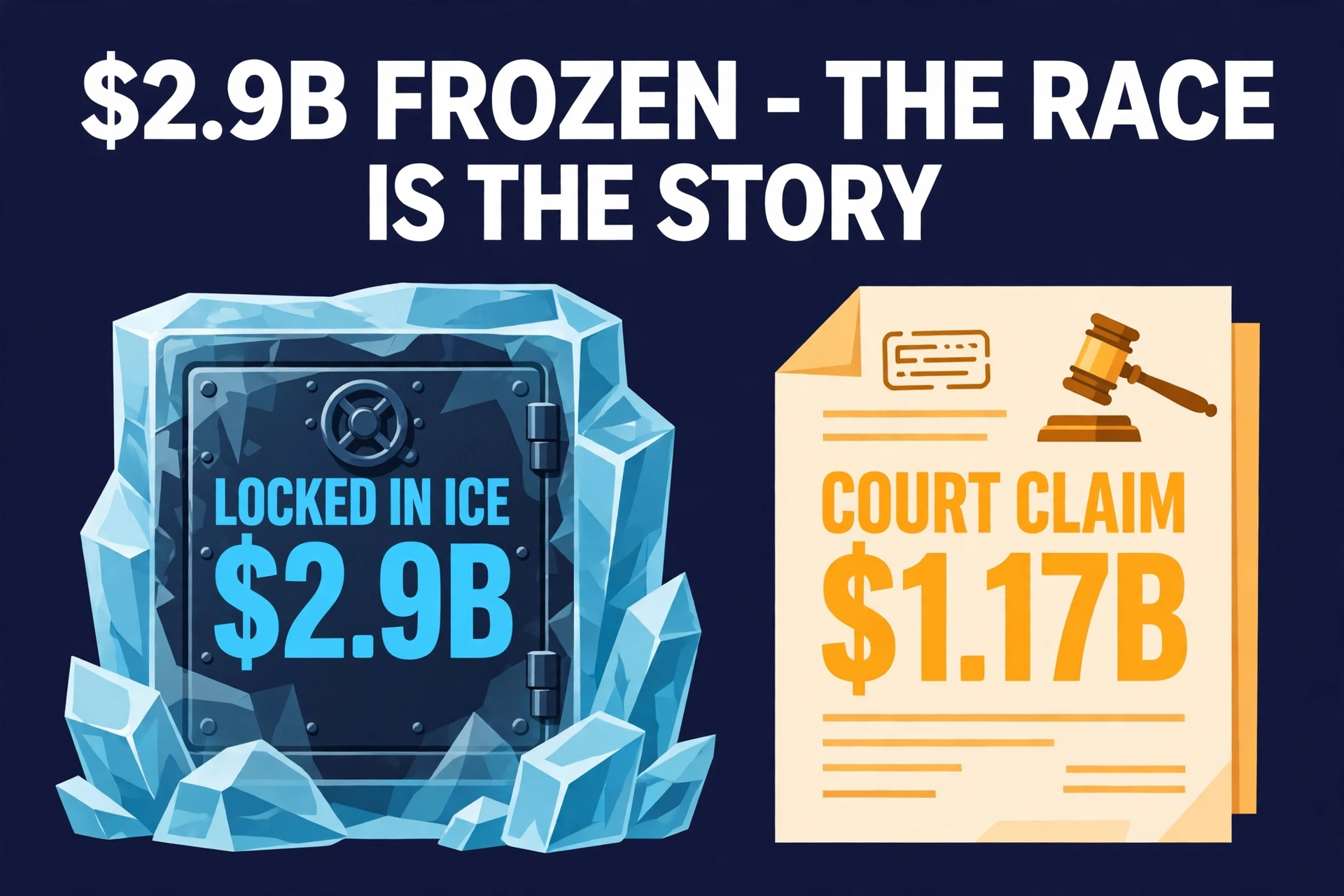
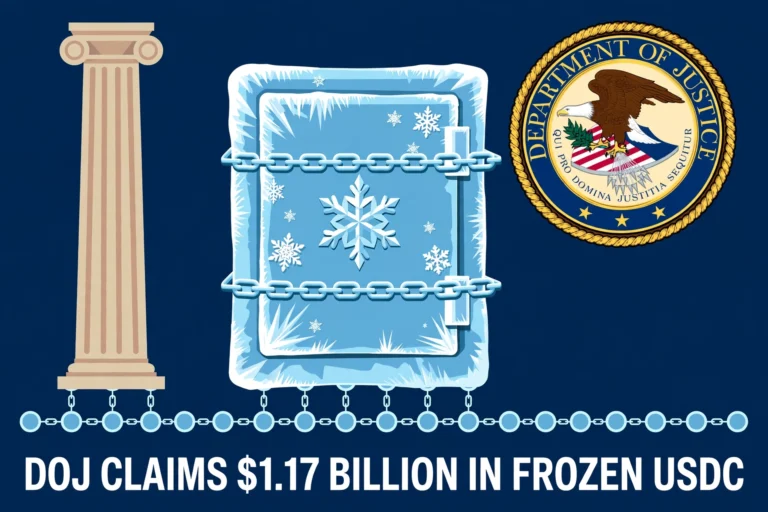
What has changed in this cycle is not the laundering – it is the speed of the response racing against it. Circle froze the stolen USDC roughly one hour after the Binance theft, at law enforcement’s request. More than $2.9 billion of the total haul has been frozen, seized or returned. A global freezing order out of Abu Dhabi’s ADGM courts now covers some $6.5 billion of identified assets, and on Monday the U.S. Department of Justice filed a civil forfeiture complaint over $1.17 billion of USDC sitting frozen on 36 addresses – a claim on money that cannot move, in a case with no mechanism to pay it back to victims, because Binance already reimbursed its users from its own funds. The legal machinery is no longer chasing the money after it lands. It is trying to immobilize it in place, mid-maze.
The freeze race: over $2.9 billion immobilized across Circle, ADGM court orders and DOJ civil forfeiture.
The laundering machine vs the freeze race
Figure
Routed via THORChain (cluster flows)
$600M+
Wallets identified (Elliptic)
~26,000-27,000 addresses
Chains / services / transactions
≥16 chains / 36 services / >83,000 txs
Tornado Cash (since Nov 8)
≥11,000 ETH
Coinjoin (since Nov 1)
~700 BTC
Frozen / seized / returned
>$2.9B of ~$6.3B stolen
DOJ forfeiture claim (Mon)
$1.17B USDC, 36 addresses, 18 chains
Why the cross-chain layer is the weak point – for both sides
THORChain’s role exposes the structural tension that the Chainflip incident threw into relief this week: cross-chain infrastructure moves value between networks with no central operator able to halt a swap, which is precisely its design goal and precisely its vulnerability. For launderers, that means the conversion step – historically the moment stolen funds had to touch a regulated exchange and risk a freeze – can now happen in the open, at scale, in minutes. For investigators, it means the trail survives only as on-chain exhaust: visible, permanent, and so fragmented that reassembling it takes tracing firms weeks of compute. The $600 million THORChain figure exists because Elliptic could do that reassembly. The uncomfortable question it raises is how much volume crosses the same rails from thefts too small to hire a tracing firm.
None of this makes the stolen money spendable at scale – that is the freeze network’s real achievement this month, and it is why the remaining unmoved balances, like the Chainflip attacker’s untouched Bitcoin, sit idle rather than cashing out. TraderTraitor can move $600 million through the maze. Turning it into salaries, components and hard currency without tripping a freeze, a seizure or a sanctions designation is a different problem – and on the evidence of November, it is getting harder, not easier, even as the laundering itself gets faster.
Disclaimer: This article is for informational purposes only and does not constitute financial advice. Figures are cited from official releases and market data as reported at the time of writing and are subject to revision. Cryptocurrency markets are volatile; always do your own research before making investment decisions.
DP
David Park
ON-CHAIN // ALPHA
Chief On-Chain Data Analyst·On-Chain Forensics Desk
On-chain data engineer tracking entity-adjusted exchange netflows, smart money clustering, whale wallet accumulation, and liquidity cluster dynamics.
QUANTITATIVE SUITE // DEEP ALPHA ENGINEACTIVE
BTC/USDT // LIVE SCANNER
CONFLUENCE 74
LIVE SPOT PRICE$82,807.47WEAK_BUY
TP2
$89,522.75
+9.07%
TP1
$85,056.42
+3.63%
ENTRY
$82,078.86
ZONE
SL
$80,590.09
-1.81%
Auto-detect Order Blocks, Fair Value Gaps and risk-adjusted DCA ladders in < 5s.