Ansem’s Wallet Was Hacked for $2.57M. His Own Token Crashed 60% in an Hour.
Crypto trader Ansem (@blknoiz06) alleges his pump wallet was hacked via Bullpen, draining $2.57M in USDC to an Arbitrum address (0xAC33) as his namesake token $ANSEM crashed 60% in an hour. On-chain forensic analysis, the hack vs. inside-job debate, and 7 key risk management lessons for memecoin investors.
CX
CoinXSight Alpha DeskQuantitative Research Desk·Nov 24, 2026 · Updated Nov 24
Ansem Says His Wallet Was Hacked for $2.57M. His Own Token Crashed 60% in an Hour.
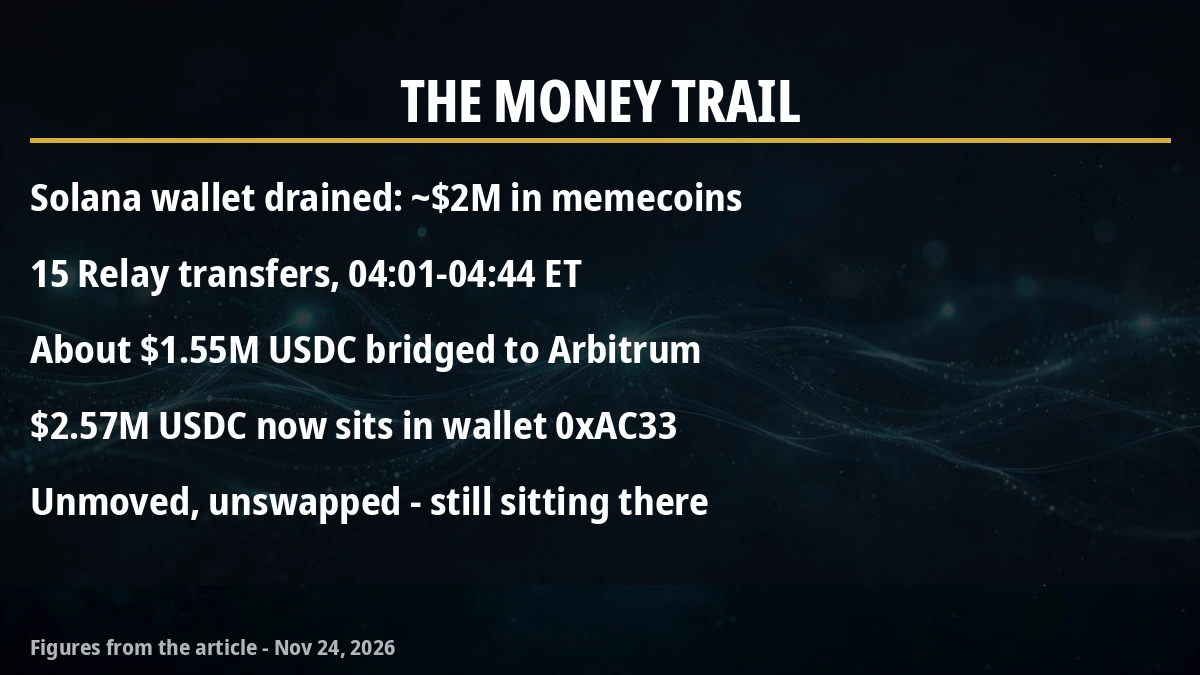
Crypto trader Ansem woke up on November 24 to the worst day of his public career. A Solana wallet labeled as his dumped roughly $2 million worth of memecoins in a matter of hours, including about $1.5 million of ANSEM, the token that carries his name. The proceeds were bridged to Arbitrum, where $2.57 million in USDC now sits in a single wallet starting with 0xAC33, unmoved.
Ansem says he was hacked. A growing group of on-chain analysts says the evidence does not look like a hack at all. The blockchain can prove the money moved. It cannot prove whose finger was on the button.
What happened
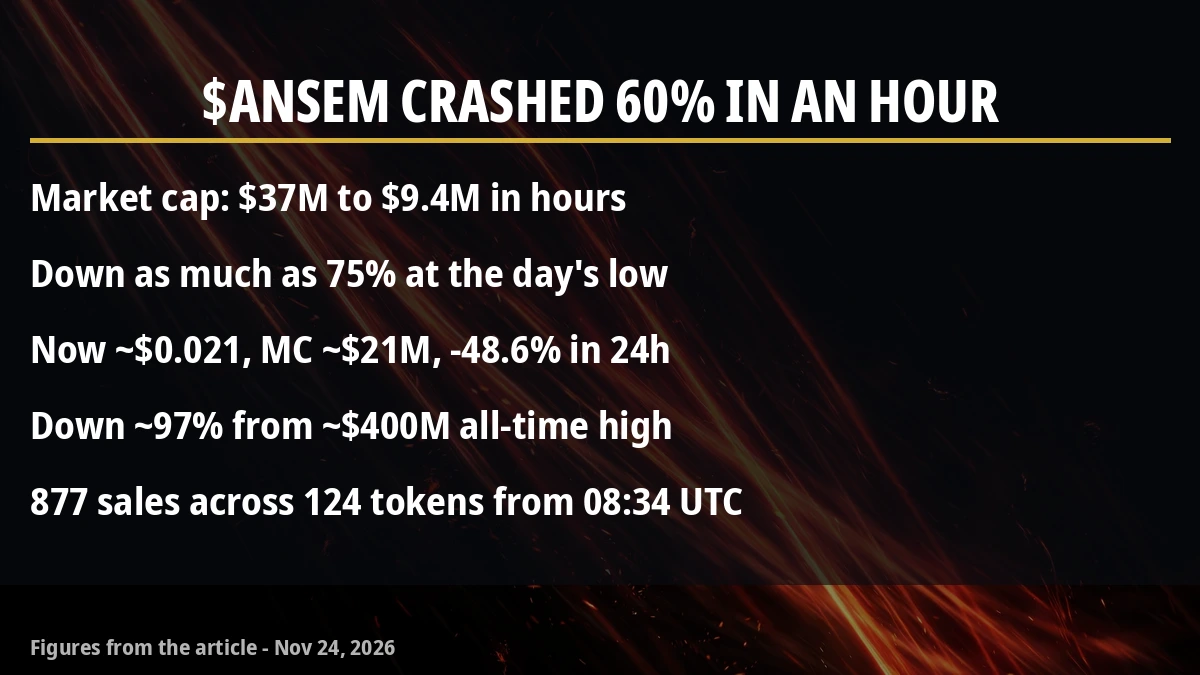
The selling began at around 08:34 UTC on November 24, according to Arkham data cited by CoinDesk. A wallet Arkham labels as Ansem’s carried out 877 separate sales across 124 tokens. The largest piece was ANSEM itself: between 70.8 million and 87.5 million tokens sold, depending on the estimate, worth roughly $1.25 million to $1.5 million. Lookonchain first flagged the activity at about 4:39 a.m. Eastern Time, noting ANSEM had fallen 60% within an hour.
The damage to the token was immediate. ANSEM’s market capitalization fell from roughly $37 million to about $9.4 million in hours, and the token slid as much as 75% at its lowest point of the day, according to Coin Edition. By midday UTC it traded near $0.024, down 39% over 24 hours, with a market value of roughly $10.8 million, per CoinDesk. By 17:09 UTC it had bounced to about $0.021 with a market capitalization near $21 million, still down 48.6% over 24 hours on DexScreener, with 24-hour volume of roughly $11.9 million.
Ansem posted on X at 5:59 a.m. Eastern Time, about an hour after Lookonchain’s first alert: “pump wallet is hacked, trying to figure out how, believe its unauthorized access to my bullpen profile somehow which had the sol priv key imported.”
Bullpen is the Solana trading terminal Ansem co-founded. He said later that morning that he did not think the attacker could reach his Ethereum-compatible wallets, “only the solana one,” and that his Bullpen profile was the only place he had imported the Solana private key. Bullpen has not commented on the claim.
The money trail ends in one wallet
Capital Flow: Solana wallet to Relay bridge to Arbitrum 0xAC33. Source: CoinXSight On-Chain Forensics.
The funds did not stay on Solana. Between 4:01 a.m. and 4:44 a.m. Eastern Time, 15 transfers through the cross-chain service Relay moved about $1.55 million in USDC from the Ansem-linked Solana wallet to an address on Arbitrum, according to transaction records examined by The Defiant. Arkham data put the figure arriving through Relay at roughly $1.39 million.
Lookonchain first reported $2.15 million in USDC reaching the Arbitrum wallet starting with 0xAC33. The total later rose to $2.57 million, matching Ansem’s own account of the loss. Onchain Lens reported the attacker swapped tokens for about 17,300 SOL, worth roughly $1.23 million, and bridged $2.56 million in USDC.
Two gaps in the record matter. First, the $1.39 million to $1.55 million traced through Relay does not match the $2.15 million to $2.57 million said to be sitting in the Arbitrum wallet, and nothing published so far explains the difference. Second, the $2.57 million in USDC has not moved since. It has not been swapped for ETH, not been sent onward, and not been laundered, according to Lookonchain and ChainCatcher reports from November 24.
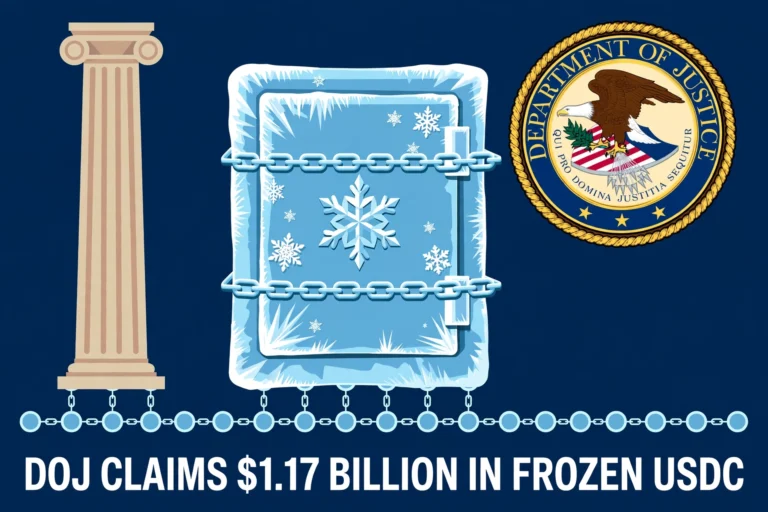
That stillness cuts both ways. A thief who wanted to disappear would usually move fast. But the destination is also a poor place to hide: Relay shares user information with law enforcement when asked, and USDC is freezable by its issuer, Circle. It is the second major hack story of the week, after the DOJ moved to seize $1.17 billion tied to the Binance hack.
Hack or inside job? The evidence splits
Not everyone accepts Ansem’s account. On-chain researcher MLM wrote that “the onchain activity looks nothing like a hack,” arguing the proceeds flowed to a wallet Ansem had previously funded rather than a fresh address controlled by an unknown attacker. MLM also noted that an address previously identified as Ansem’s had transferred funds to the receiving wallet about an hour before the selling began. Analyst Specter found that the first $27 sent to the Arbitrum address came from an “old Ansem wallet,” though ownership of that wallet is unconfirmed.
Lookonchain itself has published both readings. Its initial posts concluded Ansem had been hacked. Its later Perspective item, citing MLM’s analysis, said the activity was unlikely to be a hack. Blockchain investigator ZachXBT, who has publicly criticized Ansem in the past, expressed doubt that Ansem himself was behind the sales.
The case for a genuine hack rests on scope. Ansem’s Hyperliquid account, worth about $373,000, and his other EVM wallets were untouched. Only the Solana wallet was drained, which fits his claim that the compromised key existed in exactly one place: his Bullpen profile. The selling was also mechanical in a way that fits an automated drain: eight ANSEM transactions in under 30 seconds took the token’s market capitalization from roughly $37 million to about $10 million.
The case against it rests on destination. The money went to an address with links to Ansem’s own wallet history, not to a clean address with no prior connection. And the total loss figure comes from Ansem himself; he has not disclosed a full accounting, and CoinDesk noted it could not reproduce Lookonchain’s $2.15 million figure from the on-chain record.
Neither side has published transaction-level evidence that settles the question. Until someone does, the honest description is this: a wallet labeled as Ansem’s sold about $2 million of memecoins, the money landed in an Arbitrum wallet holding $2.57 million in USDC, and nobody outside the wallet’s owner can prove who authorized it.
Why the token fell so far, so fast
$ANSEM token price collapse (-60% in 1 hour) and market capitalization drop. Source: DexScreener / CoinXSight.
The scale of the crash is a story about concentration, not just about the hack claim. Ansem reportedly held around 58% of ANSEM’s total supply before the incident, according to KuCoin. ANSEM launched on Pump.fun in June 2026 as “The Black Bull,” an anonymous developer’s token that distributed a substantial portion of its supply to Ansem. Its website states it is not affiliated with him, but the market never treated it that way.
When one wallet holds well over half the supply, there is no order book deep enough to absorb its exit. The sales hit a thin market, and every block sold pushed the price lower through slippage. The token now trades about 97% below its all-time high, when its market capitalization reached roughly $400 million in early July, according to Crypto Briefing.
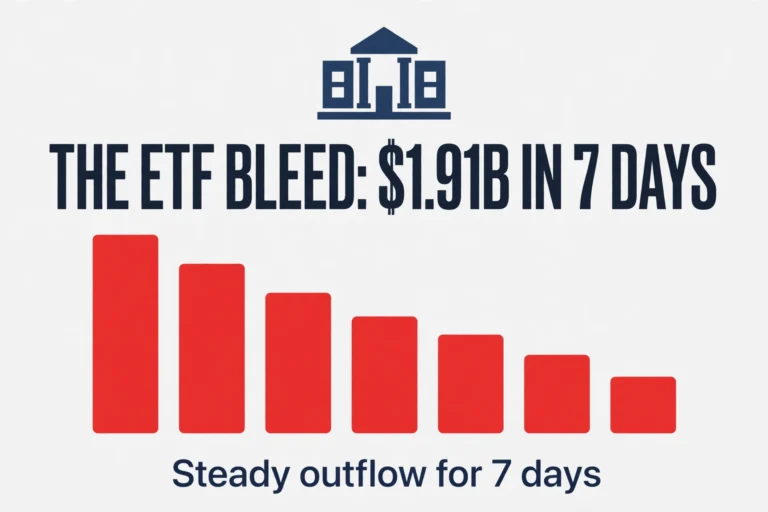
The broader market offered no cushion. Bitcoin spent November 24 under $60,000, giving back its Nvidia-driven rally to $64,600 and closing its seventh straight red week, while the Fear & Greed Index sat deep in extreme fear and ETF outflows continued. A memecoin whose entire thesis was one trader’s attention had nowhere to hide when that trader became the story.
Investment lessons from the Ansem hack
Key isolation and cold storage principles for crypto trading operations. Source: CoinXSight Research.
1. Concentration is the risk, not the narrative.
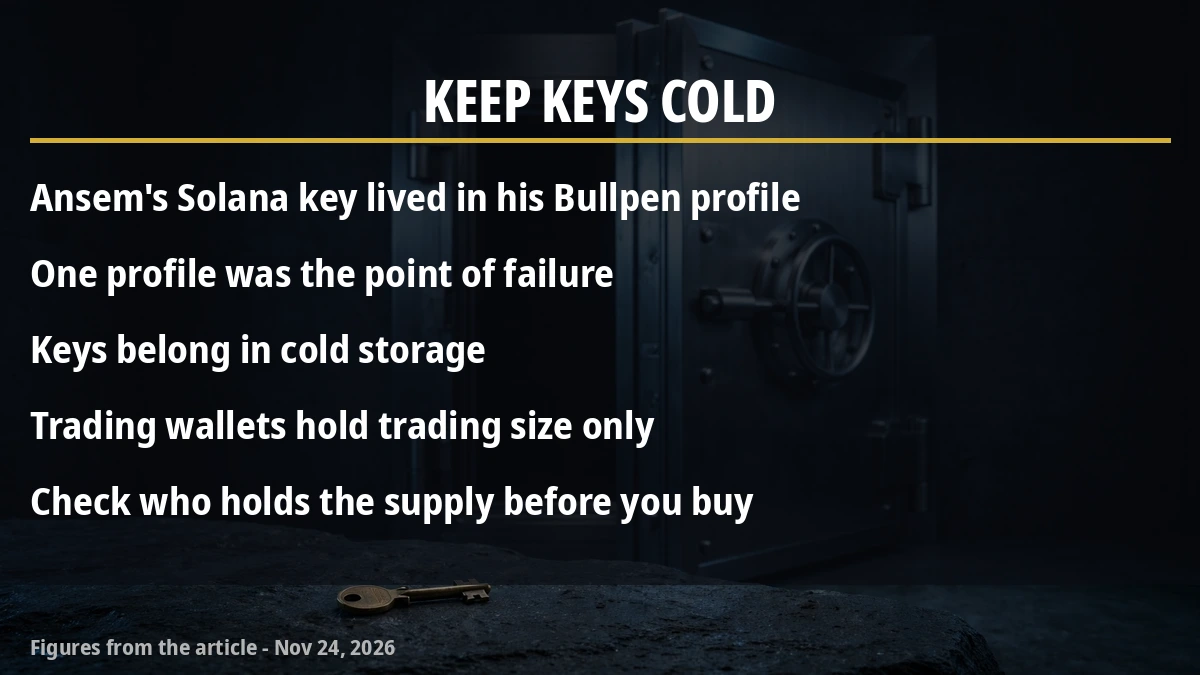
Before buying any memecoin, check who holds the supply. If a single wallet controls around half of it, your position is that wallet’s exit liquidity. The token can be fine, the community can be loud, and the chart can look strong, but none of that matters when the largest holder sells. ANSEM’s 60% crash in an hour was arithmetic: 87.5 million tokens into a market that could not absorb them.
2. Hot wallets are not vaults.
A private key imported into a trading app is only as secure as that app’s account security. Ansem’s own account is that his Solana key lived inside his Bullpen profile, and that profile was the point of failure. Keys belong in cold storage. A wallet connected to any trading terminal should hold trading size only, never a majority stake in anything.
3. Hacked cannot be verified on-chain.
The blockchain records signatures, not intent. A transaction signed with a stolen key looks identical to one signed by its owner. When a KOL says hacked and analysts say inside job, the market prices the ambiguity, not the truth. Do not trade the narrative. Trade the chart, the liquidity, and the position size.
4. Speed of selling tells you about mechanics, not motive.
Eight transactions in under 30 seconds, 877 sales across 124 tokens in hours: that is automation, not panic. But automation proves nothing about whose finger was on the button. A thief with a script and an owner with a script produce the same on-chain footprint.
5. Stolen funds sitting still is not recovery.
The $2.57 million in USDC has not moved from 0xAC33. That leaves the door open to a freeze or a law-enforcement request, but it changes nothing for holders. The token lost 60% in an hour regardless of what happens to the money. Never hold a position whose thesis depends on someone else’s funds being recovered.
6. A KOL token carries KOL risk.
ANSEM’s value was Ansem’s attention. One wallet event, hacked or not, erased 97% from its all-time high. If the investment case is a person, the risk is that person: their wallet, their keys, their judgment, their reputation. Price that in before you buy, not after it blows up.
7. Size it like a lottery ticket.
This is the rule that would have saved the most money here. A memecoin position should be small enough that a trip to zero is an annoyance, not a disaster. ANSEM is now a textbook case: down 60% in an hour, down 97% from its peak. Anyone who sized it as an investment instead of a ticket is trapped, waiting on a recovery that depends on a stranger’s wallet and a frozen stablecoin.
What to watch next
Three things decide what happens from here. First, any movement from 0xAC33: if the USDC moves, watch where it goes and whether Circle freezes it. Second, any statement from Bullpen: Ansem’s claim rests on unauthorized access to his profile there, and the platform has said nothing so far. Third, ANSEM’s own price: the token bounced from about $9.4 million in market value to roughly $21 million within hours, but it remains 97% below its peak, and every bounce in a token with this holder structure is a chance for remaining large holders to exit.
The Ansem hack, real or staged, is a reminder of how the memecoin market actually works. The technology is transparent and the story is not. The ledger shows exactly what happened and nothing about why. The only protection is the boring stuff: check the holders, keep keys cold, size the bet like a ticket, and never let one person’s wallet be your investment thesis.
Track whale flows and holder concentration before you buy: CoinXsight Terminal.
Disclaimer: This article is for informational and educational purposes only and does not constitute financial advice. Cryptocurrency investments carry a high level of risk, and you could lose your entire investment. The hack described here is alleged and disputed; no official finding has established whether the wallet was compromised or the sales were authorized. Always do your own research before making any investment decision.
CX
CoinXSight Alpha Desk
ALPHA // DESK
Quantitative Research Desk·Global Alpha Division
CoinXSight Institutional Research Desk produces quantitative crypto market intelligence, algorithmic models, and on-chain forensics.
QUANTITATIVE SUITE // DEEP ALPHA ENGINEACTIVE
BTC/USDT // LIVE SCANNER
CONFLUENCE 74
LIVE SPOT PRICE$82,807.47WEAK_BUY
TP2
$89,522.75
+9.07%
TP1
$85,056.42
+3.63%
ENTRY
$82,078.86
ZONE
SL
$80,590.09
-1.81%
Auto-detect Order Blocks, Fair Value Gaps and risk-adjusted DCA ladders in < 5s.