The DOJ Just Claimed $1.17 Billion of the Binance Hack. No Victim Gets a Dollar of It.
DOJ civil forfeiture filed Mon 23/11 (case 1:26-cv-04150): $1.17B USDC, 36 addresses / 18 chains (The Block total; DOJ '$1.1B+'), from the 29/10 Binance theft (~$6.3B, FBI: TraderTraitor). Angle: a CLAIM on frozen money, not a recovery - Circle froze ~1h after the theft; substitute USDC only after a FINAL forfeiture order; TRO 12/11; >$2.9B frozen/seized/returned; Binance already reimbursed users from treasury/SAFU; no refund mechanism in the complaint. Tape: BTC slipped under $60K (low $59,455; ~$60,516 at 06:43 UTC check); ETF Mon 23/11 FINAL -$569.7M (IBIT -$509.3M, FBTC +$13.3M), 5th straight outflow, Nov ~-$4.71B; liquidations flipped to longs ($104M/4h, $87.1M longs); F&G 11, day 12. Chainflip bounty deadline passed, still no return confirmed. Traps avoided: WhaleRoom partial -$73.7M, KuCoin '$57M' decimal error.
CX
CoinXSight Alpha DeskQuantitative Research Desk·Nov 24, 2026 · Updated Nov 24
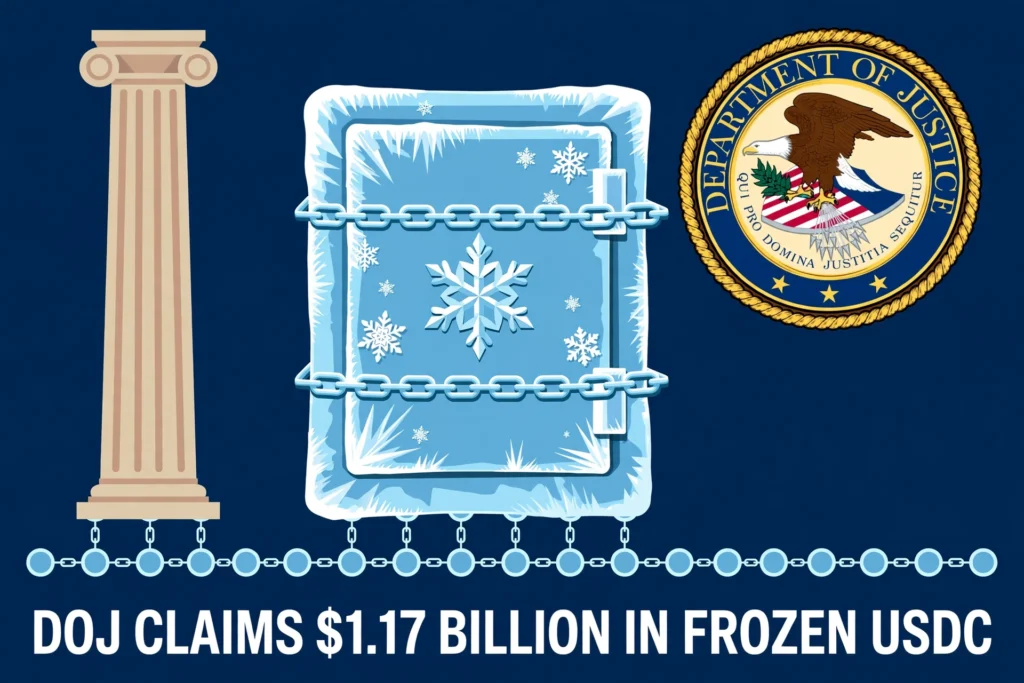
Read the headline carefully, because it does not mean what it seems to mean. On Monday, the U.S. Department of Justice filed a civil forfeiture complaint — case 1:26-cv-04150 — seeking to seize $1.17 billion in USDC spread across 36 addresses on 18 blockchains, funds traced to the October 29 theft of some $6.3 billion from Binance, attributed by the FBI to North Korea’s TraderTraitor group. It is the largest single legal claim yet in the case, and it will be reported in places as $1.17 billion “recovered.” It is not recovered. It is claimed — a government’s formal assertion, in court, over money that has been frozen in place since roughly an hour after the theft, when Circle froze the addresses at law enforcement’s request. No victim gets a dollar from this filing. Binance’s users were already made whole by the exchange, out of its own treasury and insurance fund. What the complaint actually decides is who ends up owning the frozen pile: the United States, if the court grants final forfeiture — at which point Circle would issue substitute USDC to replace the burned tainted tokens — or, in the scenario no one in Washington is pricing, the claimants who might contest it.
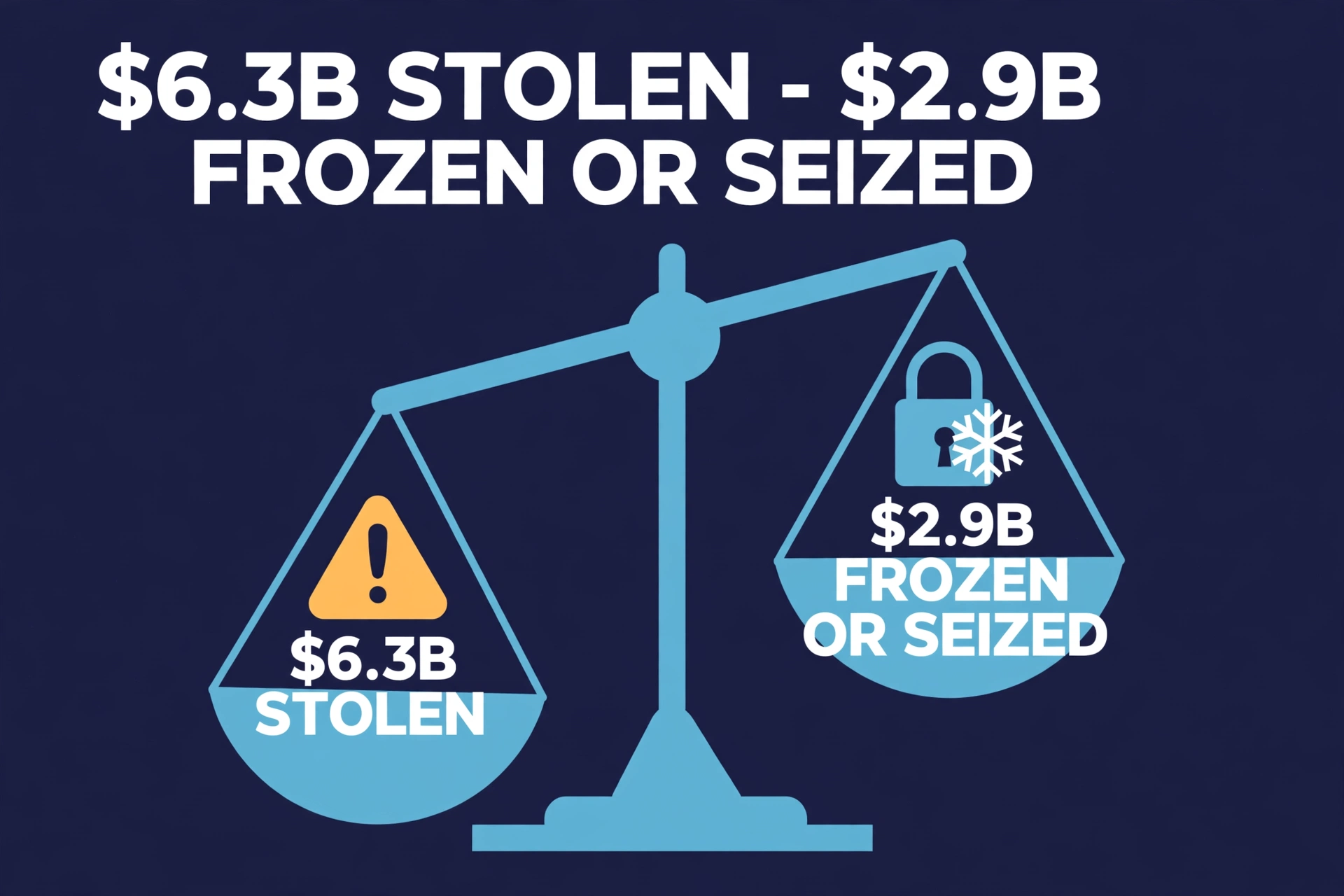
That distinction matters because the frozen-money story is the real story of this hack, and it is more interesting than the theft. Of the $6.3 billion stolen, more than $2.9 billion has now been frozen, seized or returned — a containment rate approaching half, achieved in under a month, against the most sophisticated laundering operation the industry has ever tracked. The hackers, meanwhile, are racing the freeze: as documented in Saturday’s tracing analysis, the cluster moved 488,357 ETH in four days last week, emptying five of its nine largest Ether wallets through mixers and cross-chain swaps even as court orders accumulated. Monday’s filing is the legal system’s counter-move: converting emergency freezes — some resting on a temporary restraining order obtained November 12 — into permanent title. Freezes expire and can be challenged. Forfeiture, once final, is forever.
~1 hour after the theft, at law-enforcement request
Substitute USDC
Issued by Circle only after a FINAL forfeiture order
User reimbursement
Already paid by Binance (treasury / SAFU) — not from this claim
Why the stablecoin is the battlefield
USDC is where this case was always going to be fought, because USDC is the one asset in the laundering chain with an off switch. Ether can be mixed, swapped and bridged beyond any single company’s reach — the cluster’s 137,602 ETH move last Thursday demonstrated exactly that. A centrally issued stablecoin cannot. Circle can freeze an address unilaterally, and did, within the hour. The $1.17 billion now before the court is therefore the portion of the loot that was never really the hackers’ to spend — it has sat visible, tagged and immobile for nearly four weeks while the movable remainder shrank. The forfeiture complaint is less a recovery operation than a ratification: the legal system catching up to a freeze the private sector executed in sixty minutes. For the wider market, the precedent is the point. Every future laundering desk now knows that nine figures of USDC can be immobilized before the first bridge hop — and that the immobilization, given a cooperative court, becomes permanent.
DOJ Civil Forfeiture: $1.17B USDC frozen across 36 addresses on 18 blockchains from the Binance hack. Source: Case 1:26-cv-04150 filings.
Bitcoin tape check: Sub-$60K drop, -$569.7M ETF outflow, and $87.1M long liquidations. Source: CoinXSight Telemetry.
The market, meanwhile, slipped back under $60,000
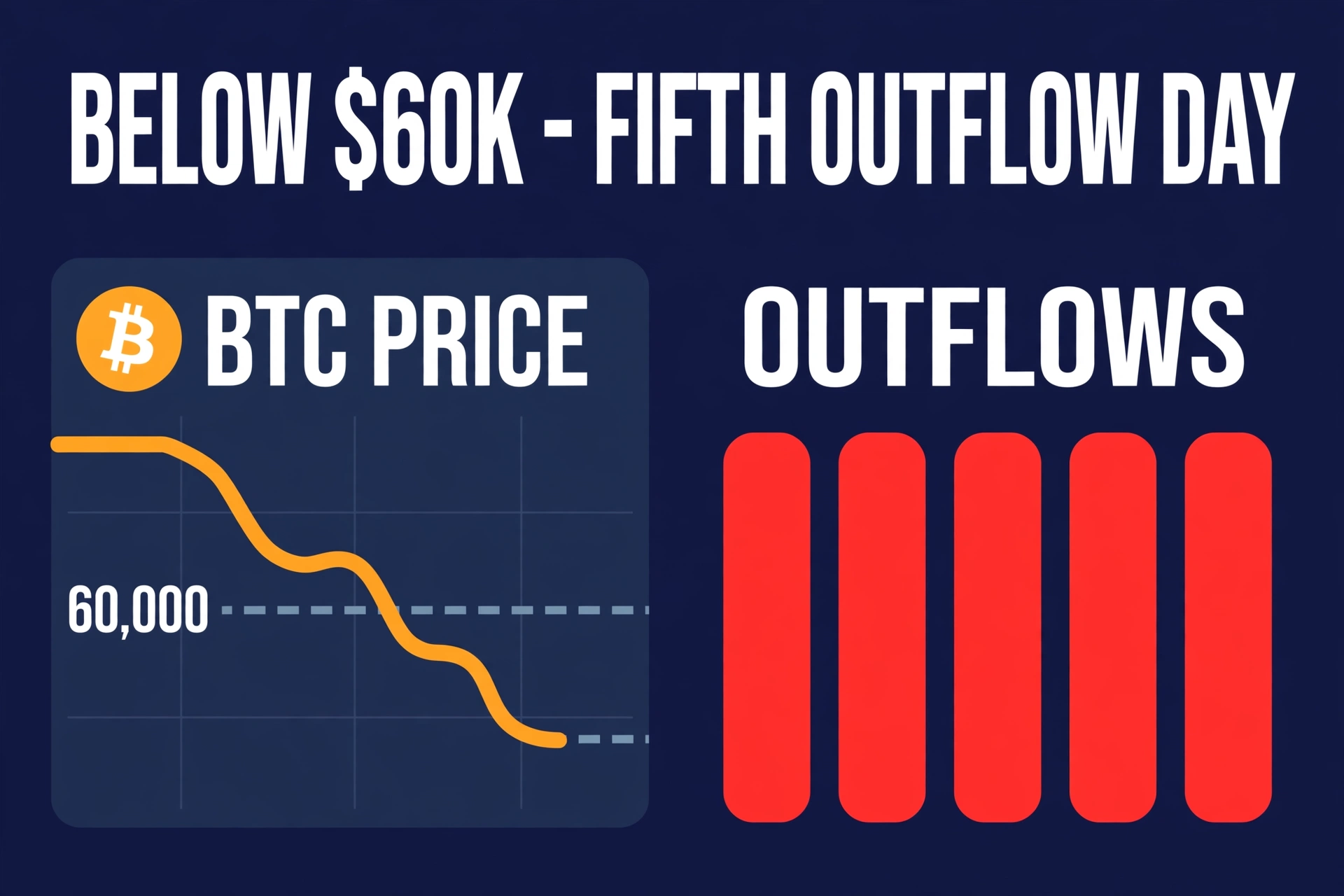
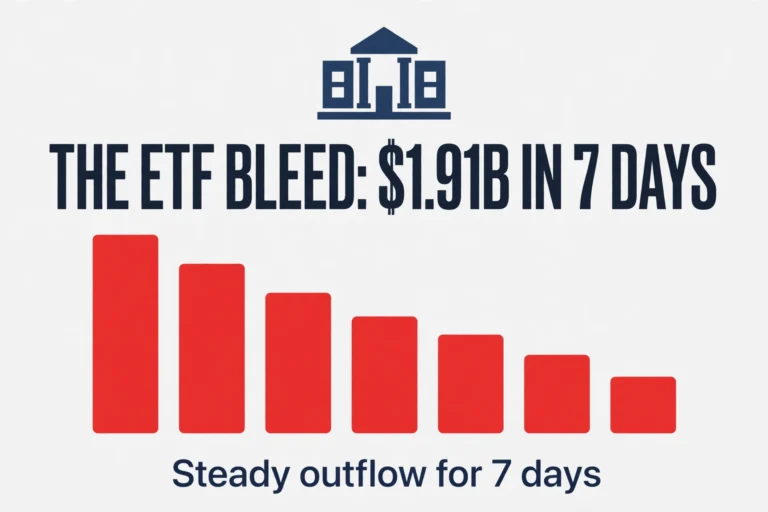
The filing landed in a market with no bid to celebrate it. Bitcoin lost the $60,000 line again on Tuesday, printing an intraday low of $59,455 and changing hands near $60,516 in the early European afternoon — roughly $950 below Monday morning’s level, the squeeze to $64,600 now fully retraced and then some. The flow table explains the gravity: Monday’s final ETF reading was a fifth consecutive outflow, −$569.7 million, with IBIT accounting for −$509.3 million (FBTC’s +$13.3 million inflow the session’s only green of size; figures circulating from partial trackers that omit IBIT understate the exit by nearly half a billion and should be ignored). November’s cumulative redemptions now approach $4.71 billion. Liquidations have flipped direction with the price: the latest four-hour window washed out $104 million, $87.1 million of it longs — the dip-buyers of Sunday’s bounce being carried out in turn. Fear & Greed sits at 11 for a twelfth consecutive day.
And one weekend loose end remains loose: Chainflip’s bounty deadline passed at 01:38 Vietnam time with, as of this writing, no public confirmation of any return of the $12 million drained on Saturday and no incident report from the protocol. Silence is not proof of refusal — but every hour of it reprices the probability.
The DOJ’s billion-dollar claim and Bitcoin’s slide under $60,000 are the same story told from opposite ends: the system’s ability to contain crypto’s worst theft is improving faster than the market’s willingness to buy crypto’s best assets. One of those curves bends first. November, so far, is not volunteering which.
Disclaimer: This article is for informational purposes only and does not constitute financial advice. Figures are cited from official releases and market data as reported at the time of writing and are subject to revision. Cryptocurrency markets are volatile; always do your own research before making investment decisions.