Bitcoin Printed $16,928 on Kraken. Nobody Was Hacked — the Book Was Just Empty.
Pair 2 microstructure analysis: Kraken BTC/CAD printed C$24,250 (~US$16,928 at BoC rate 1.4325) in the 03:00-03:15 ET window Sat 21/11 - 976 trades / 22.38 BTC, 122 trades (~10.69 BTC) below US$20K equivalent; recovered to ~$57,286 equiv. by 08:00 ET. Kraken BTC/USD same window $57,593-57,900 - global price never went there. Kraken Support: platform processed every order correctly, no breach or compromised accounts, executed trades stand. Cause: heavy selling into a thin CAD book (normally <1 BTC/hour). Backdrop: BTC ~$59,170 Sun afternoon (back below $60K), week -9.7%; liquidations normalized ~$561M/24h; ETF 20/11 FINAL still unpublished (IBIT blank).
CX
CoinXSight Alpha DeskQuantitative Research Desk·Nov 22, 2026 · Updated Nov 24
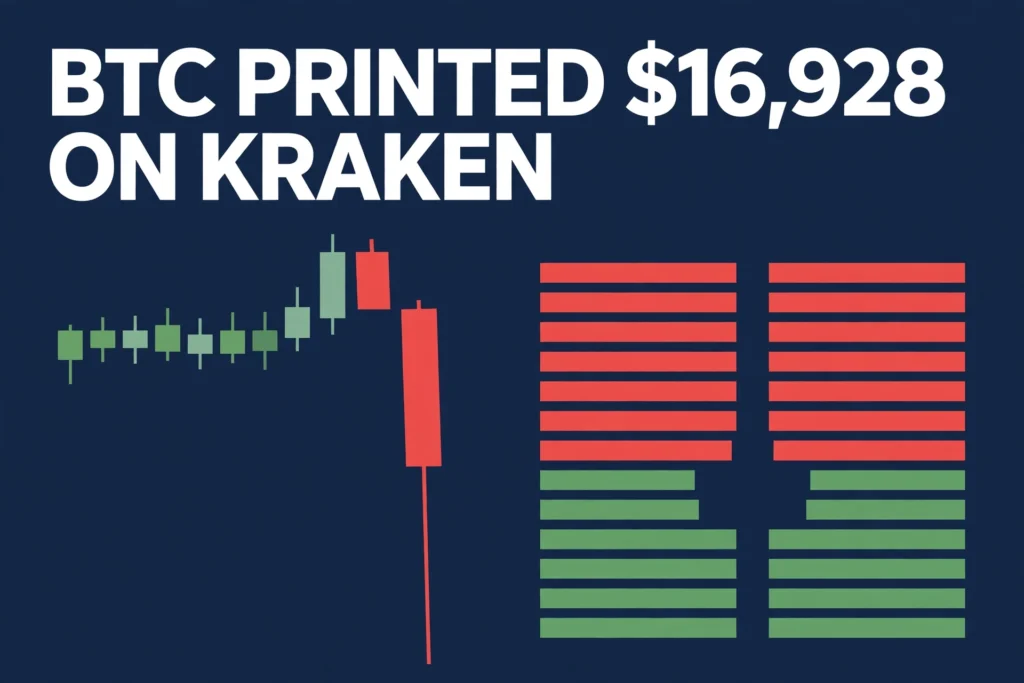
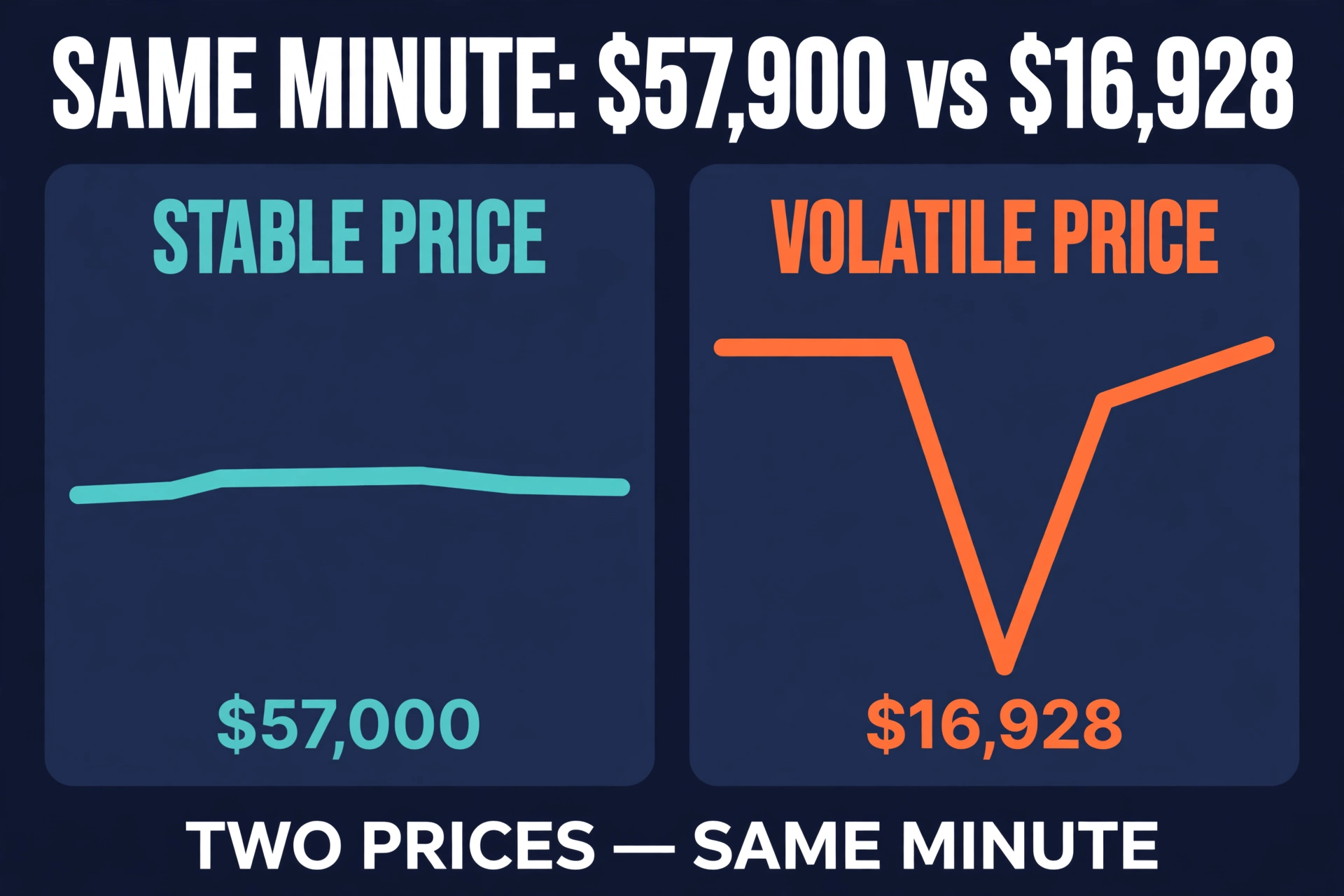
For about fifteen minutes early on Saturday, Bitcoin cost $16,928. Not everywhere — almost nowhere, in fact. On Kraken’s BTC/CAD pair, in the 03:00 ET window on November 21, the price printed as low as C$24,250, roughly US$16,928 at the Bank of Canada’s exchange rate, while Bitcoin on Kraken’s own dollar pair traded between $57,593 and $57,900 in the same minutes and the global market never came close to those levels. There was no hack, no breach and no glitch in the matching engine, Kraken says. There was something more ordinary and more instructive: a large seller, a nearly empty order book, and a market that — for one regional pair, for fifteen minutes — simply had no floor.
The screenshots, inevitably, travelled faster than the explanation. “Bitcoin crashed 71%” is a better headline than “a thin Canadian-dollar book gapped down on a Saturday morning during a market-wide liquidation.” But the second sentence is the true one, and the difference between the two is worth several million dollars to the people on both sides of those trades — because Kraken has confirmed the trades stand.
What actually happened, in the tape
Kraken BTC/CAD, 03:00–03:15 ET Sat Nov 21
Reading
Lowest print
C$24,250 (≈US$16,928) — 71% below the global price
Window open/close (USD equivalent)
~US$22,339 — the candle body itself sat far below market
Trades in the window
976 trades, 22.38 BTC total
Volume below US$20,000 equivalent
122 trades, ~10.69 BTC
Recovery
Back to ~US$57,286 equivalent by 08:00 ET
Same window, Kraken BTC/USD
US$57,593–57,900 — no anomaly
Normal BTC/CAD liquidity
Typically under 1 BTC per hour
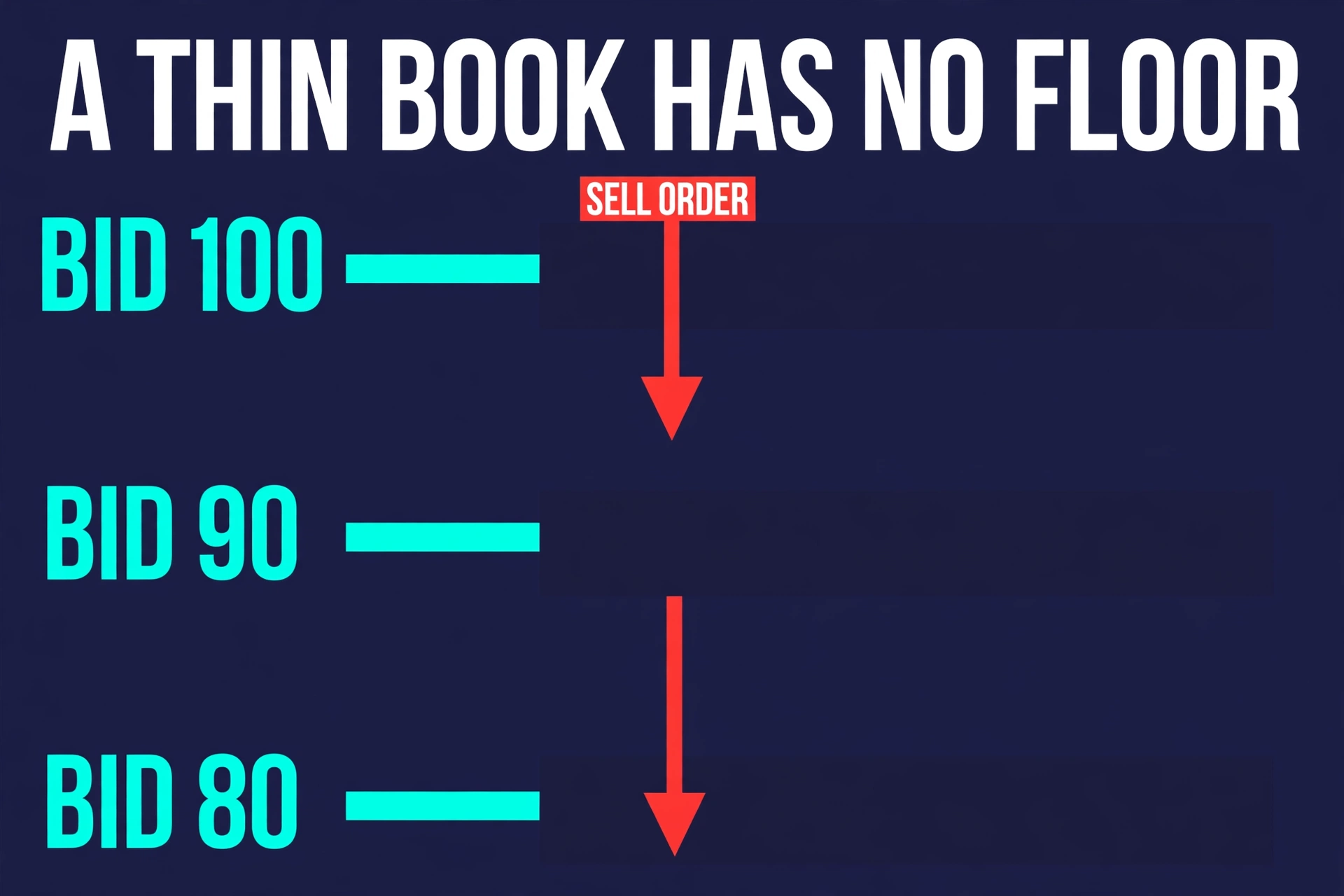
Read the numbers as a microstructure story and the mystery dissolves. BTC/CAD is a convenience pair: most Canadian flow routes through USD or stablecoin books, leaving the direct CAD book thin — ordinarily less than one bitcoin of volume per hour. Into that book, during the worst hour of a market-wide liquidation cascade (global Bitcoin printed its $55,130 low that same Saturday), someone sold roughly 22 BTC in fifteen minutes. A market sell order does not ask what the price should be; it takes every bid until it is filled. On a deep book, that walks the price down a few percent. On this book, the bids ran out — and the order kept walking, through gaps where no bids existed at all, until it found buyers at C$24,250. Around 10.69 BTC changed hands below the US$20,000 equivalent. Those were real fills, at real prices, transferring real money from the seller to whoever happened to have low bids resting on an illiquid pair at 3 a.m.
Kraken’s statement, when it came, closed the other theories: “Our platform processed every order correctly, and our security teams found no sign of a breach or compromised accounts. Executed trades stand.” Whether the seller was a liquidating fund, a misconfigured bot or a fat-fingered market order, the exchange has not said — and under its own rules, it does not have to. The engine did what it was told.
Kraken BTC/CAD order book depth collapse during Saturday 03:00-03:15 ET window. Source: CoinXSight Telemetry.
Why this keeps happening, and why it matters beyond one pair
Thin-book flash prints are a recurring feature of crypto market structure, not a Kraken-specific failure. Regional fiat pairs, minor stablecoin pairs and low-volume altcoin books all share the same geometry: a book that looks continuous at normal size and is actually a staircase with missing steps. The global price of Bitcoin is an abstraction — a composite of the deep books. Any individual venue’s pair is a specific, local auction, and a local auction with no bidders clears at whatever the last resting bid says. Saturday’s print is extreme in size, not in kind: a 71% wick is what “no floor” looks like when the seller is large enough and the hour is thin enough.
The practical lessons are unglamorous and expensive to learn firsthand. Market orders on illiquid pairs are a donation to whoever is resting bids below; limit orders exist precisely for books like this. Stops placed on thin pairs trigger at wick prices, not at “the” price. And anyone who has ever wondered why professional desks route size through the deepest USD and USDT books — and why exchanges publish “index prices” for liquidations and margin rather than trusting any single pair — watched the answer print at C$24,250 on Saturday morning. The buyers on the other side, incidentally, include whoever keeps lowball bids parked on sleepy pairs for exactly this eventuality. It is a legitimate, if predatory, strategy, and on Saturday it paid roughly $40,000 per coin.
Time-and-sales distribution of 976 trades executing 22.38 BTC across fragmented liquidity tiers. Source: CoinXSight Microstructure Desk.
The market around the wick
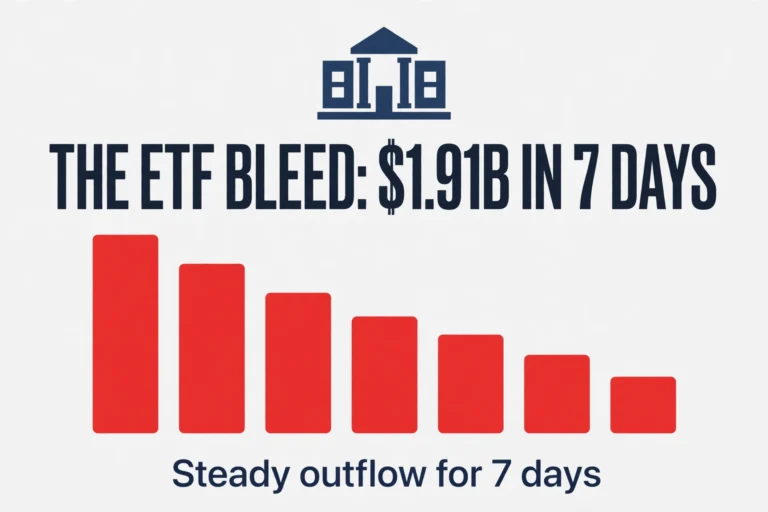
The wick happened inside a genuinely violent market, which is why the screenshots found such a ready audience. Bitcoin’s global low that Saturday was $55,130; by Sunday morning it had reclaimed $60,000 on a short squeeze, and by Sunday afternoon it had slipped back below the level again, trading near $59,170 — still down about 9.7% on the week, with the weekly candle set to close at 07:00 Monday Vietnam time. Liquidations have normalized from the $2.4 billion flush to roughly $561 million over the latest 24 hours — in a week that also saw a state-linked laundering operation empty 488,357 ETH out of its mapped wallets in public. The final ETF table for Friday’s session, remarkably, had still not been published by Sunday — IBIT’s figure outstanding on Farside for a second day, leaving Thursday’s record $582.3 million redemption as the last confirmed institutional reading.
None of that makes the Kraken print a signal about Bitcoin’s value, and treating it as one is the exact error this article exists to correct. It is a signal about plumbing. Bitcoin did not trade at $16,928 on Saturday in any sense that matters to a holder, a fund or a market maker — it traded at $57,000 and change, globally, while one thin book in one currency, for fifteen minutes, showed what happens when size meets emptiness. The market’s price is only as real as the book underneath it. On Saturday, on BTC/CAD, there was barely a book at all.
Track institutional orderbook telemetry and real-time execution anomalies with CoinXSight Deep Alpha →
Disclaimer: This article is for educational and informational purposes only and does not constitute financial, investment, or trading advice. Cryptocurrency trading and algorithmic systems carry substantial market risk. Always perform comprehensive independent research and manage your capital responsibly.
CX
CoinXSight Alpha Desk
ALPHA // DESK
Quantitative Research Desk·Global Alpha Division
CoinXSight Institutional Research Desk produces quantitative crypto market intelligence, algorithmic models, and on-chain forensics.
QUANTITATIVE SUITE // DEEP ALPHA ENGINEACTIVE
BTC/USDT // LIVE SCANNER
CONFLUENCE 74
LIVE SPOT PRICE$82,807.47WEAK_BUY
TP2
$89,522.75
+9.07%
TP1
$85,056.42
+3.63%
ENTRY
$82,078.86
ZONE
SL
$80,590.09
-1.81%
Auto-detect Order Blocks, Fair Value Gaps and risk-adjusted DCA ladders in < 5s.